Vendor Removed After Delivery, Payment Withheld – Legal Remedies to Recover Dues in India
This article is published by The Legal Warning India and written by Advocate Uday Singh.
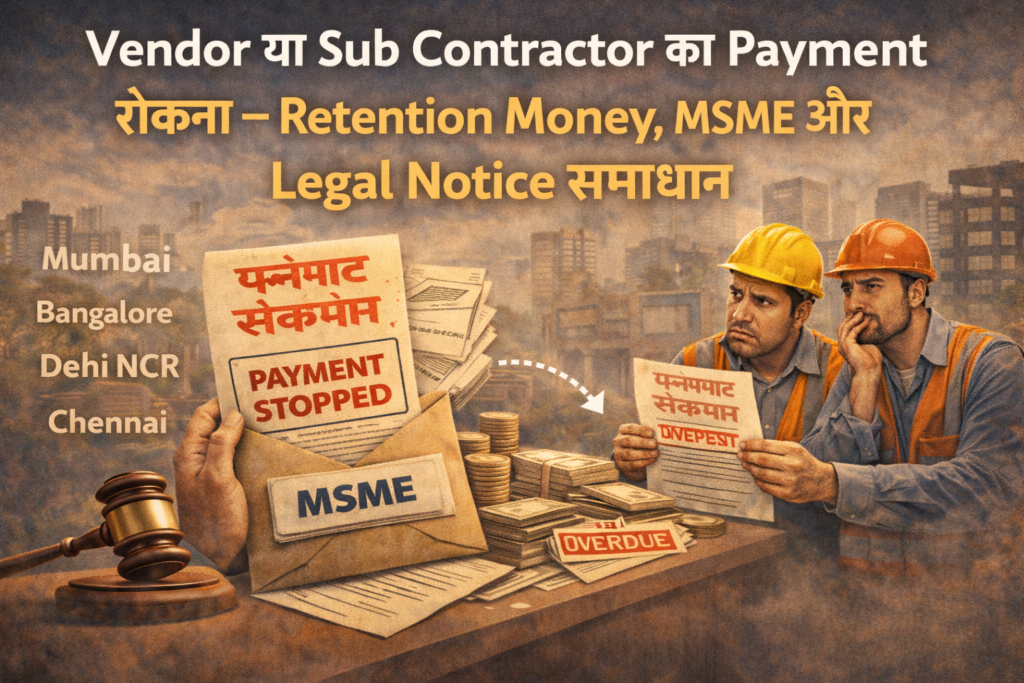
Across India, thousands of vendors, MSME suppliers, service providers and sub-contractors face a common but devastating situation — goods or services are delivered successfully, accepted by the company, and soon after that, the vendor is removed, blacklisted, or stopped from site, while payment is withheld.
Typical excuses include:
- “Vendor has been removed from the project”
- “Management has decided to discontinue services”
- “Accounts team will review pending invoices”
- “Quality issue raised after delivery”
The most urgent question vendors ask is:
“I have delivered goods / completed services. Can payment be denied just because I was removed?”
This article explains the legal position in India and the remedies available to recover payment even after removal or blacklisting.
What Does ‘Vendor Removed After Delivery’ Mean?
This situation usually involves:
- Purchase order or work order issued
- Goods delivered or services completed
- Delivery challans / GRN acknowledged
- Invoices raised
- Vendor removed or access blocked
Such removal is often used as a tactic to delay or deny payment.
Can a Company Withhold Payment After Accepting Delivery?
No. Under Indian law, once goods or services are:
- Delivered
- Accepted
- Utilised
the buyer is legally obligated to pay.
Removal or discontinuation of vendor does not cancel the liability for past deliveries.
Common Reasons Cited to Withhold Payment
- Alleged quality issues raised after delivery
- Internal audit or review
- Vendor termination or blacklisting
- Project closure
- Cash flow issues
Courts treat post-delivery objections with suspicion, especially if acceptance is already recorded.
What Evidence Strengthens the Vendor’s Case?
Courts rely heavily on documentary and conduct-based evidence, such as:
- Purchase Order / Work Order
- Delivery challans / GRN
- Invoices and GST returns
- Email or WhatsApp acknowledgments
- Proof of utilisation of goods/services
- Partial payments made earlier
Acceptance of delivery is the strongest proof.
First Legal Step – Sending a Legal Notice
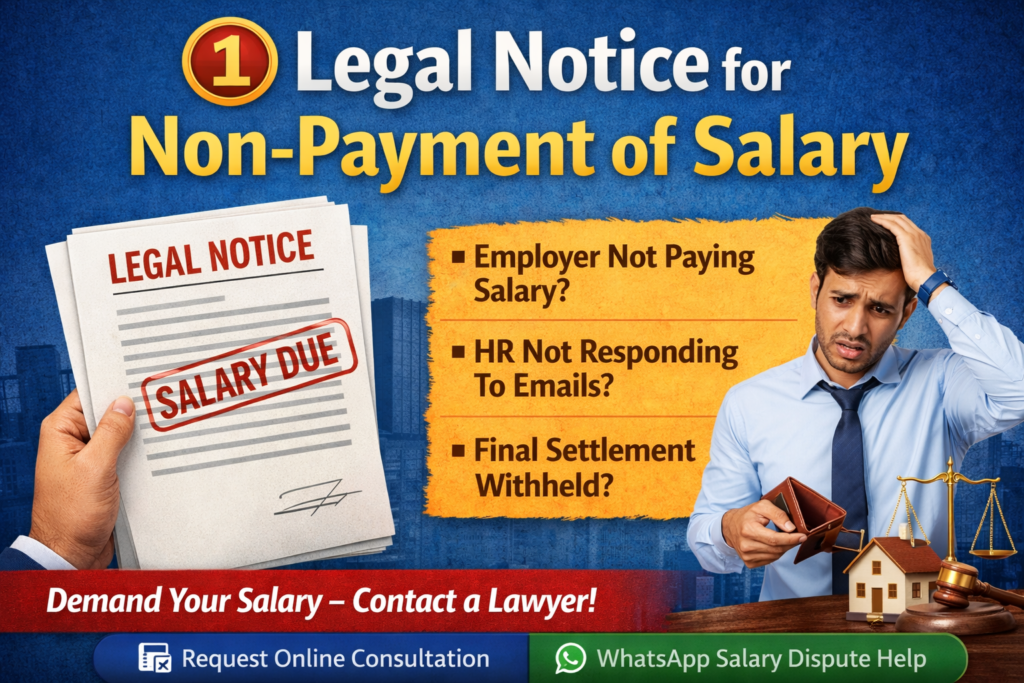
The most effective initial remedy is issuing a legal notice demanding payment.
A proper legal notice should:
- Detail deliveries/services completed
- Mention invoice amounts and dates
- Record acceptance and utilisation
- Demand time-bound payment
- Warn of legal action
Many companies release payments after receiving a well-drafted legal notice.
Legal Remedies Available to Vendors
1. Civil Suit for Recovery of Money
Vendors can claim outstanding dues along with interest and costs.
2. Commercial Court (High-Value Transactions)
For large corporate or EPC transactions.
3. MSME Remedies (If Registered)
MSME-registered vendors enjoy statutory protection against delayed payments.
How Courts Examine Such Disputes
Courts usually examine:
- Whether delivery/services were completed
- Whether acceptance was unconditional
- Timing of objections
- Whether removal was used to avoid payment
Courts do not allow unjust enrichment by retaining goods/services without payment.
Common Mistakes Vendors Make
- Accepting removal silently
- Not preserving delivery proof
- Delaying legal notice
- Failing to document acceptance
How Vendors Can Protect Themselves in Future
- Ensure delivery acknowledgments are signed
- Preserve GRN and gate entry records
- Raise invoices promptly
- Act legally at the first sign of non-payment
Related Articles
- Sub Contractor Ka Paisa Atak Gaya? Legal Notice aur Court Solution
- Labour Thekedar Ka Bill Clear Nahi Ho Raha? Legal Rights aur Recovery Process
- Running Bill (RA Bill) Not Cleared – Legal Remedies
- Sub-Contractor Terminated After Work Completion – Payment Recovery
Frequently Asked Questions (FAQs)
Q. Can payment be denied after vendor removal?
No, payment for accepted delivery cannot be denied.
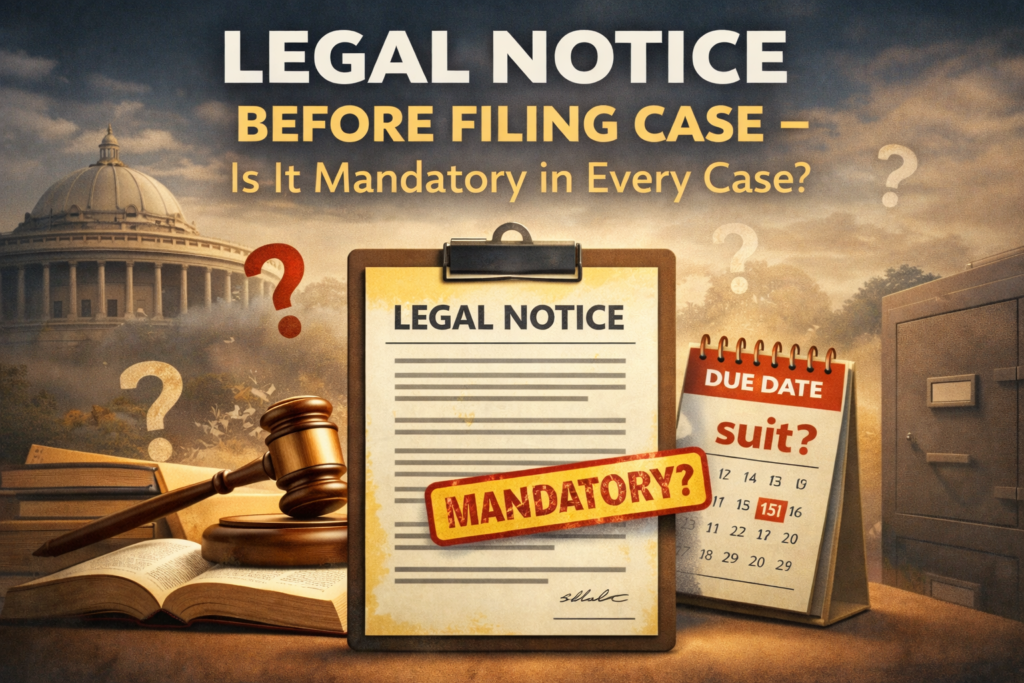
Q. Is legal notice compulsory?
Not mandatory, but strongly recommended.
Q. Can blacklisting stop payment recovery?
No, blacklisting does not cancel past payment liability.
This article is for general legal information and awareness purposes only. It does not constitute legal advice or solicitation. Communication is purely informational, in compliance with Bar Council of India Rule 36.