This article is published by The Legal Warning India and written by Advocate Uday Singh.
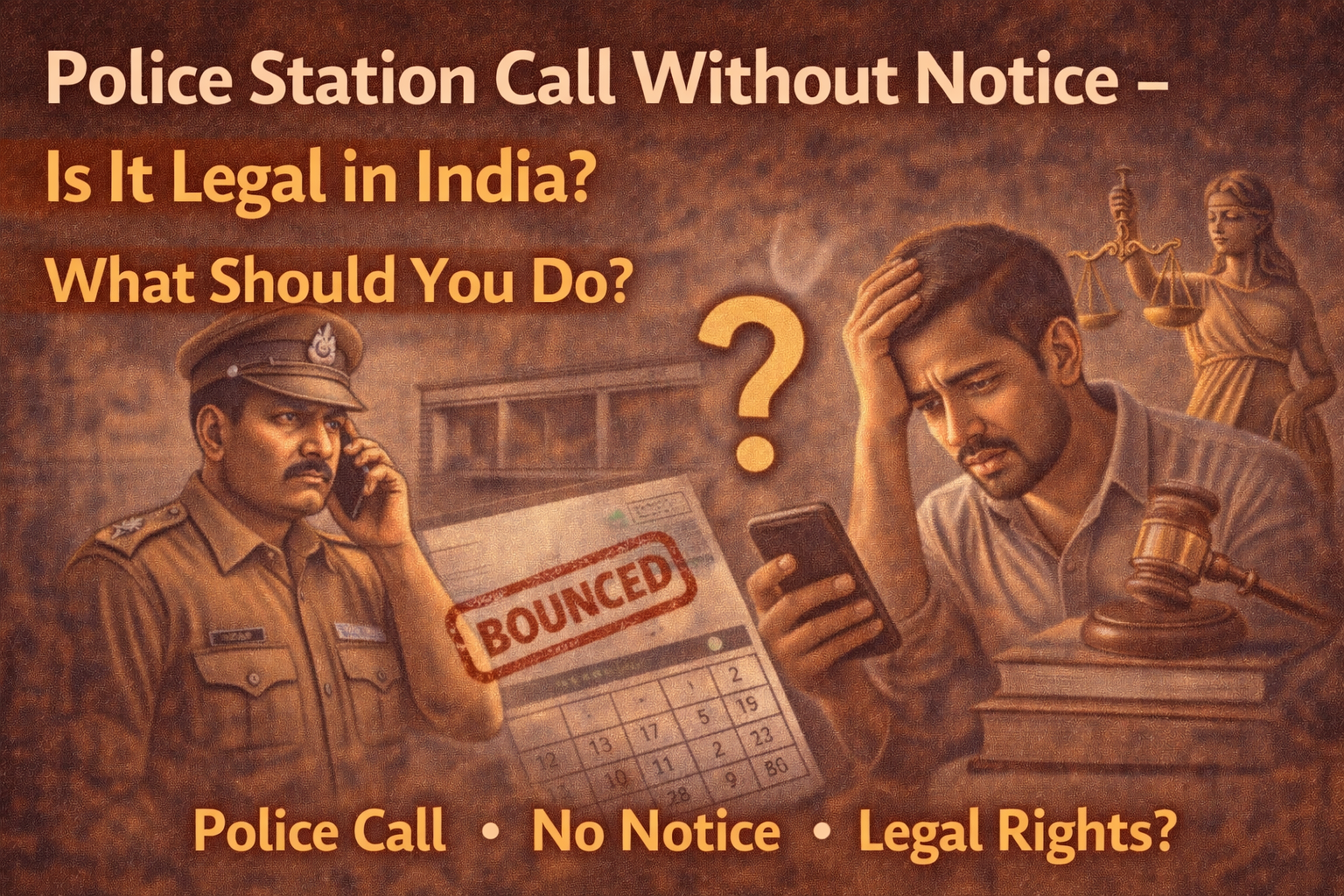
Police Station Call Without Notice – Is It Legal? What Should You Do?
Receiving a sudden phone call from a police station without any written notice creates instant panic.
Most people immediately think:
- “Am I going to be arrested?”
- “Is an FIR already registered against me?”
- “Do I have to go immediately?”
The legal reality is very different from public fear.
Not every police call is legal, and not every call must be obeyed blindly.This article explains when police can call you, when they cannot, and what legally safe steps you should take.Information is based on criminal procedure law, constitutional safeguards, and settled legal principles.
Can Police Call Someone Without Written Notice?
Yes, police may contact a person informally for preliminary inquiry.
However, an informal phone call does not automatically create a legal obligation to appear.Police authority depends on the nature of the case and your role in it.
When Is a Written Notice Mandatory?
In most situations, especially where arrest is not required, police are expected to issue a written notice of appearance.Written notice becomes important when:
- You are named as an accused
- You are being called repeatedly
- The offence is punishable with limited imprisonment
- The investigation is at an advanced stage
Repeated calls without notice may amount to harassment.
Are You Legally Bound to Go to Police Station on Phone Call?
No automatic obligation exists.You are not legally required to appear merely because of a phone call, unless:
- You receive a written notice
- You are formally arrested
- You are summoned by a court
Blind compliance without understanding context can sometimes create unnecessary legal risk.
What If Police Threaten Arrest Over Phone?
Threatening arrest over phone without following legal process is not justified.Arrest must follow:
- Legal grounds
- Procedure established by law
- Written documentation
Phone threats are often used to create fear and pressure.
Safe and Legal Steps You Should Take
1️⃣ Ask for Written Communication
You may politely request the reason and written notice.
2️⃣ Do Not Panic or Argue
Maintain calm and respectful communication.
3️⃣ Avoid Giving Statements Over Phone
Any statement should be given only after understanding your legal position.
4️⃣ Keep Record of Calls
Date, time, and number details should be noted.
5️⃣ Seek Legal Awareness Before Visiting
Understanding your rights helps prevent misuse of power.
When Can Police Directly Call You?
Police may directly call:
- Witnesses for clarification
- Complainants for follow-up
- Persons connected to inquiry at preliminary stage
Even then, dignity and legal procedure must be maintained.
Difference Between Inquiry Call and Accused Summon
An inquiry call is not the same as being summoned as an accused.
- Inquiry call – information gathering
- Summon / notice – formal legal process
Confusing the two causes unnecessary fear.
Related Legal Awareness Articles
Key Takeaway
A police phone call is not a conviction, not an arrest, and not always a legal command.Understanding procedure protects you from panic-driven mistakes.
▶ Request Online Consultation▶ Request WhatsApp Consultation
Disclaimer: This article is for general legal information and awareness purposes only. It does not constitute legal advice or solicitation. Communication is purely informational, in compliance with Bar Council of India Rule 36.