
This article is published by The Legal Warning India and written by Advocate Uday Singh.
Notice of Appearance vs Arrest – What the Law Really Says
Many people panic the moment they receive a call or notice from the police, assuming arrest is inevitable.
However, Indian criminal law clearly distinguishes between a Notice of Appearance and an Arrest.
Confusing these two leads to unnecessary fear, poor legal decisions, and avoidable harassment.
This article explains the legal difference between notice of appearance and arrest, why the distinction matters, and how courts expect police to act.
Information is based on criminal procedure law and publicly available judicial principles.
What Is a Notice of Appearance?
A Notice of Appearance is a formal intimation issued by police asking a person to:
- Appear before the investigating officer
- Cooperate with investigation
- Provide information or clarification
It is not an arrest.
The purpose is to secure cooperation without depriving personal liberty.
What Is an Arrest?
An arrest involves taking a person into custody and restricting their freedom.
Arrest has serious legal consequences, including:
- Loss of personal liberty
- Detention and custody
- Production before a magistrate
Arrest is meant to be used sparingly, not routinely.
Key Legal Difference: Notice vs Arrest
| Notice of Appearance | Arrest |
|---|---|
| Does not restrict liberty | Restricts personal freedom |
| Issued to ensure cooperation | Used when custody is necessary |
| No detention involved | Detention and custody involved |
| Preferred in non-serious offences | Exceptional in non-serious offences |
When Should Police Issue a Notice Instead of Arrest?
Courts have repeatedly emphasised that police should prefer notice of appearance when:
- The offence is non-serious
- The person is cooperating
- There is no risk of absconding
- No threat to evidence or witnesses exists
This approach protects liberty while allowing investigation to continue.
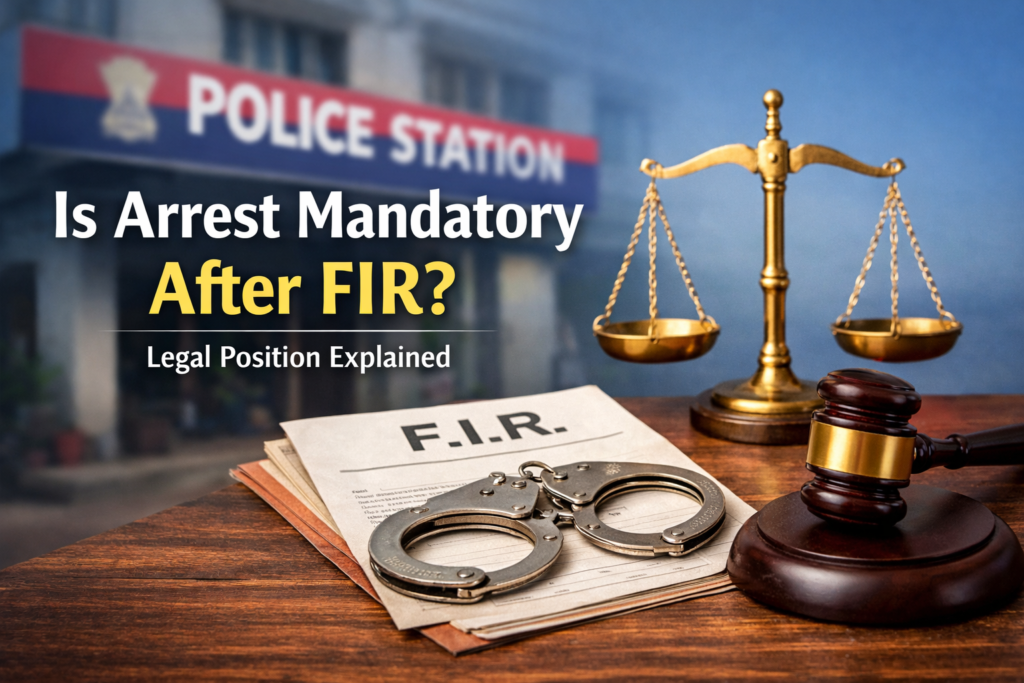
Arrest Without Warrant vs Notice – Judicial Trend
Higher courts have cautioned against unnecessary arrests, especially in routine matters.
You may find this detailed explanation useful:
Arrest Without Warrant in Non-Serious Offences – What the Law Actually Allows
The trend clearly favours restraint and accountability.
What If Police Threaten Arrest Despite Cooperation?
Threatening arrest even after compliance with notice raises serious legal concerns.
In many cases, such conduct may amount to misuse of power.
Related guidance:
Illegal Arrest – Compensation and Legal Remedies in India
Understanding this difference helps citizens respond lawfully, not fearfully.
Why This Distinction Matters
Confusing notice with arrest:
- Creates unnecessary panic
- Leads to wrongful detention
- Encourages pressure-based policing
Courts have made it clear that liberty cannot be sacrificed for convenience.
Key Takeaway
A Notice of Appearance is not an arrest.
Police are expected to use arrest only when absolutely necessary.
Understanding this distinction empowers citizens and promotes lawful policing.
Need legal guidance? You may choose to connect for general consultation and information.
▶ Request Online Consultation
▶ Request WhatsApp Consultation
Disclaimer: This article is for general legal information and awareness purposes only. It does not constitute legal advice or solicitation. Communication is purely informational, in compliance with Bar Council of India Rule 36.