
This article is published by The Legal Warning India and written by Advocate Uday Singh.
Illegal Arrest in India – Compensation, Remedies and Legal Consequences
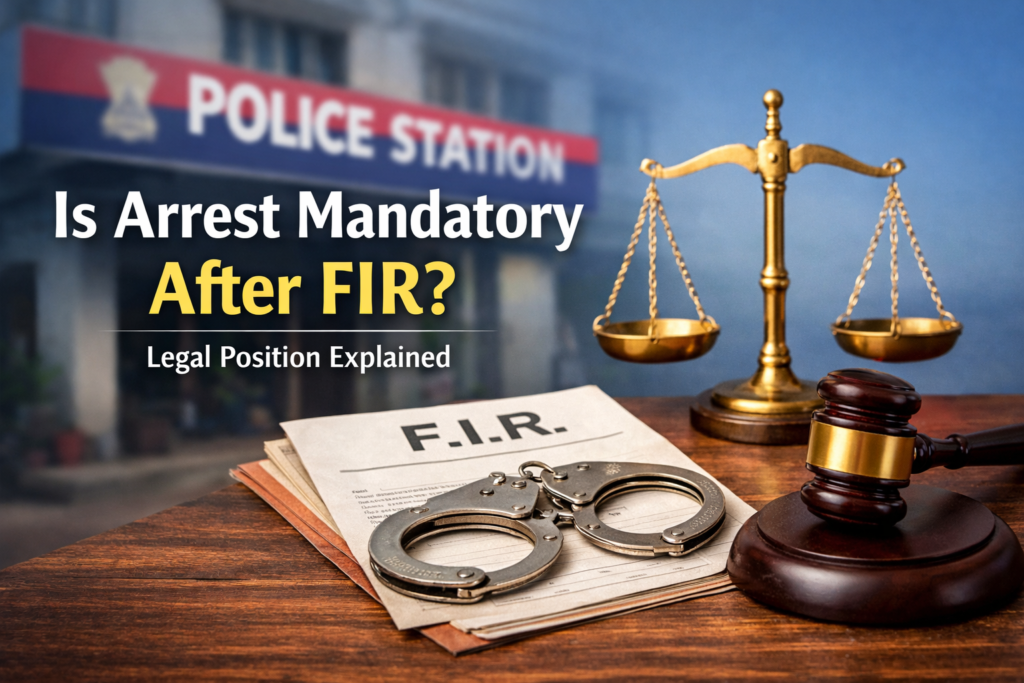
Illegal arrest is not just a violation of procedure — it is a direct attack on personal liberty.
Despite repeated court warnings, complaints of arbitrary and unnecessary arrests continue to surface across India.
Many people wrongly believe that once arrested, there is no remedy.
The law says otherwise.
This article explains what constitutes an illegal arrest, what compensation and remedies are available, and how courts view such violations.
Information is based on constitutional principles, criminal procedure law, and publicly reported judicial trends.
What Is an Illegal Arrest?
An arrest becomes illegal when it is made:
- Without legal justification
- Without following mandatory procedure
- Without necessity or recorded reasons
- As a pressure or harassment tactic
Arrest is not meant to punish, threaten, or extract settlements.
Common Examples of Illegal Arrest
- Arrest without warrant in non-serious offences without justification
- Arrest despite cooperation with investigation
- Custody taken to force compromise
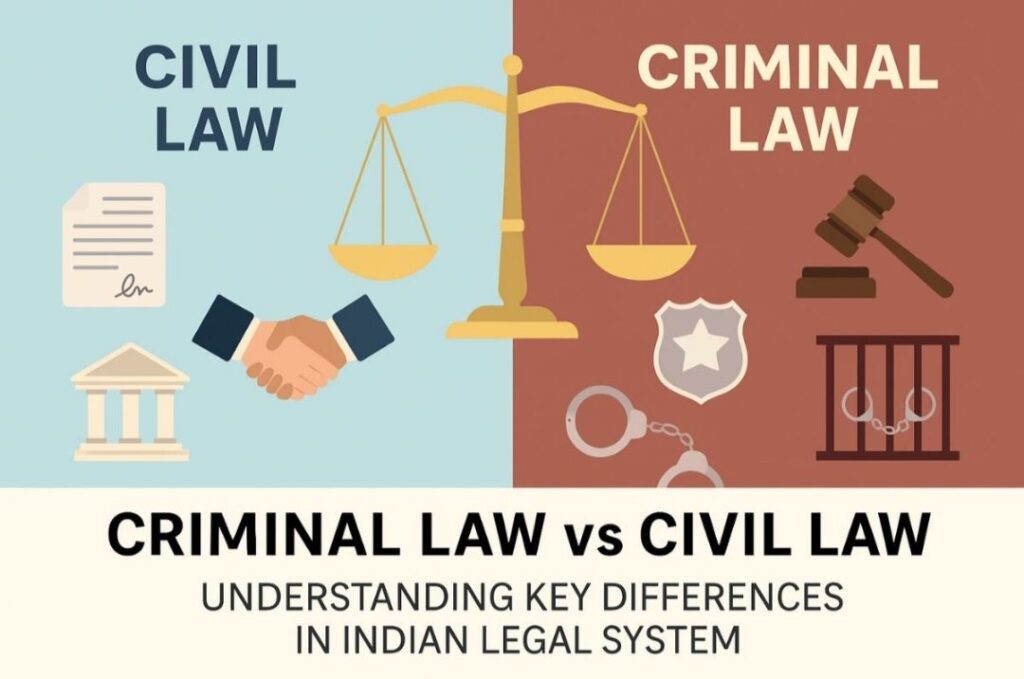
- Arrest in civil disputes dressed as criminal cases
Courts have repeatedly held such practices to be unlawful.
Constitutional Protection Against Illegal Arrest
The Indian Constitution guarantees:
- Protection of life and personal liberty
- Due process before deprivation of liberty
- Right against arbitrary detention
Any arrest violating these principles invites judicial scrutiny.
What Remedies Are Available After an Illegal Arrest?
1️⃣ Immediate Judicial Remedy
The arrested person can challenge the legality of arrest before the appropriate court.
2️⃣ Bail and Release
Courts often take illegal arrest into account while granting bail.
3️⃣ Compensation for Illegal Detention
Courts have recognised monetary compensation as a remedy where liberty is unlawfully curtailed.
4️⃣ Departmental Action Against Police
Illegal arrest can invite internal disciplinary proceedings.
Compensation for Illegal Arrest – Court’s Approach
Judicial compensation is not automatic, but courts consider:
- Duration of illegal detention
- Mental and reputational harm
- Absence of lawful justification
Compensation is meant to acknowledge violation of fundamental rights.
Police Accountability and Legal Consequences
Illegal arrests can expose police officers to:
- Departmental inquiry
- Adverse judicial remarks
- Personal liability in extreme cases
Courts have increasingly emphasised accountability over blind discretion.
Illegal Arrest vs Procedural Lapse
Not every procedural mistake makes an arrest illegal.
However, arrests made without necessity, justification, or legal backing cross the constitutional line.
Related Legal Guidance
-
Arrest Without Warrant in Non-Serious Offences – What the Law Allows
-
Police Station Call Without Notice – Legal Rights Explained
-
Police Asking for Compromise in Criminal Case – Legal Reality
Why This Issue Matters
Illegal arrests:
- Erode trust in the justice system
- Cause irreversible personal damage
- Undermine constitutional governance
Courts have made it clear that liberty cannot be sacrificed for convenience.
Key Takeaway
Illegal arrest is not beyond remedy.
The law provides protection, judicial oversight, and compensation where liberty is unlawfully taken.
Awareness is the first step toward accountability.
Need legal guidance? You may choose to connect for general consultation and information.
▶ Request Online Consultation
▶ Request WhatsApp Consultation
Disclaimer: This article is for general legal information and awareness purposes only. It does not constitute legal advice or solicitation. Communication is purely informational, in compliance with Bar Council of India Rule 36.