This article is published by The Legal Warning India and written by Advocate Uday Singh.
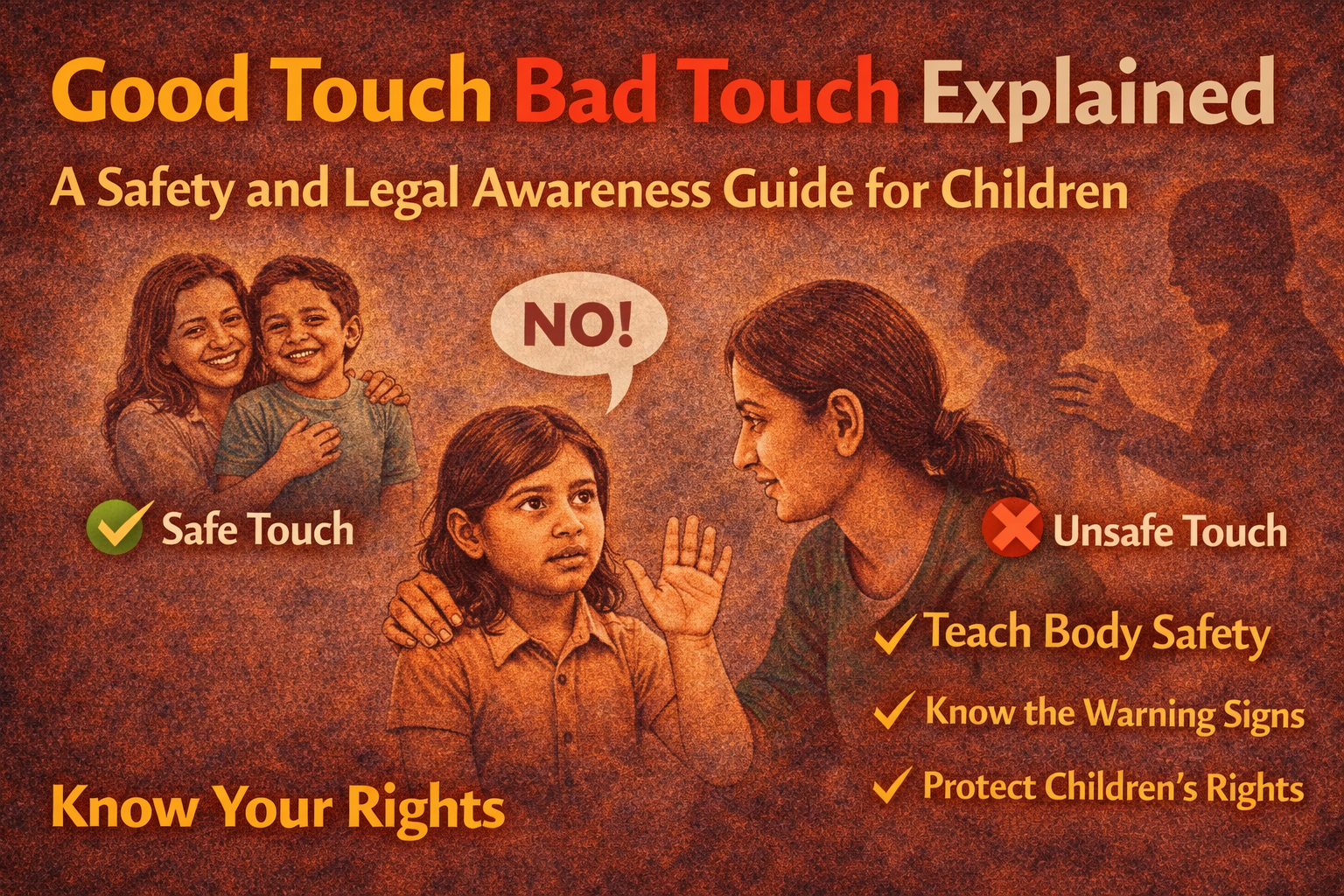
Good Touch Bad Touch Explained – A Legal and Safety Guide for Parents and Children
Incidents involving child abuse often reveal a disturbing reality — many children are unable to identify or report inappropriate behaviour because they do not understand the difference between good touch and bad touch.
Teaching children about good touch and bad touch is not about fear. It is about safety, awareness, and empowerment.
This article explains the concept clearly, responsibly, and legally, so that parents, guardians, and educators can protect children without creating panic.
Information is based on child protection principles, legal awareness, and publicly accepted safety guidelines.
What Is Good Touch?
A good touch is a touch that makes a child feel:
- Safe
- Cared for
- Comforted
Examples of good touch include:
- A parent hugging a child with love
- A doctor examining a child in the presence of parents
- A teacher guiding a child in a respectful manner
Good touch never causes fear, confusion, or discomfort.
What Is Bad Touch?
A bad touch is any touch that:
- Makes a child uncomfortable or scared
- Is forced or unwanted
- Involves private body parts
- Is asked to be kept a secret
Bad touch can be done by anyone — known or unknown.
Important: A bad touch is wrong even if the person is a relative, neighbour, teacher, or family friend.
Why Children Often Do Not Report Bad Touch
Children may remain silent because:
- They are confused or scared
- The offender threatens them
- The offender is someone they trust
- They fear being blamed or punished
This silence is why early education is crucial.
How to Teach Good Touch Bad Touch to Children
- Use simple, age-appropriate language
- Teach body safety rules calmly
- Encourage children to say “NO”
- Tell children they can always talk to trusted adults
Never shame or scare the child.
The Concept of “Safe Touch” and “Unsafe Touch”
Many experts prefer using the terms:
- Safe Touch – makes you feel okay
- Unsafe Touch – makes you feel uneasy
This helps children express feelings without confusion.
Legal Protection for Children in India
Indian law provides strict protection to children against abuse.
Any inappropriate touch involving a child can attract serious legal consequences.
Child safety is not optional — it is a legal priority.
Role of Parents and Guardians
- Listen without judgement
- Believe the child
- Ensure safety first
- Seek lawful guidance when required
Ignoring early warning signs can increase harm.
Warning Signs That Should Not Be Ignored
- Sudden fear or withdrawal
- Change in behaviour
- Unexplained anxiety
- Reluctance to be around certain people
These signs require attention, not dismissal.
What Children Should Be Taught Clearly
- Their body belongs to them
- They have the right to say no
- No one should ask for secret touching
- Telling a trusted adult is always right
Related Legal Awareness
Key Takeaway
Good Touch Bad Touch education saves children from silence.
Awareness, communication, and trust are the strongest tools against child abuse.
Teaching safety is not teaching fear — it is teaching strength.
Need legal guidance? You may choose to connect for general consultation and information.
▶ Request Online Consultation
▶ Request WhatsApp Consultation
Disclaimer: This article is for general legal information and awareness purposes only. It does not constitute legal advice or solicitation. Communication is purely informational, in compliance with Bar Council of India Rule 36.