This article is published by The Legal Warning India and written by Advocate Uday Singh.
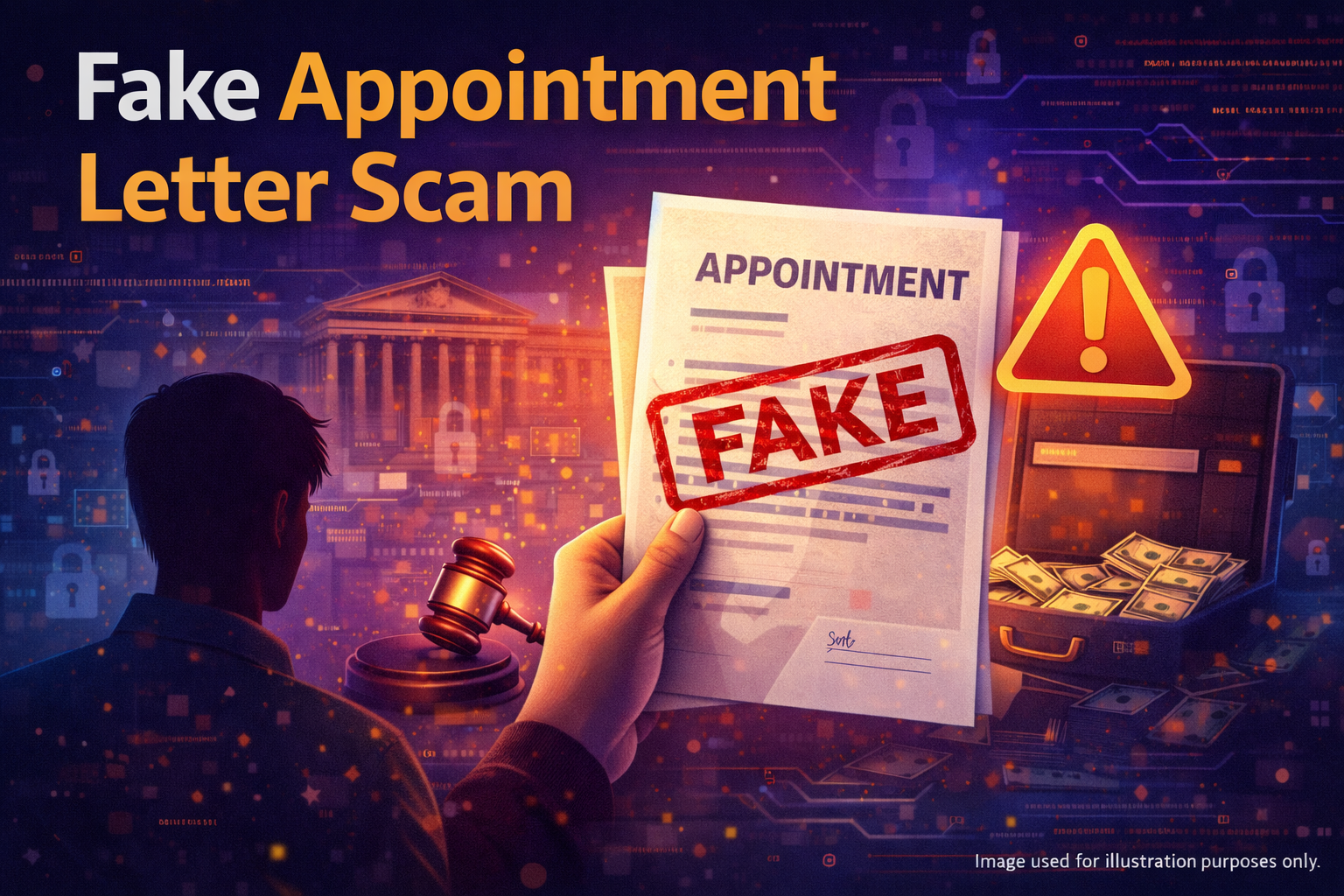
Fake Appointment Letter Scam – How It Works, Legal Consequences & Remedies in India
Across India, job seekers are increasingly becoming victims of a dangerous fraud known as the
Fake Appointment Letter Scam. In this scam, fraudsters issue forged appointment or joining letters
claiming selection in government departments, PSUs, or reputed private companies.
Victims often realize the fraud only after resigning from an existing job, paying money, or reporting
for a joining that never actually exists.
Information is based on reported fraud patterns and publicly available legal principles.
What Is a Fake Appointment Letter Scam?
A fake appointment letter scam occurs when:
- An appointment or joining letter is issued without any real recruitment
- The letter uses fake logos, seals, or forged signatures
- The accused claims influence or internal connections
- Money is demanded as processing, verification, or security fees
The letter looks official, but the job never existed.
Common Red Flags in Fake Appointment Letters
- No reference to official recruitment notification
- Email IDs from free domains instead of official domains
- Pressure to join immediately
- Demand for payment before joining
- No verification on official government or company website
If money is demanded, it is almost always a scam.
Is Fake Appointment Letter a Criminal Offence?
Yes. Such scams generally attract serious criminal liability, including:
- Cheating and deception
- Forgery of documents
- Using forged documents as genuine
- Criminal conspiracy (in group scams)
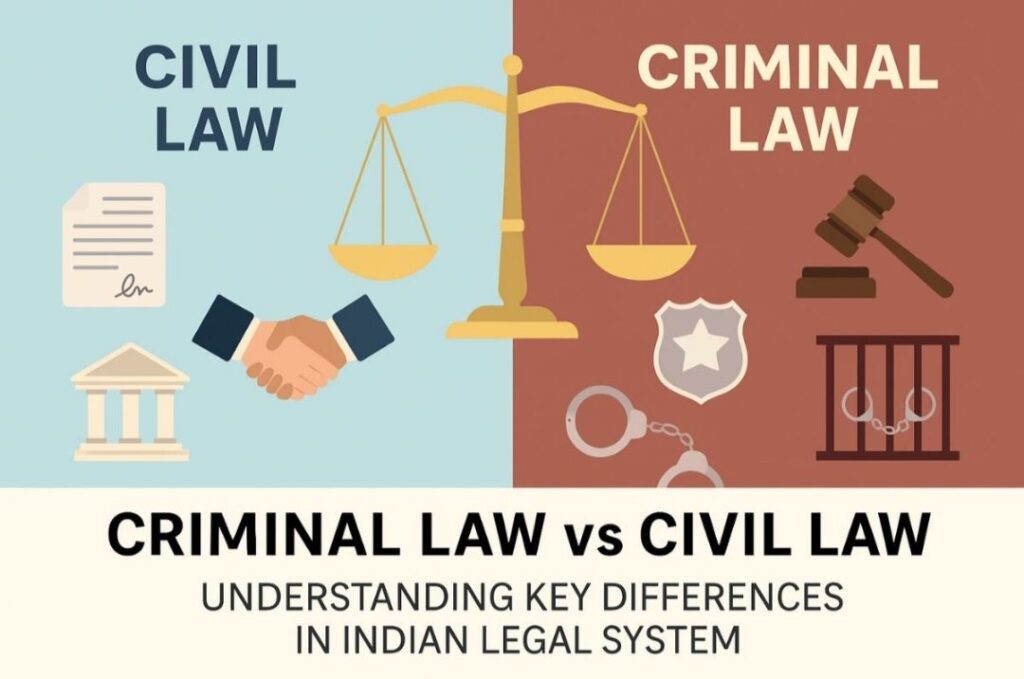
Courts treat fake appointment letter cases as serious fraud, not mere civil disputes.
Why Victims Delay Legal Action
- Fear of social embarrassment
- Hope that the job offer may still be genuine
- Pressure from the accused to “wait”
Delay often weakens recovery chances and allows fraudsters to disappear.
Immediate Legal Steps to Take
1️⃣ Secure All Evidence
- Appointment letter (PDF / print)
- WhatsApp chats, emails, call records
- Payment receipts or bank transactions
2️⃣ Verify the Letter Officially
Always cross-check with the official website or HR department of the concerned organization.
3️⃣ Lodge a Police Complaint / FIR
If forgery and cheating are evident, FIR is the correct legal step.
Can Money Be Recovered?
Recovery depends on:
- Speed of complaint
- Availability of bank transaction trail
- Whether accounts can be frozen
Early action significantly improves recovery chances.
Fake Appointment Letters & Online Job Scams
Many fake appointment letters are circulated through WhatsApp, Telegram, and email campaigns.
For understanding this pattern, read:
WhatsApp / Telegram Job Scam – Legal Action Guide
How Courts View Fake Appointment Letter Cases
Courts examine:
- Whether the accused had authority to issue the letter
- Whether forged seals or signatures were used
- Whether money was taken under false promise
If deception is established from the beginning, criminal prosecution is sustained.
How to Protect Yourself from Such Scams
- Never trust appointment letters received via WhatsApp
- Verify recruitment notifications independently
- Never pay for job confirmation
- Check official email domains carefully
Related Legal Guidance
Conclusion
A fake appointment letter is not a mistake – it is a calculated fraud.
Early verification, timely complaint, and proper legal action are the only ways to prevent further damage
and hold fraudsters accountable.
Need legal guidance? You may choose to connect for general consultation and information.
▶ Request Online Consultation
▶ Request WhatsApp Consultation
Disclaimer: This article is for general legal information and awareness purposes only. It does not constitute legal advice or solicitation. Communication is purely informational, in compliance with Bar Council of India Rule 36.