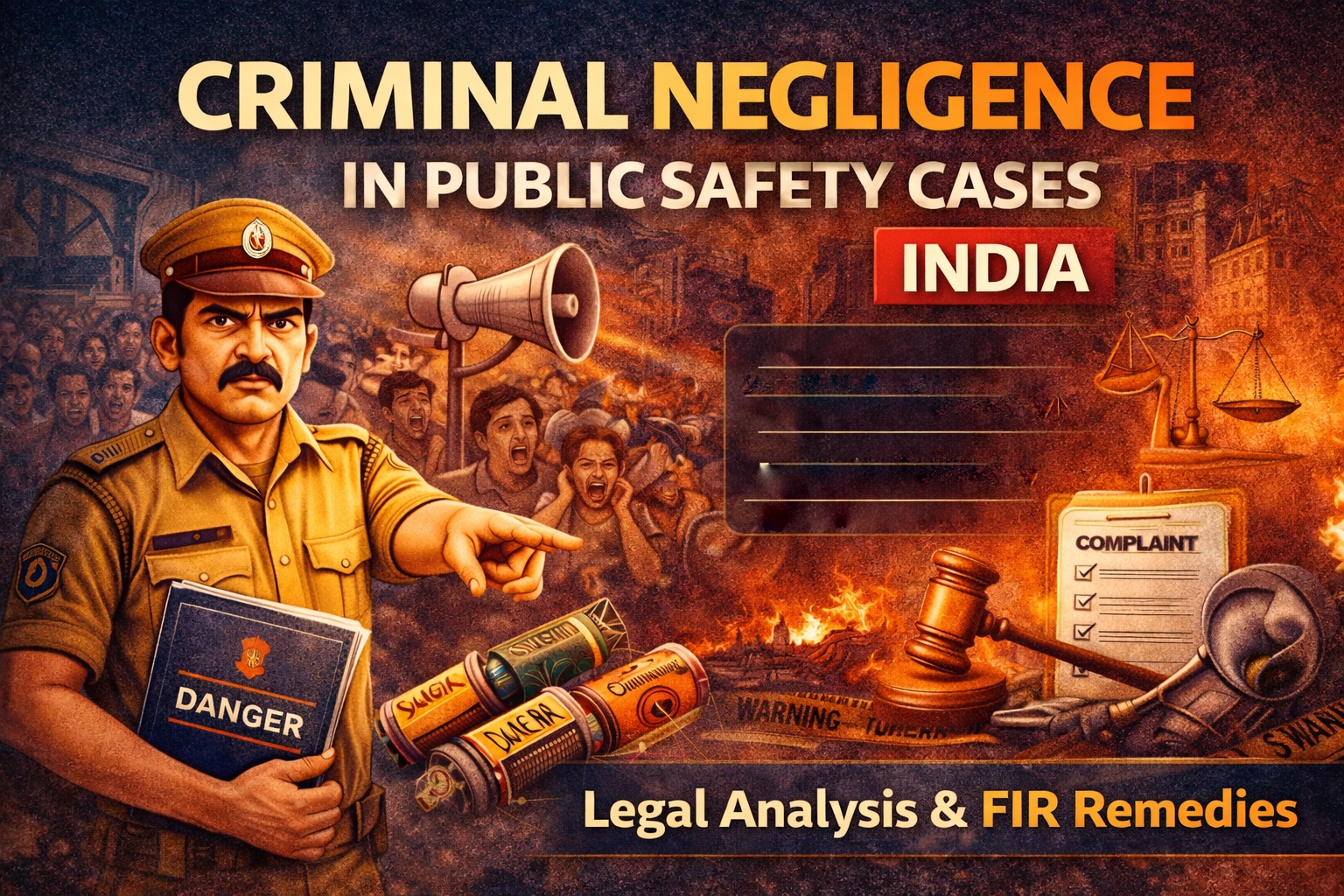
Criminal Negligence in Public Safety Cases in India: Legal Analysis, Statistics & Accountability
This article is published by The Legal Warning India and written by Advocate Uday Singh for legal awareness and public safety education purposes only.
Introduction: Why Criminal Negligence in Public Safety Matters
Criminal negligence in public safety cases has emerged as a serious legal concern in India. From road-side open pits and collapsed bridges to fire safety lapses and municipal failures, courts are increasingly treating such incidents not as mere accidents but as punishable criminal acts where gross negligence is established.
With the replacement of the Indian Penal Code (IPC) by the Bharatiya Nyaya Sanhita (BNS), the legal framework governing negligence has become more structured, particularly in cases involving public authorities, contractors, and institutions responsible for public safety.
What is Criminal Negligence under Indian Law?
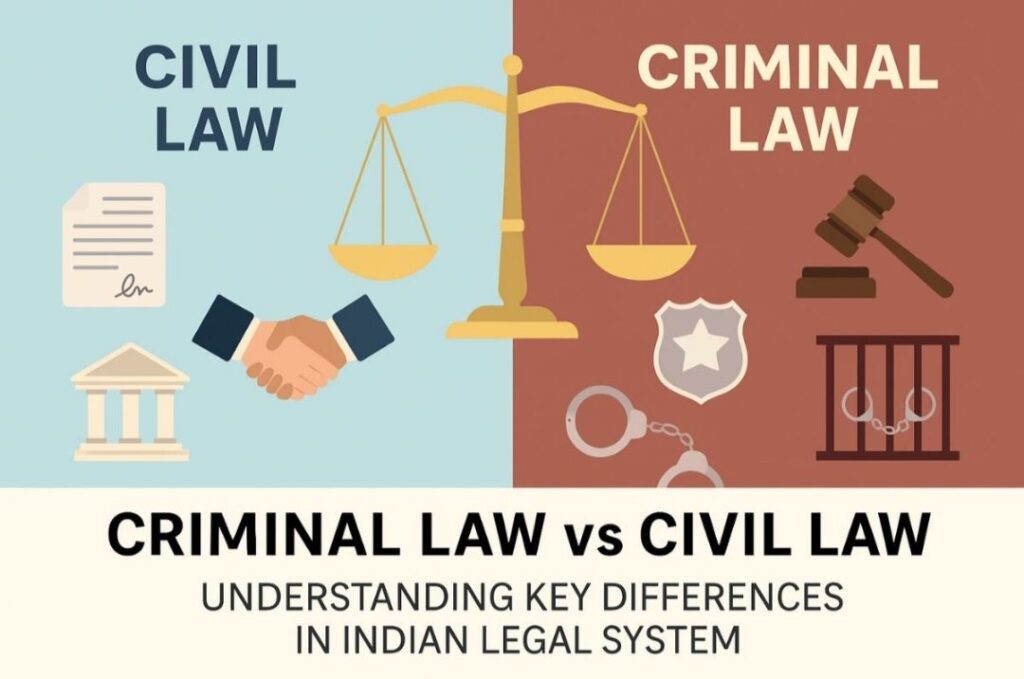
Criminal negligence refers to an act or omission where a person or authority fails to exercise reasonable care, resulting in danger to human life or public safety. Unlike civil negligence, criminal negligence attracts penal consequences.
- Absence of intention
- Existence of a legal duty of care
- Gross or reckless disregard for human life
- Direct causal connection with injury or death
Legal Provisions: IPC vs BNS (Verified)
Earlier Position under IPC
Section 304A IPC dealt with causing death by negligence. It was commonly invoked in cases of road accidents, infrastructure failures, medical negligence (rarely), and construction collapses.
Current Law under Bharatiya Nyaya Sanhita, 2023
Section 106 BNS now governs causing death by negligence. The provision retains the core principle of IPC Section 304A but expands judicial scrutiny to include institutional and systemic negligence.
Courts now examine whether authorities failed in planning, supervision, or preventive action despite foreseeable risks.
Public Safety Negligence: Major Categories in India
1. Road & Infrastructure Failures
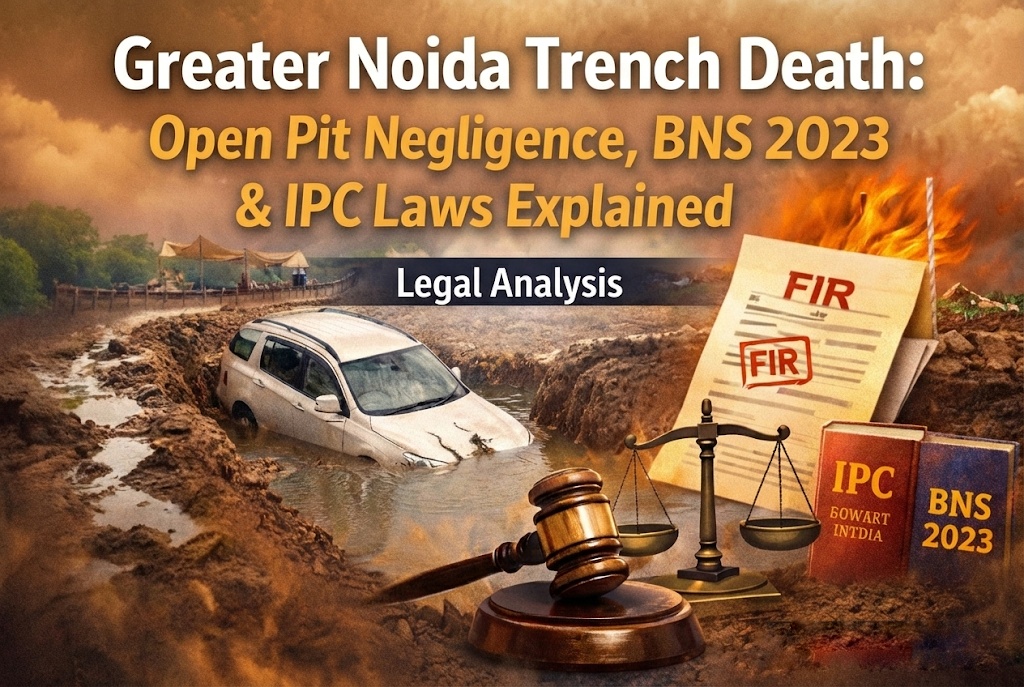
Uncovered manholes, poorly designed roads, lack of barricading, and absence of warning signs have resulted in multiple fatal incidents across Indian cities.
Such cases increasingly attract prosecution under Section 106 BNS where municipal or contractor negligence is established.
2. Building Collapse & Construction Negligence
Illegal constructions, use of substandard material, and negligent approvals by authorities have led to criminal liability of builders, engineers, and sanctioning officers.
3. Fire Safety Violations
Hospitals, coaching centres, factories, and commercial buildings operating without valid fire safety compliance have been the subject of criminal cases after fatal incidents.
4. Crowd & Event Management Failures
Stampedes and overcrowding at religious, political, or public events often result in criminal proceedings where lack of planning and disregard for safety norms is proven.
Can Government Authorities Be Criminally Prosecuted?
Yes. Indian courts have clarified that criminal negligence does not enjoy blanket immunity merely because the accused is a government official. Where a specific duty exists and failure results in loss of life, criminal liability may arise.
While sanction may be required for prosecution in certain cases, registration of FIR cannot be denied solely on the ground of official position.
Judicial Principles Applied by Courts
- Gross Negligence Test: Simple carelessness is insufficient
- Foreseeability: Risk must be reasonably predictable
- Causal Link: Clear connection between negligence and harm
- No Strict Liability: Each case judged on its facts
Statistical & Ground Reality in India
National crime and accident data consistently reveal that a significant number of deaths occur annually due to infrastructure failure, unsafe public spaces, and regulatory lapses.
With increasing public awareness and media scrutiny, FIRs are now more frequently registered against responsible authorities, reflecting a shift toward accountability.
FIR, Remedies & Public Action
Victims or families affected by public safety negligence may:
- File FIR under Section 106 BNS
- Seek departmental inquiry
- Claim compensation through civil remedies
- Approach High Courts via PIL for systemic reforms
For understanding FIR procedure in public-related offences, readers may also refer to:
Do Not Use Chinese Manjha – Public Safety & Legal Analysis
Related Legal Guidance
Deepfake Video & Voice Scam: Criminal Negligence in Digital Public Safety
Legal Accountability of Authorities: When Negligence Becomes Punishable
Conclusion
Criminal negligence in public safety cases is no longer treated as an unfortunate accident. With the introduction of BNS and evolving judicial standards, Indian law is increasingly holding individuals, institutions, and authorities accountable for gross failures that endanger human life.
The focus is gradually shifting from post-incident compensation to preventive responsibility and criminal accountability.
Disclaimer: This article is based on legal provisions, judicial trends, and publicly available information. It is intended solely for legal awareness and educational purposes.