This article is published by The Legal Warning India and written by Advocate Uday Singh.
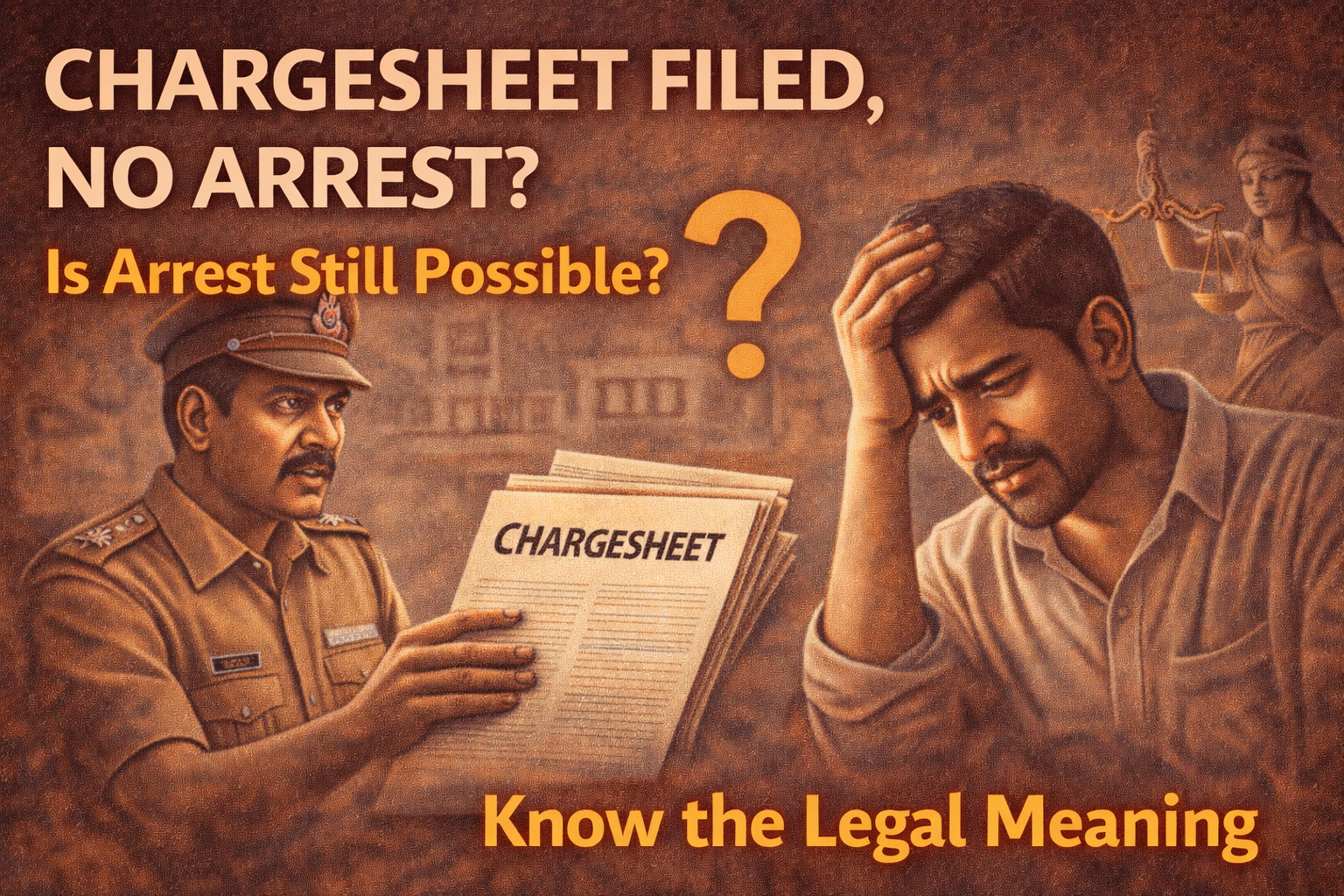
Chargesheet Filed but No Arrest – What It Means Under Indian Law
For many people, filing of a chargesheet sounds more serious than an FIR.
When a chargesheet is filed but no arrest is made, confusion and fear increase:
- “If chargesheet is filed, why was there no arrest?”
- “Does this mean arrest can happen anytime?”
- “Is the case already strong against me?”
In reality, arrest is not mandatory even after a chargesheet is filed.
Chargesheet and arrest serve different legal purposes.
This article explains what it legally means when a chargesheet is filed but no arrest is made.
Information is based on criminal procedure law, investigation practice, and settled legal principles.
What Is a Chargesheet?
A chargesheet is a formal report filed by police before the court after completing investigation.
It contains:
- Details of allegations
- List of accused persons
- Evidence collected during investigation
- Opinion of police on prosecution
Filing of chargesheet means investigation is complete, not that arrest is compulsory.
Is Arrest Mandatory After Filing a Chargesheet?
No.
Indian criminal law does not require police to arrest an accused merely because a chargesheet has been filed.
Arrest depends on necessity, such as:
- Risk of absconding
- Non-cooperation with investigation
- Possibility of influencing witnesses
- Requirement of custodial interrogation
If none of these factors exist, police may choose not to arrest.
Why Police File Chargesheet Without Arrest
- Accused cooperated during investigation
- Offence does not require custody
- Case is document-based
- Dispute has civil elements
This approach is legally recognised and prevents unnecessary detention.
Can Arrest Still Happen After Chargesheet?
Yes.
Even after filing a chargesheet, arrest may occur if:
- Accused violates court conditions
- Fails to appear when summoned
- New facts emerge during trial
Chargesheet without arrest is not a permanent protection.
Chargesheet Filed but Summons Issued – What Does It Mean?
Often, instead of arrest, the court issues:
- Summons
- Bailable warrants (in some cases)
This indicates that the court expects voluntary appearance.
Non-compliance can change the situation.
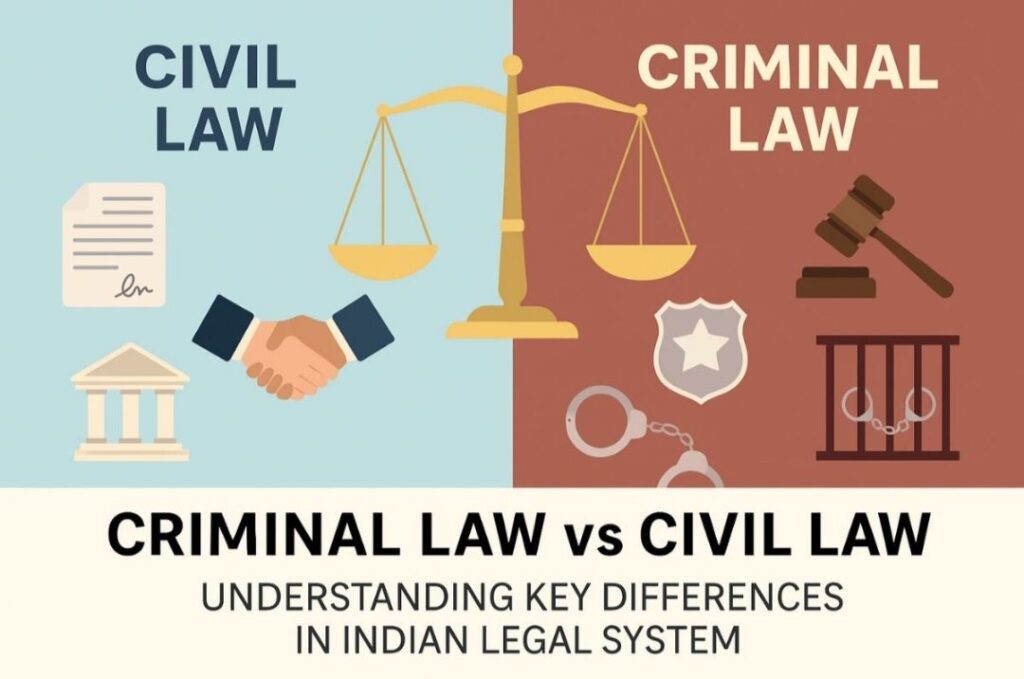
Civil Dispute Converted into Criminal Case
Many chargesheets are filed in disputes that are primarily civil in nature.
Courts have repeatedly cautioned against criminalisation of civil disputes.
Farzi Civil Case Mein FIR Kab Ho Sakti Hai? – Legal Reality Explained
Such cases often proceed without arrest.
Police Calls or Pressure After Chargesheet
After filing chargesheet, police may still contact parties for procedural reasons.
Know your rights if police call you without notice:
Police Station Call Without Notice – Is It Legal? Your Rights Explained
Understanding procedure avoids panic-driven mistakes.
Police Suggesting Compromise Even After Chargesheet
In some cases, police may suggest settlement even after filing chargesheet.
It is important to understand the legal limits of such suggestions:
Police Asking for Compromise in Criminal Case – Legal Reality
Only courts can legally approve compromise, where law permits.
What Should an Accused Do If Chargesheet Is Filed?
- Do not assume arrest is inevitable
- Attend court proceedings regularly
- Preserve all documents
- Avoid ignoring summons
Compliance and awareness are key.
Key Takeaway
Chargesheet filing does not automatically require arrest.
Arrest is based on necessity, not on filing of documents.
Understanding this distinction protects against fear and misinformation.
Need legal guidance? You may choose to connect for general consultation and information.
▶ Request Online Consultation
▶ Request WhatsApp Consultation
Disclaimer: This article is for general legal information and awareness purposes only. It does not constitute legal advice or solicitation. Communication is purely informational, in compliance with Bar Council of India Rule 36.