This article is published by The Legal Warning India and written by Advocate Uday Singh.
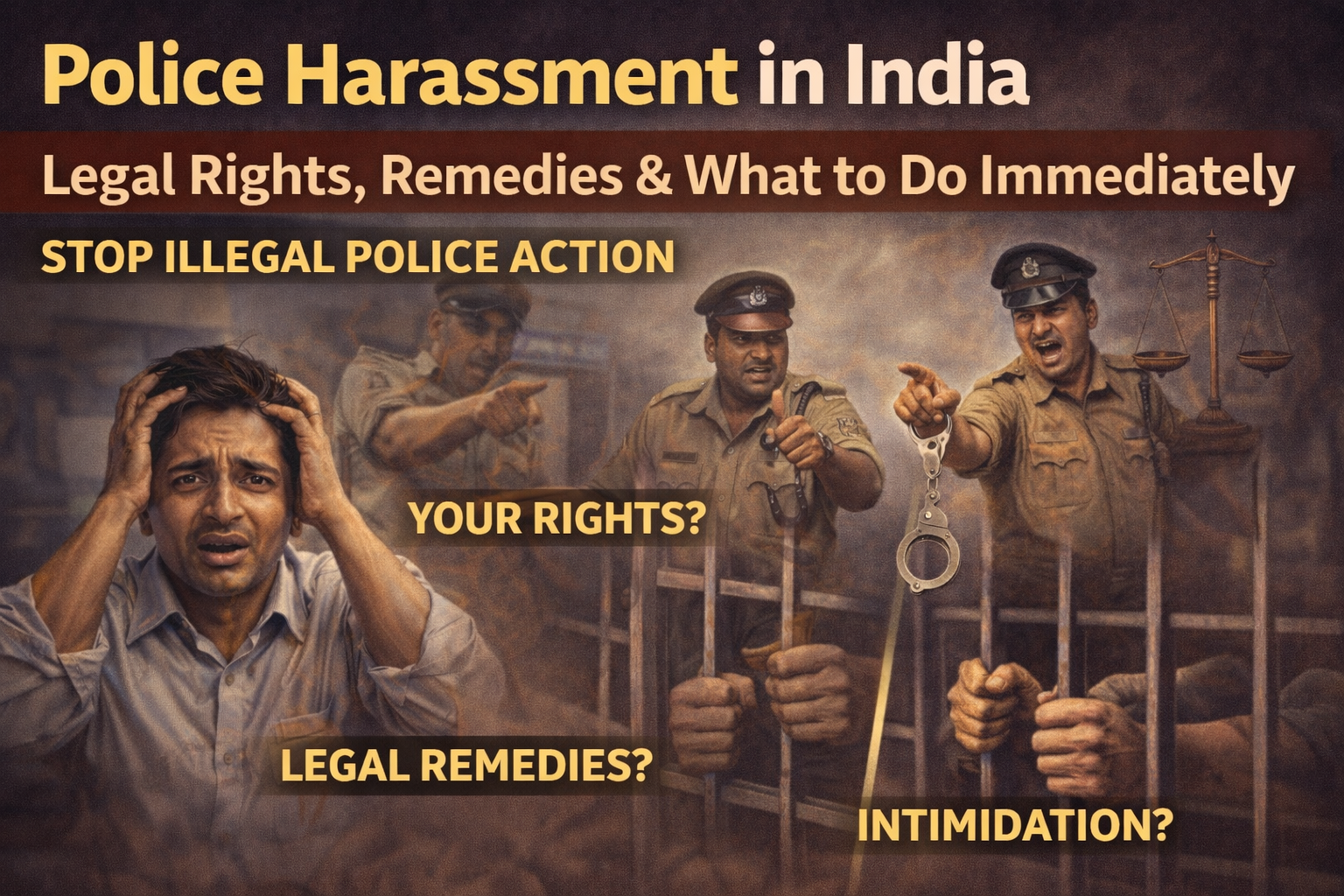
Police Harassment in India – Legal Rights, Remedies & What to Do Immediately
Many ordinary citizens face police harassment despite having committed no crime.
Common situations include:
- Repeated police calls without written notice
- Pressure to visit police station unnecessarily
- Threats of arrest without legal basis
- Verbal abuse or intimidation
- Misuse of FIR or inquiry process
Police harassment is not just a personal inconvenience — it can be a serious violation of fundamental rights.This article explains what legally amounts to police harassment, what the law says, and what remedies are available to protect yourself.Information is based on Supreme Court guidelines, constitutional protections, and publicly available criminal law principles.
What Is Police Harassment?
Police harassment occurs when police officers:
- Act beyond their legal authority
- Use intimidation instead of lawful procedure
- Force cooperation without due process
- Misuse arrest, FIR, or inquiry powers
Law enforcement powers are regulated — not absolute.
Common Forms of Police Harassment
- Calling someone to police station without written notice
- Threatening arrest to force settlement or silence
- Keeping people waiting for hours without reason
- Questioning without registering FIR or inquiry
- Targeting individuals due to influence or pressure
Such actions are often challenged in courts.
What the Law Says About Police Powers
Indian law clearly states:
- Police cannot arrest arbitrarily
- Summons or notice must follow legal procedure
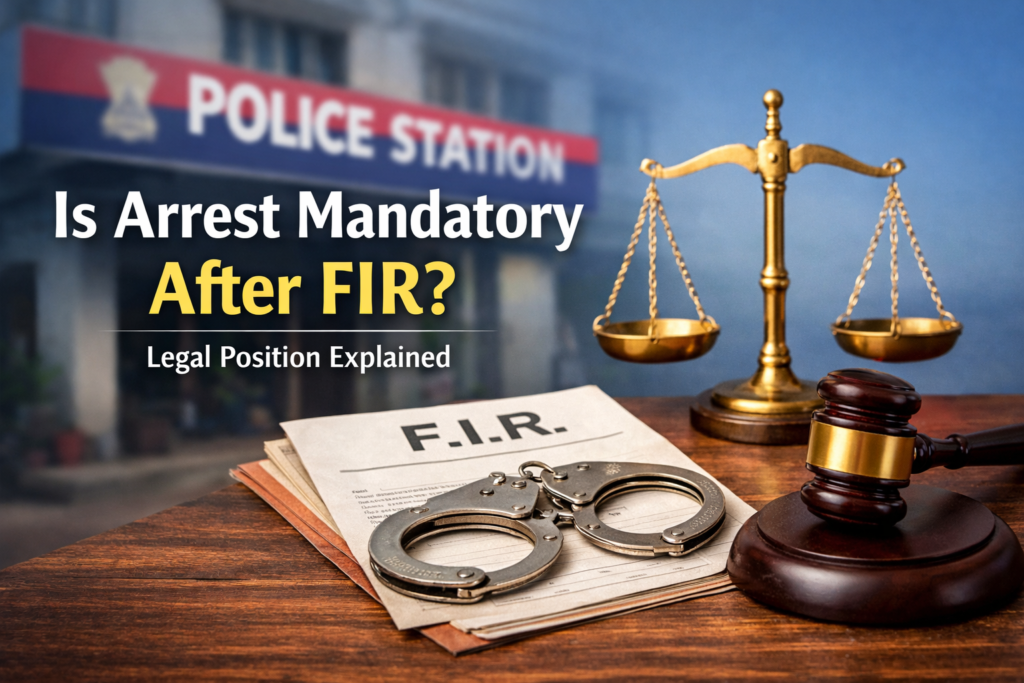
- Arrest is not mandatory in every FIR
- Personal liberty is protected under Article 21 of the Constitution
Supreme Court guidelines restrict misuse of arrest and police power.
When Police Conduct Becomes Illegal
Police action may become illegal when:
- No cognizable offence is disclosed
- Arrest is threatened without grounds
- Investigation is biased or malicious
- Civil disputes are given criminal colour
In such cases, courts often intervene.
Your Legal Rights During Police Interaction
- Right to remain silent (except lawful questioning)
- Right to consult a lawyer
- Right against illegal detention
- Right to dignity and fair treatment
You are not required to comply with illegal demands.
What You Should Do If You Face Police Harassment
- Do not panic or argue emotionally
- Ask for written notice or legal basis
- Document calls, visits, and interactions
- Avoid giving statements without legal advice
- Consult a criminal lawyer at an early stage
Calm documentation weakens unlawful pressure.
Legal Remedies Against Police Harassment
- Approaching senior police officers
- Filing a written complaint
- Seeking protection from the High Court
- Challenging illegal FIR or investigation
- Claiming constitutional remedies in appropriate cases
Court oversight acts as a check on misuse of police power.
Related Legal Awareness Guides
- Police Added Your Name in FIR? Legal Remedies Explained
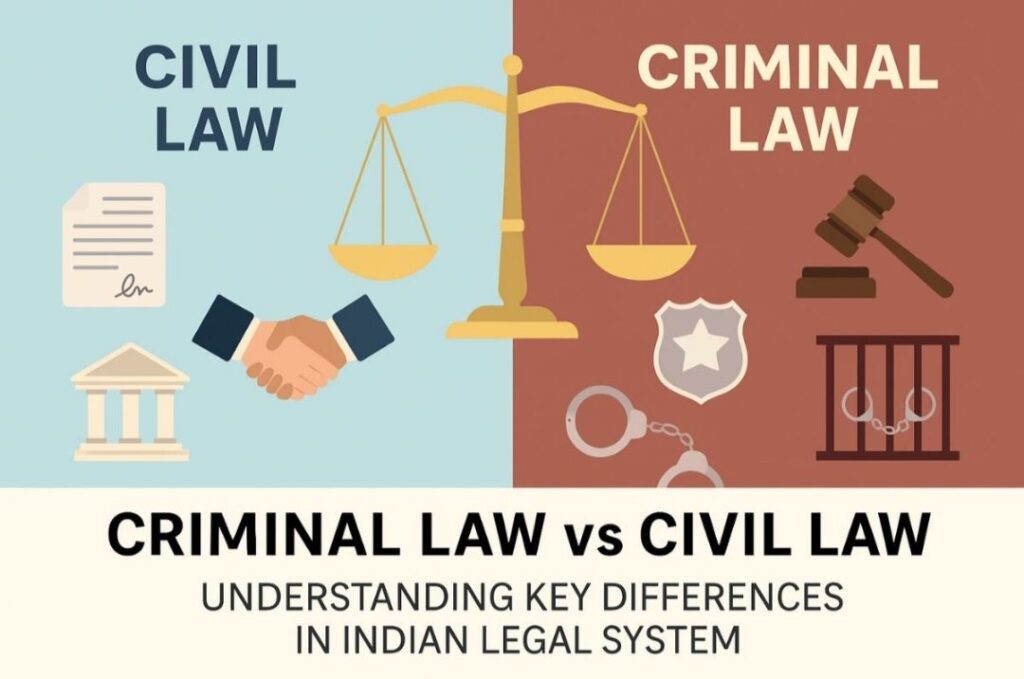
- Difference Between Civil Dispute and Criminal Case
When Immediate Legal Help Is Important
Urgent legal advice is necessary if:
- You fear arrest
- Your name appears in FIR without basis
- Police are forcing repeated station visits
- Criminal law is being misused to harass
Early legal strategy often prevents escalation.
Need Legal Guidance?
If you are facing police harassment or misuse of criminal process, understanding your rights and legal options can protect your liberty and reputation.
▶ Request Online Consultation▶ WhatsApp Consultation Request
Disclaimer: This article is for general legal information and awareness purposes only. It does not constitute legal advice or solicitation. Communication is purely informational, in compliance with Bar Council of India Rule 36.