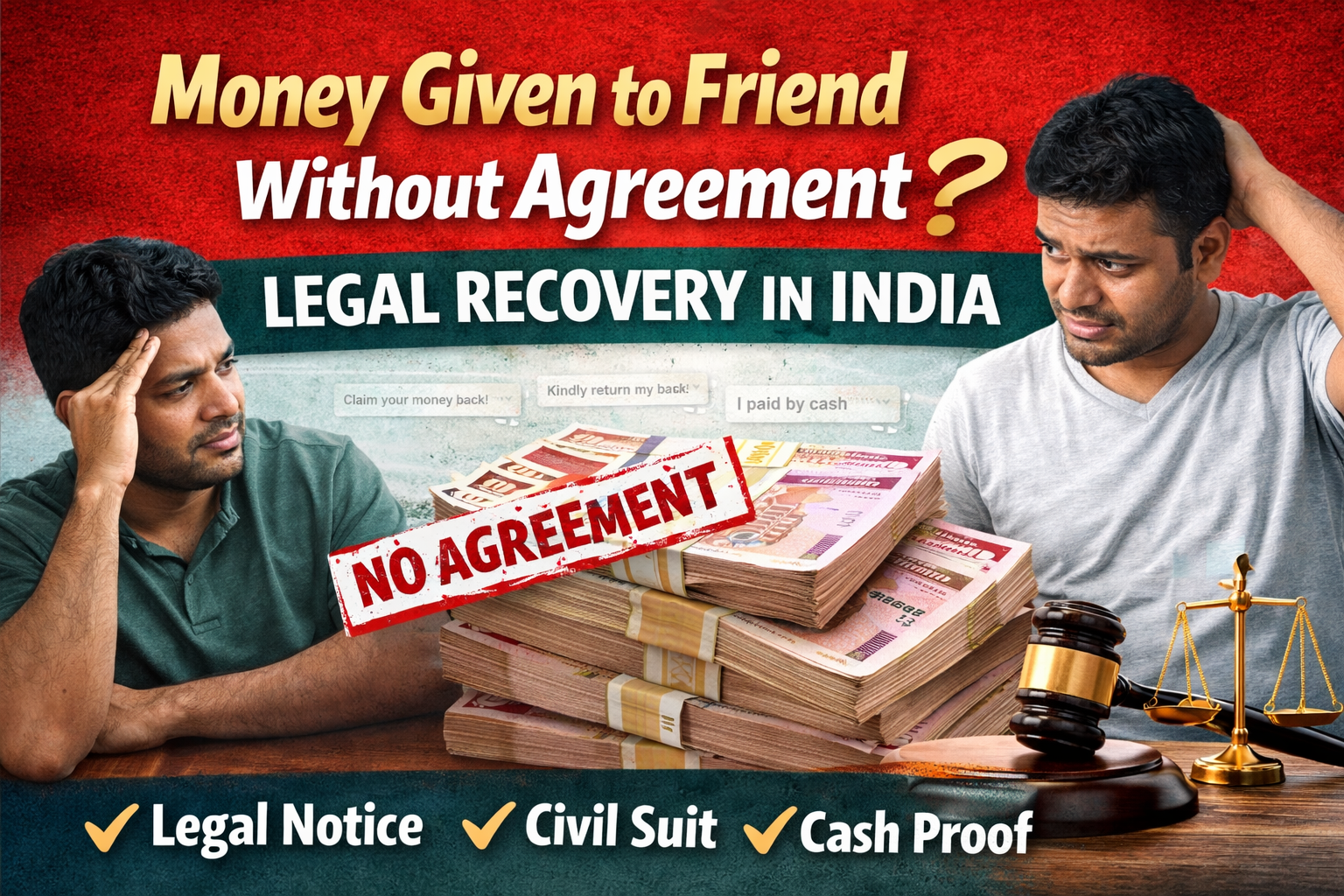
Money Given to Friend Without Agreement – How to Recover Legally in India
This article is published by The Legal Warning India and written by Advocate Uday Singh.
In India, money disputes between friends, relatives, and known persons are extremely common. A large number of people give money as a friendly loan without executing any written agreement, receipt, or promissory note. Initially, trust is high. But when repayment time comes, excuses begin, calls stop, and relationships break down.
The most common question people ask is:
“Maine friend ko paise diye the, koi agreement nahi hai – kya main legally paise recover kar sakta hoon?”
The answer is YES. Indian law does not say that money given without agreement cannot be recovered. Courts look at the intention, conduct, and surrounding circumstances.
This article explains, step by step, how money given to a friend without agreement can be legally recovered in India.
What Is a Friendly Loan?
A friendly loan is money given:
- Without formal loan agreement
- Based on trust or personal relationship
- Usually without interest
- Often in cash or bank transfer
Friendly loans are legally recognised. The problem arises when repayment is denied.
Is Giving Money Without Agreement a Mistake?
Legally, it is not a crime or illegal. But it becomes a practical risk.
People usually avoid agreement because:
- They trust the borrower
- They don’t want to offend
- They think “friend hai, wapas de dega”
Unfortunately, most money recovery cases start exactly like this.
Is Oral Loan Valid in Law?
Yes. Under Indian Contract Act, a contract does not need to be written to be valid.
An oral loan is valid if:
- Money was actually given
- There was intention to repay
- Loan was not a gift
The challenge is proving these facts.
How to Prove Money Given Without Agreement?
Courts rely on cumulative evidence, not just one document.
1. Bank Transfer / UPI Records
Bank statements showing transfer to the borrower’s account are strong evidence.
2. WhatsApp Chats / Messages
Messages discussing:
- Request for money
- Promise to return
- Time for repayment
are valid electronic evidence.
3. Call Recordings (If Legal)
Recorded calls admitting loan can support the case.
4. Witness Evidence
Any person who knows about the loan transaction can be examined as a witness.
5. Partial Repayment Proof
If borrower returned even a small amount, it confirms loan existence.
6. Conduct of Borrower
Repeated excuses, admissions, or delay tactics are considered by courts.
What If Money Was Given in Cash?
Cash loans are harder to prove but not impossible.
Courts look for:
- Withdrawal entries from lender’s bank
- Messages acknowledging receipt
- Witness presence during payment
- Borrower’s financial conduct
Important: Large unexplained cash loans may raise income-tax issues.
First Legal Step – Sending Legal Notice
The first and most important step is sending a legal notice.
A legal notice should:
- Demand repayment within time
- Mention loan details
- Warn of legal action
Many disputes settle at this stage itself.
Related Reading:
Why Legal Notice Matters Before Court Case
What If Friend Ignores Legal Notice?
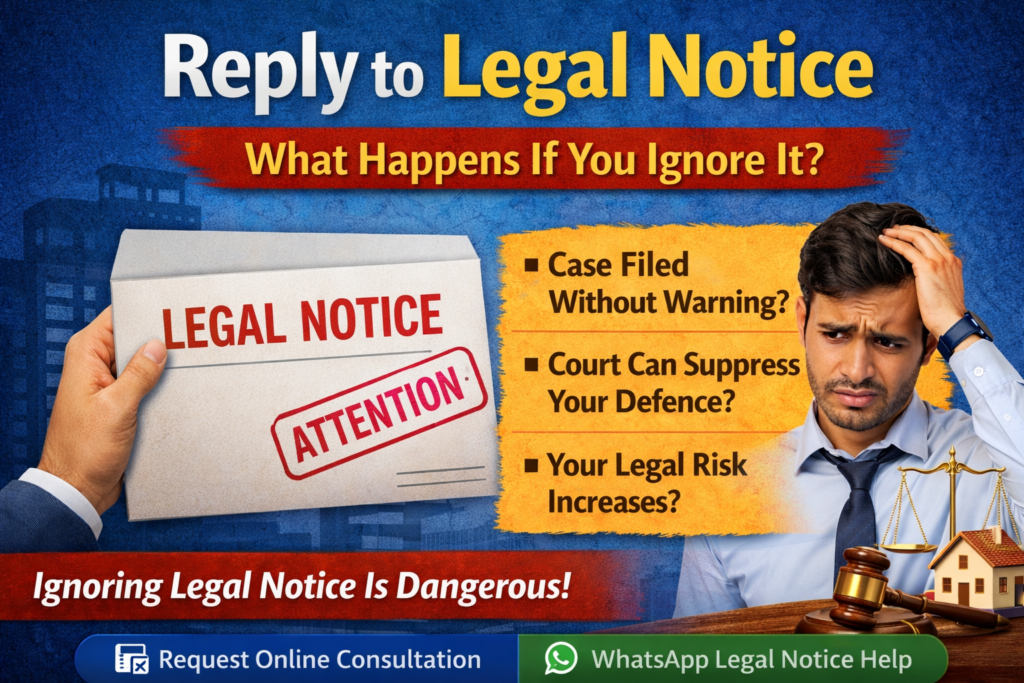
Ignoring a legal notice is dangerous for the borrower.
- Strengthens lender’s case
- Shows dishonest intention
- Helps claim interest & costs
Court may draw adverse inference.
Legal Remedies Available for Money Recovery
1. Civil Suit for Recovery of Money
A civil recovery suit can be filed under CPC for:
- Principal amount
- Interest
- Legal expenses
2. Summary Suit (Order 37 CPC)
If there is written acknowledgment, cheque, or promissory note, a summary suit is faster.
3. Cheque Bounce Case (If Applicable)
If borrower issued a cheque that bounced, criminal remedy may apply.
Can Criminal Case Be Filed for Friendly Loan?
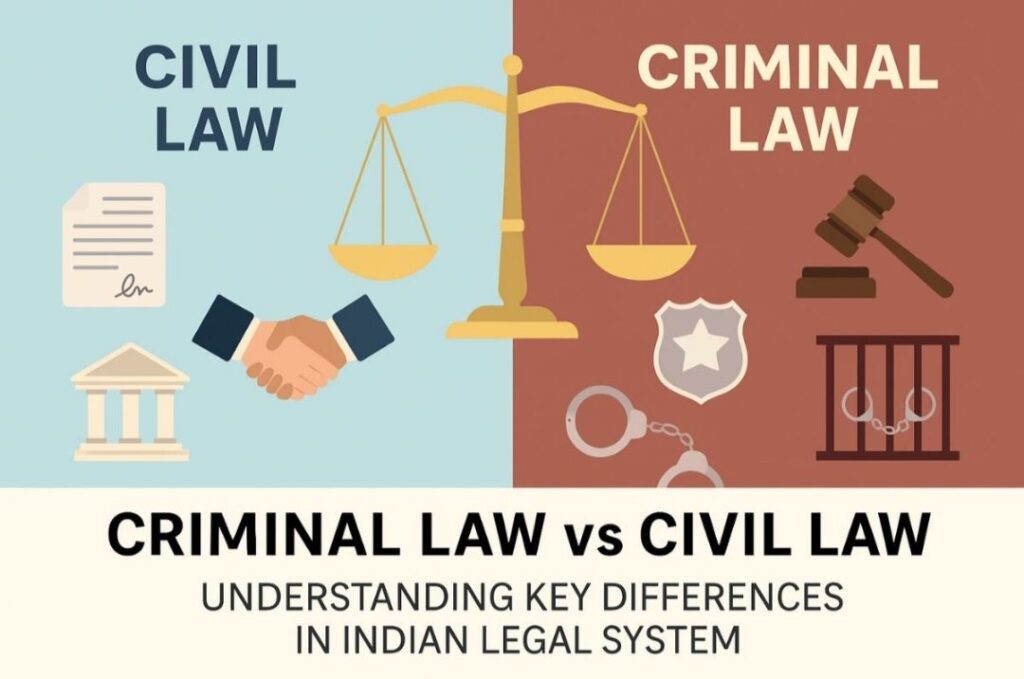
Pure money lending disputes are civil in nature.
Criminal action may apply only if:
- Cheating was intention from start
- False promise induced payment
Each case depends on facts.
Limitation Period – Do Not Delay
Money recovery suits must be filed within limitation period (generally 3 years).
Delay can defeat even a genuine claim.
Common Mistakes Lenders Make
- No legal notice
- Only verbal follow-ups
- Accepting vague promises
- Not preserving chats
- Waiting indefinitely
Prevention Tips for Future
- Always use bank transfer
- Take written acknowledgment
- Avoid large cash loans
- Save communication records
Internal Reading (Recommended)
Frequently Asked Questions (FAQs)
Q. Is agreement mandatory to recover money?
No. Oral loan can also be proved.
Q. Can I charge interest?
Court may allow reasonable interest.
Q. Can friend deny everything?
Court examines evidence & conduct.
This article is for general legal information and awareness purposes only. It does not constitute legal advice or solicitation. Communication is purely informational, in compliance with Bar Council of India Rule 36.