This article is published by The Legal Warning India and written by Advocate Uday Singh.
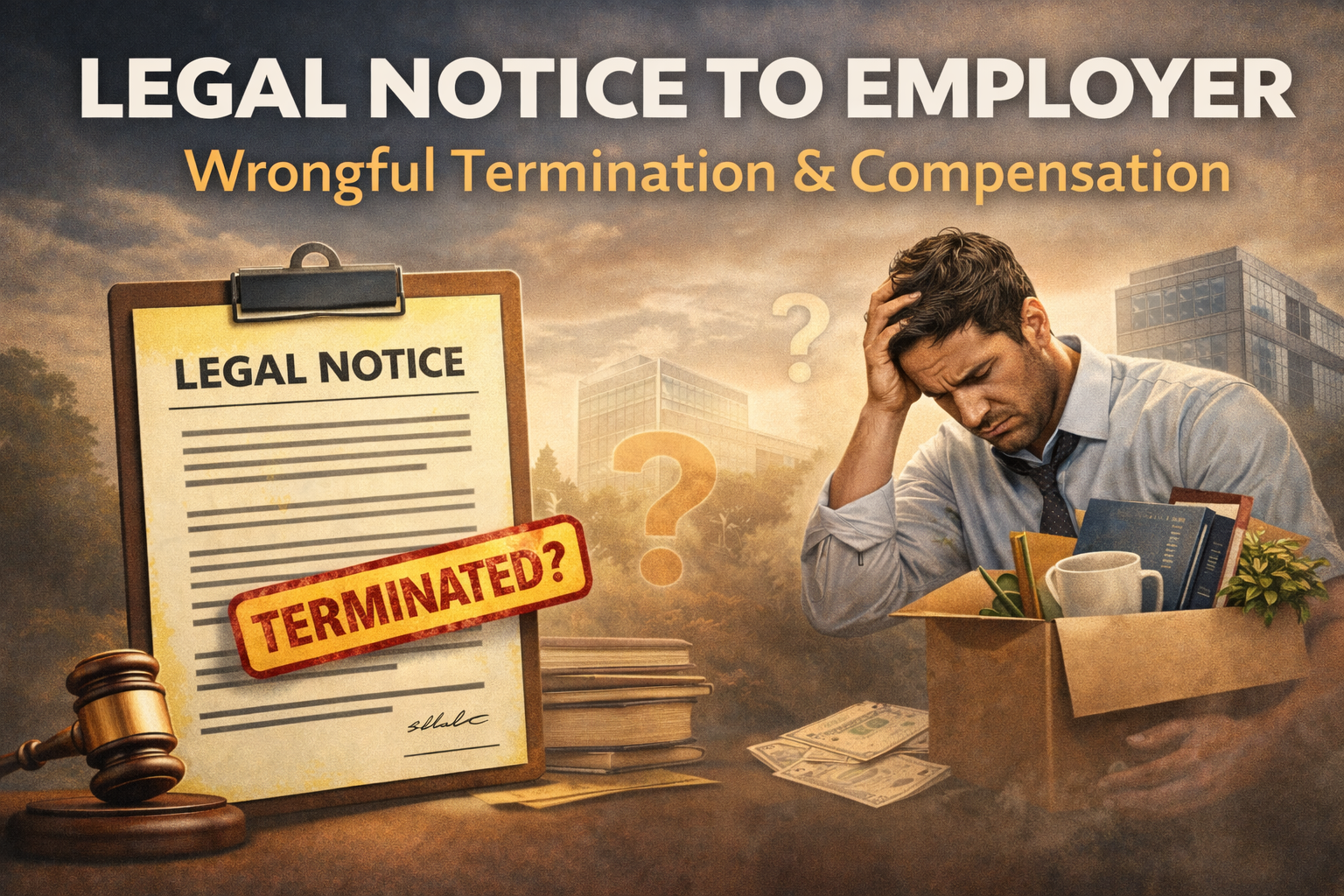
Legal Notice to Employer – Wrongful Termination & Compensation Explained
Disclaimer: This article is for general legal information and awareness purposes only. It does not constitute legal advice or solicitation. Communication is purely informational, in compliance with Bar Council of India Rule 36.
Introduction: When Termination Becomes Legally Wrongful
Job termination is one of the most stressful events in a working professional’s life. While employers have the right to terminate employment, such termination must strictly follow law, contract, and principles of natural justice. Any termination done arbitrarily, without procedure, or in violation of the appointment terms may amount to wrongful or illegal termination.
In such situations, sending a legal notice to the employer becomes the first and most effective legal step to challenge the action and seek compensation or reinstatement.
What Is Wrongful Termination Under Indian Law?
Wrongful termination refers to dismissal from employment in violation of:
- Employment contract or appointment letter
- Labour laws or service rules
- Principles of natural justice
- Statutory protections available to workmen or employees
It is important to understand that not every termination is illegal, but termination without following due process can expose the employer to legal consequences.
Common Examples of Wrongful Termination
- Termination without notice or notice pay
- Termination without written reason
- Forced resignation
- Termination during medical leave or maternity leave
- Termination without domestic inquiry in misconduct cases
- Termination to avoid paying salary, bonus, or gratuity
Is Sending a Legal Notice to Employer Mandatory?
There is no single law making legal notice mandatory in every employment dispute. However, sending a legal notice is strongly recommended before initiating any legal proceedings.
A legal notice serves multiple purposes:
- Formally challenges the illegal termination
- Demands compensation, dues, or reinstatement
- Creates written evidence of grievance
- Opens scope for settlement
What Should a Legal Notice for Wrongful Termination Contain?
A properly drafted legal notice to employer should include:
- Date of appointment and designation
- Terms of appointment letter violated
- Manner in which termination was illegal
- Relevant legal provisions and principles
- Clear demand for compensation, reinstatement, or dues
- Reasonable time for compliance
Improper drafting or emotional language may weaken the employee’s case in future litigation.
Compensation for Wrongful Termination – What Can an Employee Claim?
Depending on facts and category of employment, an employee may claim:
- Salary in lieu of notice period
- Pending salary and incentives
- Compensation for illegal termination
- Gratuity, bonus, and other statutory dues
- Damages for mental harassment (in appropriate cases)
In cases involving workmen under labour laws, reinstatement with back wages may also be claimed.
Which Forum Can Be Approached After Legal Notice?
If the employer fails to respond or refuses to comply, the employee may approach:
- Labour Commissioner / Labour Court
- Industrial Tribunal
- Civil Court (for contractual employees)
- High Court (in limited service matters)
The choice of forum depends on employment nature, designation, salary structure, and governing law.
Why Legal Strategy Matters in Employment Disputes
Employment disputes are highly fact-specific. A premature or poorly planned legal action may result in dismissal of the case. A strategically drafted legal notice often leads to settlement without prolonged litigation.
Therefore, professional legal assistance at the notice stage itself plays a crucial role.
Conclusion: Legal Notice Is the Strongest First Step
Wrongful termination not only affects financial stability but also professional reputation. Sending a well-drafted legal notice to the employer is a legally sound and effective way to assert rights and seek compensation.
Employees should act promptly and strategically to protect their legal interests.