How a Viral Bus Video and a Suicide Ignited Outrage in Kerala
This article is published by The Legal Warning India and written by Advocate Uday Singh for informational and public awareness purposes.
Introduction: A Viral Clip That Became a National Flashpoint
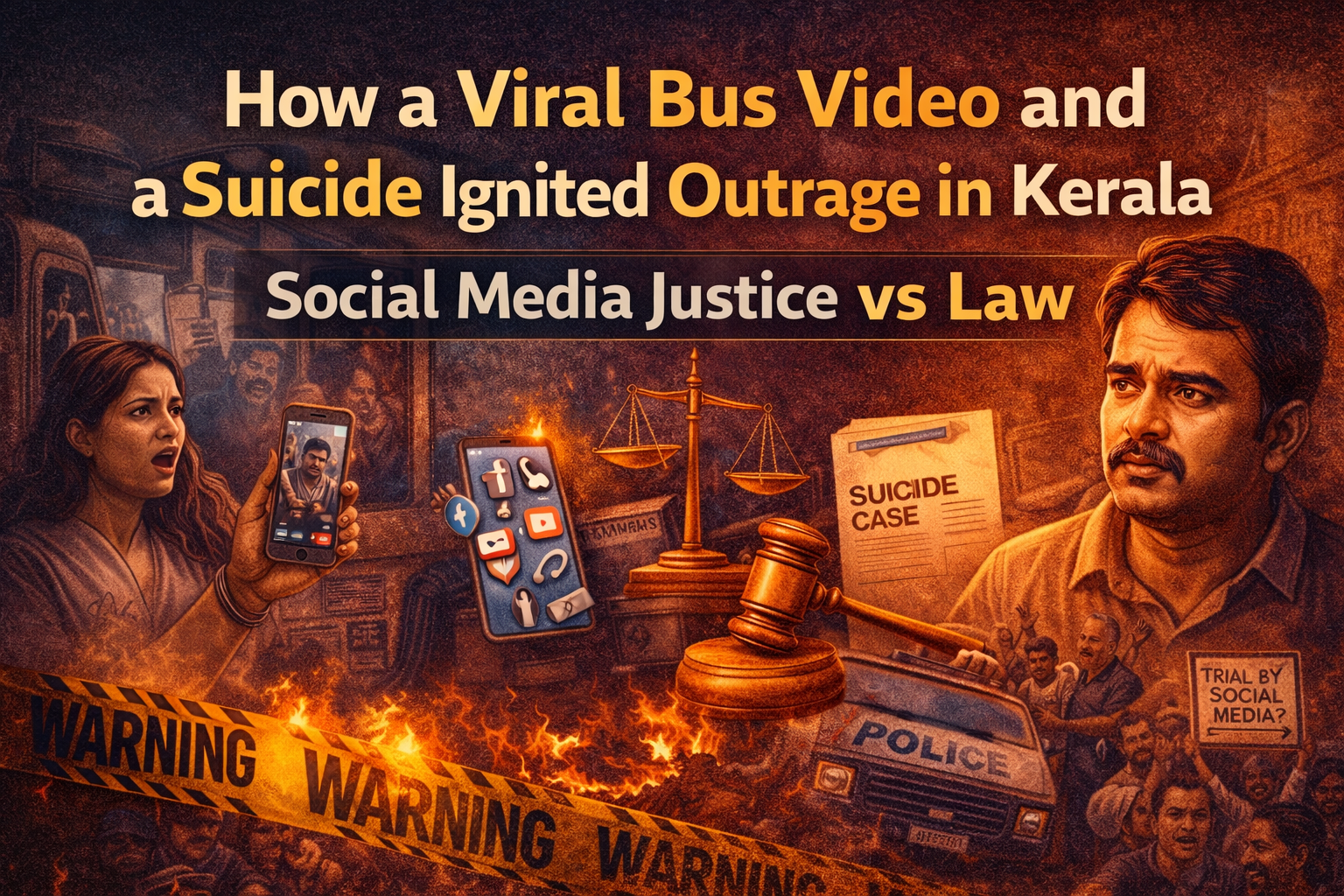
A seemingly ordinary bus journey in Kozhikode, Kerala turned into a national controversy after a video recorded inside a KSRTC bus alleging misconduct went viral — and was followed by the shocking suicide of the man featured in the clip.
This incident has ignited fierce debate over social media trials, online shaming, judicial process, and public accountability, challenging how allegations are handled in the digital age. 0
Chronology of Events: From Video to Outrage
On 18 January 2026, 42-year-old U Deepak, a resident of Govindapuram, was found dead by suicide at his home in Kozhikode. This followed the rapid spread of a video taken by a fellow passenger on a bus, who accused him of inappropriate touching during the journey. 1
The video was widely shared across platforms, gathering millions of views, and quickly drew attention from online communities and media outlets. Deepak’s family later described the social media reaction and public shaming as contributing factors to his mental distress and tragic decision. 2
Initially registered as an unnatural death, the case took a legal turn after Deepak’s mother filed a formal complaint, leading to a police FIR under provisions related to abetment of suicide. 3
On 21 January 2026, police arrested 35-year-old influencer Shimjitha Musthafa — the woman who recorded and posted the video — on charges including abetment of suicide. 4
Social Media Trials vs Due Process
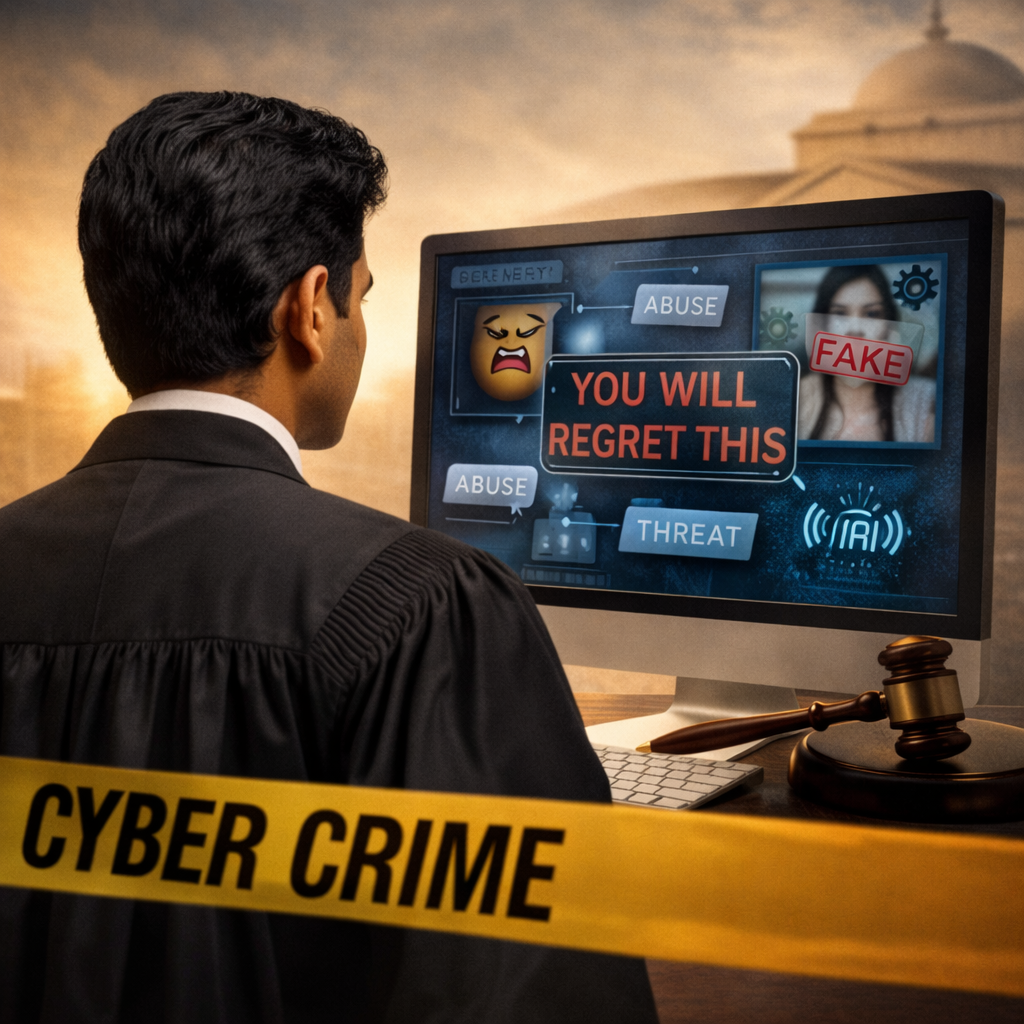
This case highlights the striking tension between public opinion formed via social media and the established legal process. The viral nature of the video allowed millions to form judgments before any formal investigation or police inquiry, effectively creating a parallel “trial” online. Critics argue that such viral accusations can cause irreversible reputational damage and psychological harm, particularly without context or verification. 5
Many commentators expressed concern that platforms meant for social interaction are being misused as instruments of social justice without procedural safeguards — a phenomenon often referred to as “trial by social media.” 6
Legal Issues Arising from the Incident
The Kerala bus video controversy touches on multiple areas of law and public policy:
- Criminal Responsibility: Abetment of suicide under Bharatiya Nyaya Sanhita (Section 108) or IPC Section 306 (legacy reference)
- Defamation & Reputation: False statements and alleged character assassination
- Cyber Laws: Liability for online content and distribution
- Mental Health Impact: Psychological distress linked to public humiliation
The police, after receiving complaints, invoked non-bailable provisions under the relevant sections to proceed with the case. 7
Human Rights & Investigative Oversight
In addition to FIR and arrest, the Kerala State Human Rights Commission sought an investigation by the North Zone DIG into the circumstances surrounding Deepak’s suicide, underscoring the seriousness with which authorities are examining the incident. 8
This dual focus — both on criminal liability and systemic review — reflects a broader concern about how such cases are handled by institutions and how victims of digital public shaming can be protected under law.
Public Reaction, Debate & Fallout
The case has sparked significant public and political reaction across Kerala and beyond:
- Outrage among citizens critical of “social media vigilantism”
- Protests and symbolic acts reflecting fear of online trials after controversy
- Political leaders calling for stringent accountability mechanisms
- Family and civil groups demanding justice for Deepak
Images and clips of men travelling with protest signs on buses have gone viral, symbolising anxiety and backlash against online reputational risk. 9
Similar Incidents & Broader Context
The Deepak suicide case is not an isolated social media phenomenon. Across India, several incidents reflect how viral content impacts real lives:
- Instances where unverified videos fuelled public outrage without legal process
- Cases where individuals faced intense online harassment leading to psychological distress
- Debates on whether social media exposure without due process can be legally regulated
These patterns highlight the urgent need for balancing free expression with responsible digital conduct.
Lessons and the Way Forward
The Kerala bus video controversy teaches several important lessons:
- Social media users must prioritise verification before sharing accusatory content
- Allegations should be pursued through legal procedures before public dissemination
- Court processes and presumption of innocence are cornerstones of justice
- Mental health consequences of digital shaming must be acknowledged
Civil society and law enforcement must work towards clear mechanisms that protect both accusers and the accused, especially when online content triggers irreversible social and psychological consequences.
Related Legal Guidance
- Criminal Negligence in Public Safety Cases – Legal Analysis
- Public Nuisance Laws Explained
- How to File an FIR in Sensitive Cases
Disclaimer: This article is based on verified news reports and public discourse. It is intended for educational and legal awareness purposes only, and does not imply legal determination without formal judicial process.