This article is published by The Legal Warning India and written by Advocate Uday Singh.
BNSS Section 173: FIR Information, SP Complaint & Magistrate Investigation under Section 175(3)
BNSS लागू होने के बाद FIR procedure समझते समय Section 173 और Section 175 को अलग-अलग समझना जरूरी है। Section 173 मुख्यतः cognizable offence की information देने और record करने से संबंधित है, जबकि Section 175(3) Magistrate द्वारा investigation का order करने से संबंधित provision है।
BNSS Section 173 क्या है?
BNSS Section 173 cognizable offence से संबंधित information को police station में देने और record करने का framework देता है। Information oral या statutory requirements के अनुसार electronic communication से भी दी जा सकती है। Electronic communication के मामले में prescribed statutory formalities का पालन करना जरूरी है।
अगर Police Information Record न करे तो?
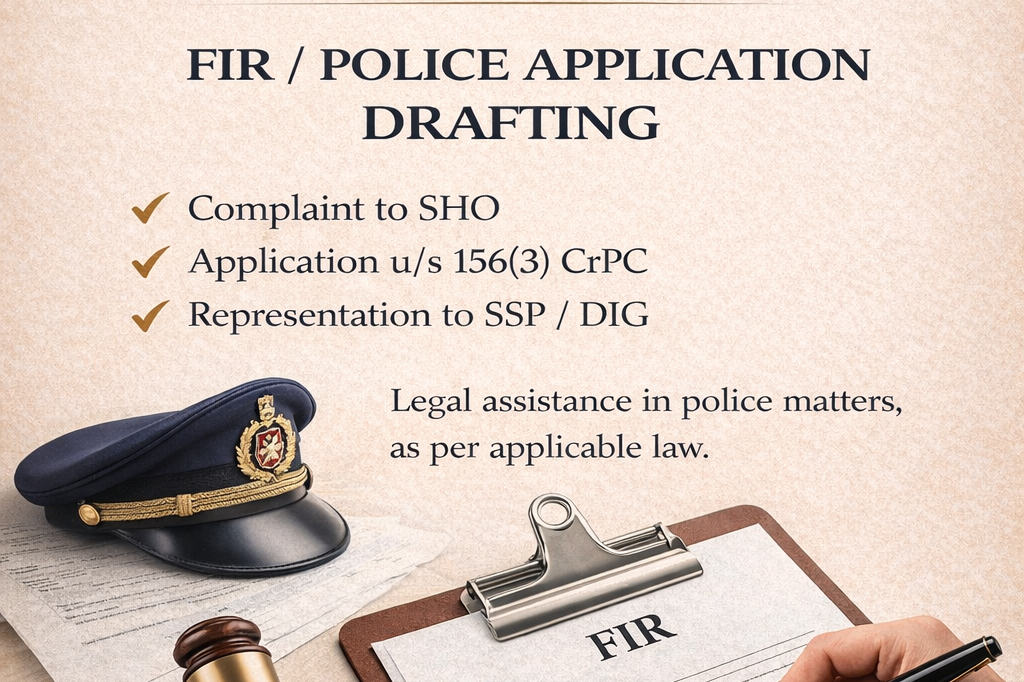
BNSS Section 173(4) के अनुसार, यदि officer in charge information record करने से refuse करता है, तो aggrieved person information का substance Superintendent of Police को writing और post के माध्यम से भेज सकता है।
Magistrate के सामने कब जाएं?
Magistrate-directed investigation का relevant provision BNSS Section 175(3) है। इस provision के तहत empowered Magistrate, Section 173(4) में referred affidavit के साथ application पर विचार करके, आवश्यक inquiry और police officer की submission को देखते हुए investigation का order कर सकता है।
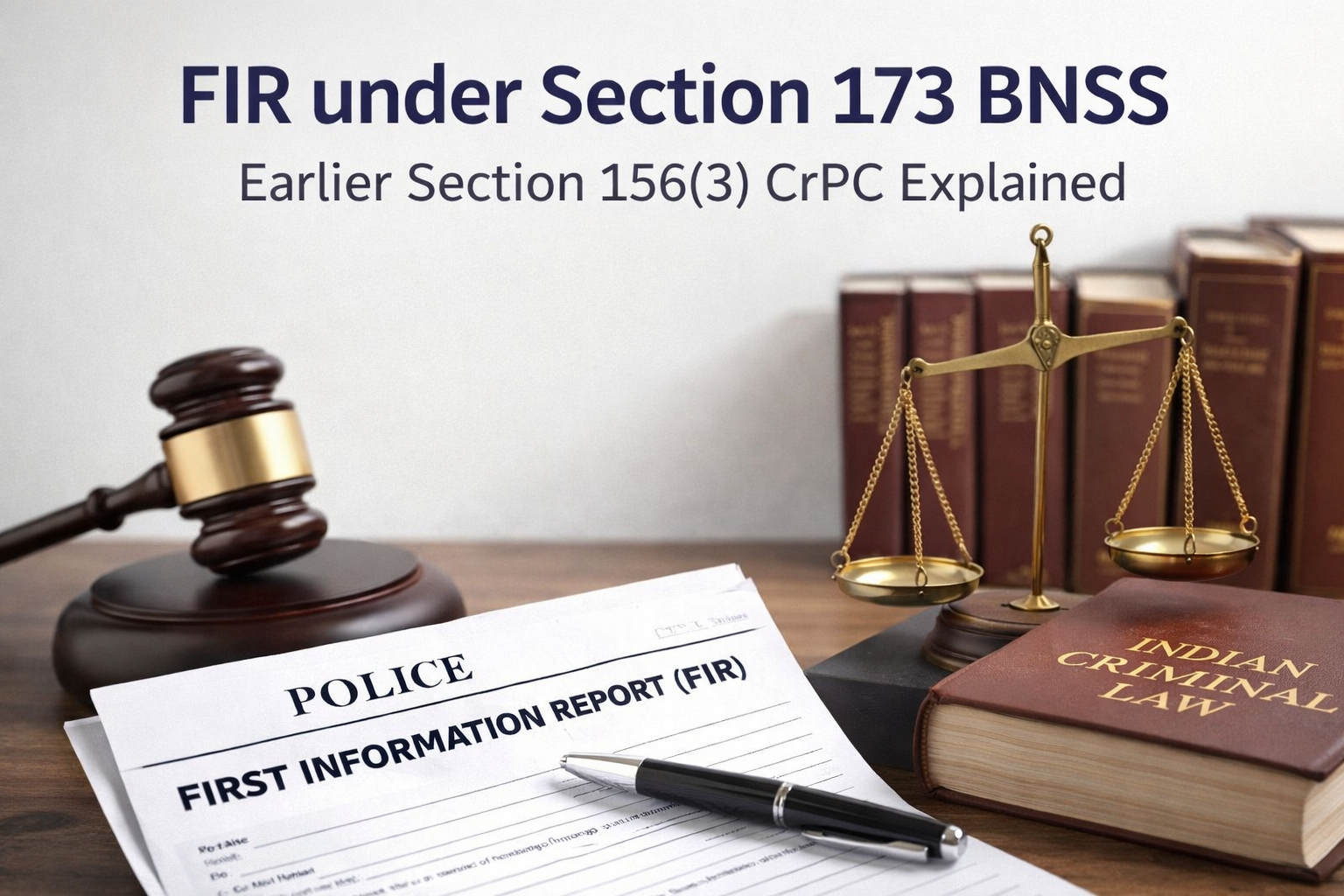
इसलिए Section 173 BNSS को पुराने CrPC Section 156(3) का direct replacement बताना technically सही नहीं है। Current statutory structure में Section 173 information-recording/SP remedy से और Section 175(3) Magistrate-directed investigation से संबंधित है।
Practical Steps
- Police station को facts की clear information दें।
- Complaint/communication और receiving/acknowledgement का proof रखें।
- Refusal होने पर BNSS Section 173(4) के अनुसार SP को information भेजने पर विचार करें।
- SP stage के बाद, facts और applicable law के अनुसार Section 175(3) Magistrate remedy की suitability assess करें।
- हर filing के साथ relevant documents/evidence की copies और dispatch proof सुरक्षित रखें।
क्या Affidavit जरूरी है?
Section 175(3) के statutory text में Section 173(4) में referred affidavit के साथ application का उल्लेख है। इसलिए Magistrate-directed investigation application तैयार करते समय applicable statutory requirement और local court practice को verify करना चाहिए। इसे हर criminal complaint पर एक blanket rule की तरह नहीं समझना चाहिए।
Section 173 और Section 175(3) में अंतर
| Provision | Main function |
|---|---|
| BNSS Section 173 | Cognizable offence की information देने/record करने का framework |
| BNSS Section 173(4) | Police refusal पर SP को information भेजने का statutory route |
| BNSS Section 175(3) | Empowered Magistrate द्वारा investigation order करने का provision |
Common Mistakes
- Section 173 को Magistrate investigation-order provision समझना।
- पुराने CrPC section numbers को current law बताना।
- False या exaggerated allegations करना।
- Police/SP complaint का proof सुरक्षित न रखना।
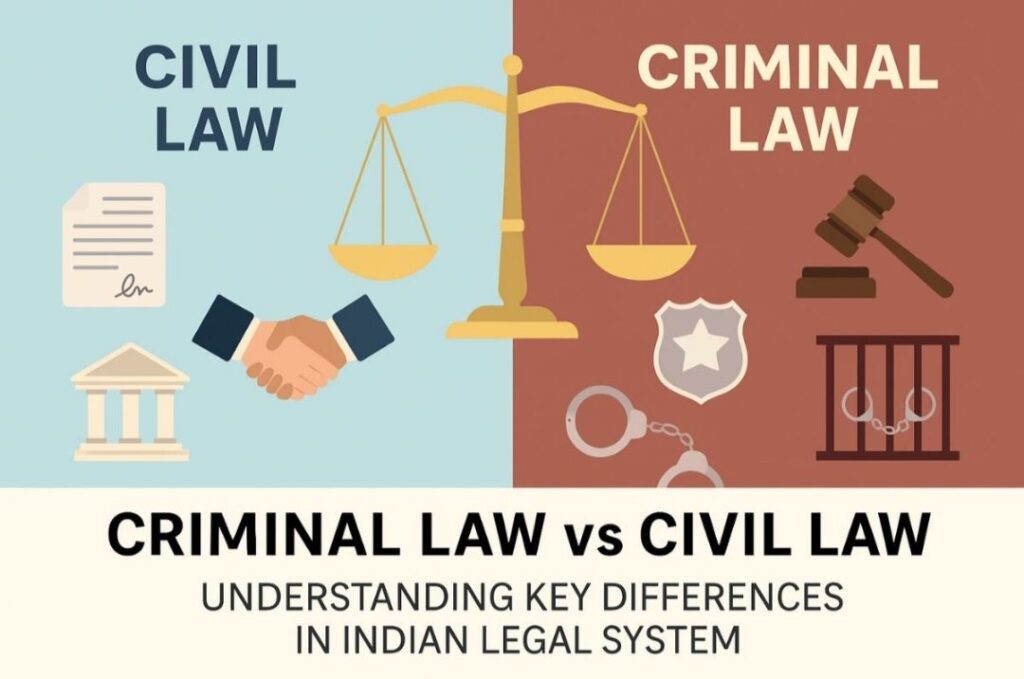
- Purely civil dispute को बिना criminal ingredients के FIR matter मान लेना।
FAQ
क्या Section 173 BNSS Magistrate को FIR order करने की power देता है?
Section 173 information in cognizable cases से संबंधित है। Magistrate-directed investigation का relevant provision Section 175(3) है।
Police FIR न लिखे तो SP को कौनसी provision relevant है?
BNSS Section 173(4) refusal की स्थिति में SP को information का substance writing और post के माध्यम से भेजने का framework देता है।
क्या हर complaint में FIR होती है?
नहीं। Cognizable और non-cognizable matters के लिए अलग statutory frameworks हो सकते हैं। Facts और applicable offence देखना जरूरी है।
WhatsApp – Request General Legal Guidance
WhatsApp – Request Procedural Information
Image disclaimer: Any illustrative image is for educational representation only and is not a real police record, court order or government document.
Disclaimer: This article is for general legal information and awareness purposes only. It does not constitute legal advice or solicitation. Communication is purely informational, in compliance with Bar Council of India Rule 36.