WhatsApp Nude Video Blackmail Scam: One Video Call Can Ruin Lives – Legal Protection Under IPC, BNS & IT Act
This article is published by The Legal Warning India and written by Advocate Uday Singh.
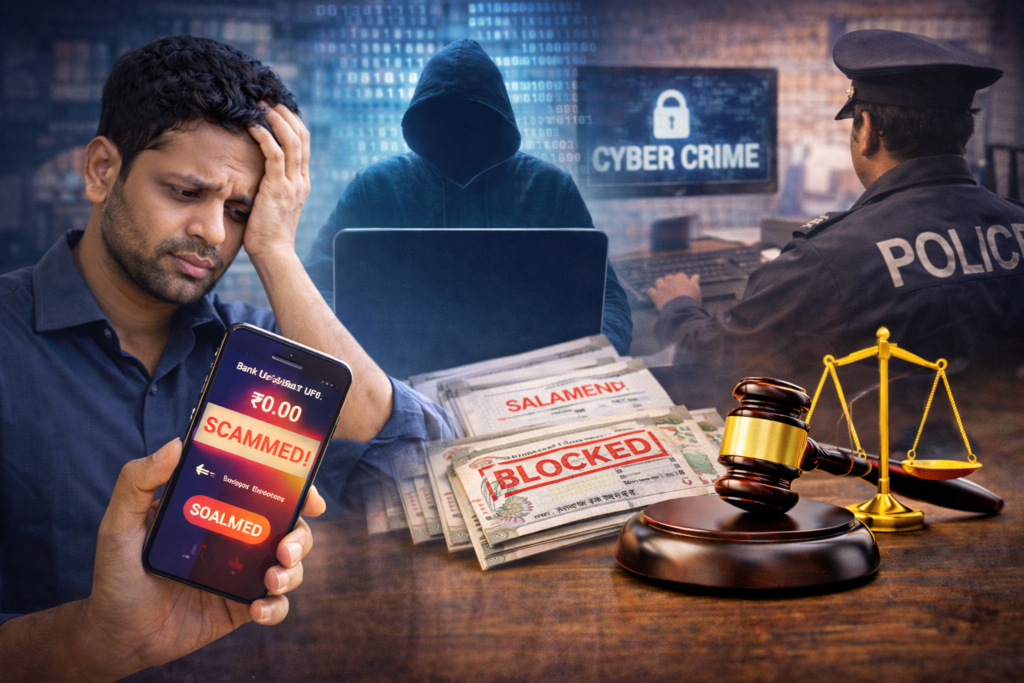
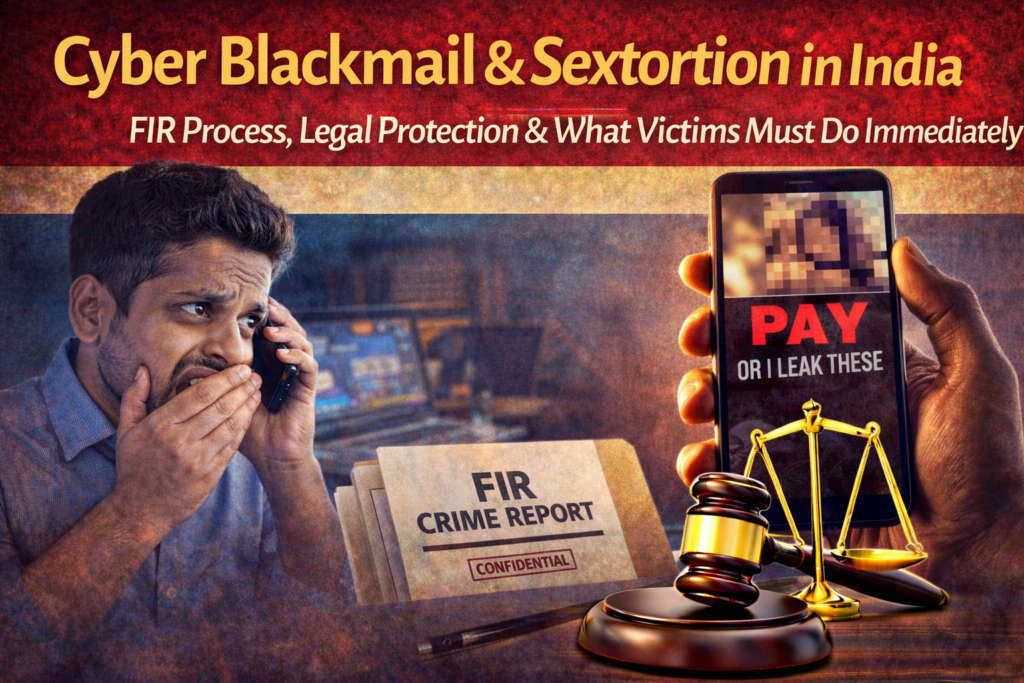
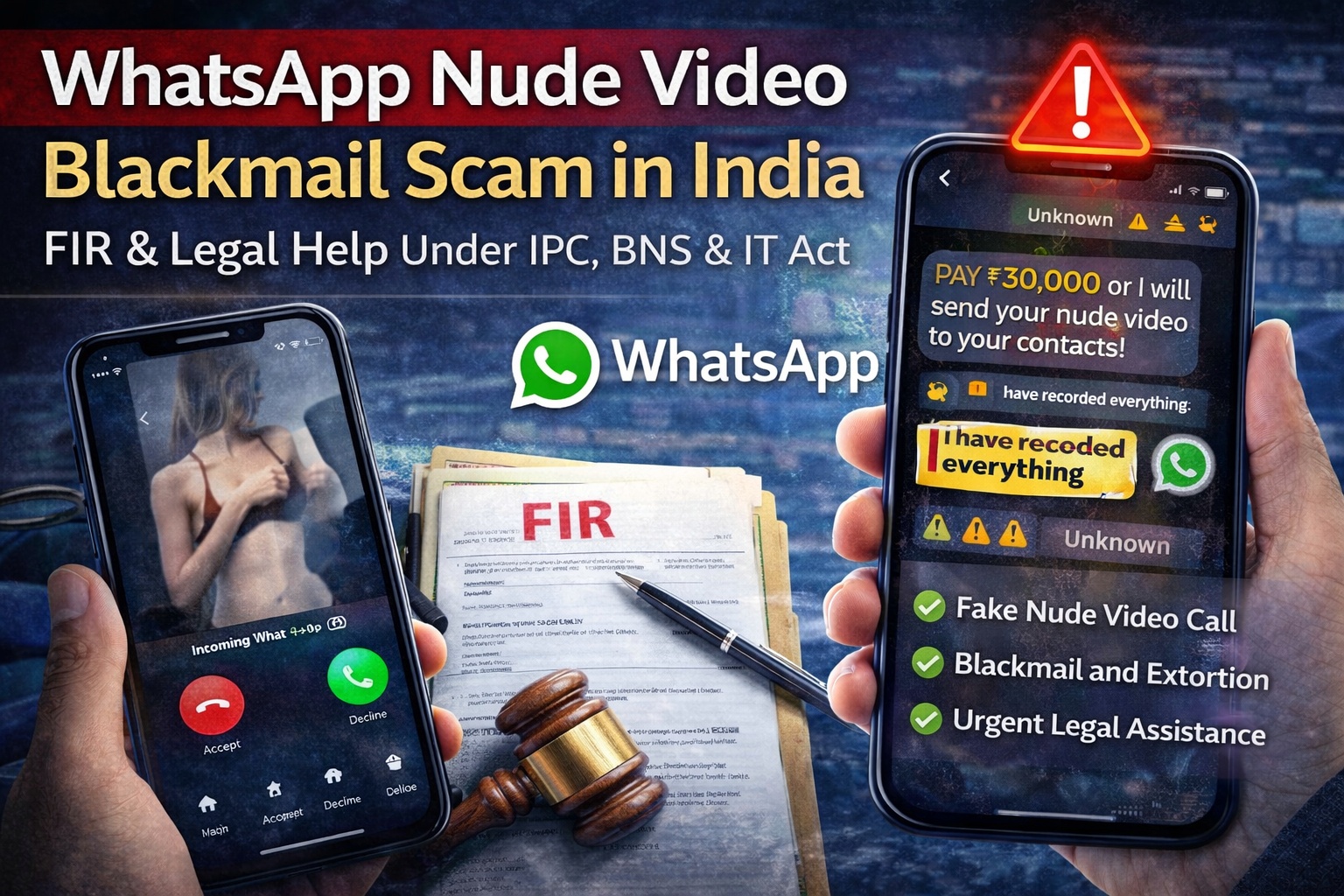
Across India, a dangerous cyber crime trend is rapidly increasing where unsuspecting individuals receive a WhatsApp video call from an unknown number. The moment the call is answered, the caller deliberately undresses, records the interaction, and later uses the footage to blackmail the victim for money.
This crime, commonly referred to as “Fake Nude Video Blackmail” or “Sextortion Scam”, has pushed thousands of victims into severe mental trauma, financial loss, and social fear. Many victims hesitate to report due to shame, unaware that Indian law strongly protects them.
How the WhatsApp Nude Video Blackmail Scam Works
- The victim receives a WhatsApp video call from an unknown number
- The caller immediately removes clothes on camera
- The scammer secretly records the screen
- The call disconnects within seconds
- The victim receives threatening messages demanding money
- Threats include sending the video to family, friends, or colleagues
These gangs often operate from multiple states or even outside India and use fake SIM cards, VPNs, and mule bank accounts to collect extortion money.
Important Legal Truth Every Victim Must Know
Even if the victim only answered the call and did nothing else, no offence is committed by the victim.
The entire criminal liability lies on the scammer. Indian courts and cyber crime units treat such cases as serious organized cyber extortion offences.
Legal Provisions Applicable in Fake Nude Video Blackmail Cases
1. Criminal Intimidation – IPC & BNS
Threatening to harm reputation by circulating private videos amounts to criminal intimidation.
- Section 503 IPC
- Section 351 Bharatiya Nyaya Sanhita (BNS)
Punishment includes imprisonment and fine depending on severity.
2. Extortion – IPC & BNS
- Section 383 IPC
- Section 308 BNS
Demanding money by creating fear of reputation damage is a clear case of extortion. Even a single demand message is sufficient to constitute the offence.
3. Sexual Harassment & Obscenity
- Section 292 IPC / Section 294 BNS – Obscene content
- Section 354A IPC / Section 75 BNS – Sexual harassment
4. Information Technology Act – Strongest Protection
- Section 66E IT Act – Violation of privacy
- Section 67 IT Act – Publishing obscene content
- Section 67A IT Act – Sexually explicit content
Punishment may extend up to 5 years imprisonment and fine up to ₹10 lakh.
Why Victims Panic – Psychological Trap Used by Scammers
Scammers rely on fear, shame, urgency, and social pressure. They deliberately threaten to contact parents, spouses, employers, or friends to force quick payment.
However, paying money never stops the harassment. Instead, it increases demands.
What Victims Must NOT Do
- Do not pay any money
- Do not negotiate with the blackmailer
- Do not delete chats or call logs
- Do not panic or feel ashamed
Immediate Action Plan for Victims (First 24 Hours)
Step 1: Preserve Evidence
Save screenshots of chats, call logs, phone numbers, payment demands, and profile details.
Step 2: File Cyber Crime Complaint
Register a complaint on the official cyber crime portal: cybercrime.gov.in
Step 3: Lodge FIR at Police Station
An FIR must be registered under IPC, BNS, and IT Act provisions. Police cannot refuse registration.
Step 4: Report on WhatsApp
Block and report the number for sexual exploitation and extortion.
Can Police Freeze Blackmailer’s Bank Account?
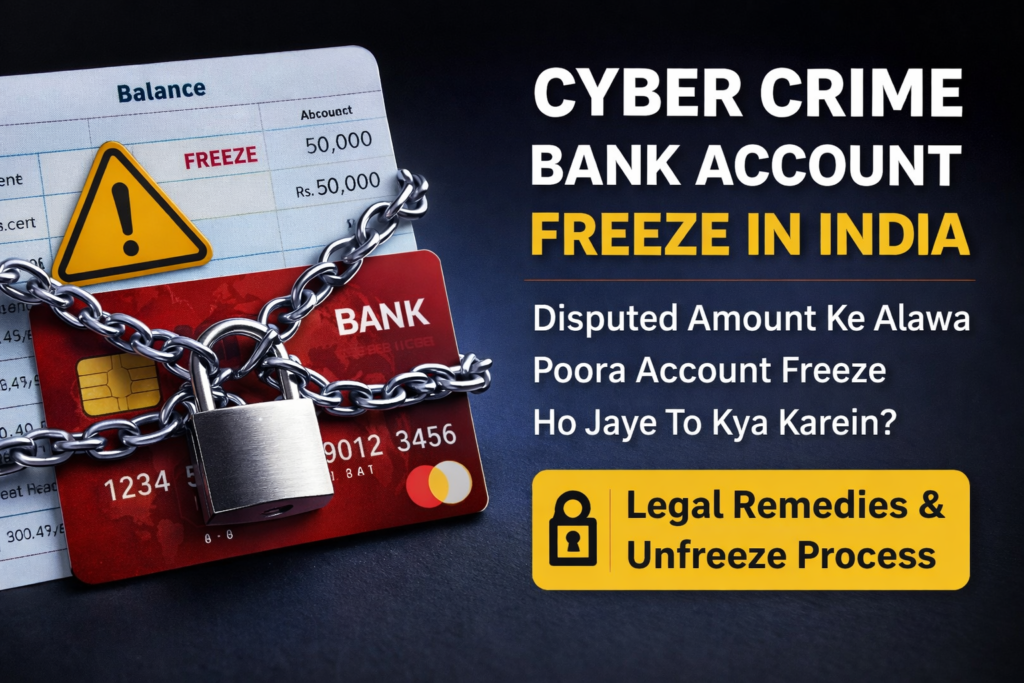
Yes. Cyber crime units routinely freeze mule accounts used to collect extortion money. Many such cases lead to arrests and interstate investigations.
Public Awareness & Prevention Tips
- Never accept video calls from unknown numbers
- Keep social media privacy settings strict
- Educate family members about sextortion scams
- Report immediately without fear
Legal Awareness Note
If a person is facing issues related to online video blackmail or sextortion,
they should be aware of the legal remedies and procedures available under Indian law.
This information is shared solely for general legal awareness and educational purposes.
It does not constitute legal advice or solicitation.
Legal Disclaimer
This article is published by The Legal Warning India and written by Advocate Uday Singh solely for legal awareness purposes. It does not constitute solicitation or advertisement as per Bar Council of India Rule 36. The information is based on reported cyber crime cases and legal provisions currently in force.