This article is published by The Legal Warning India and written by Advocate Uday Singh.
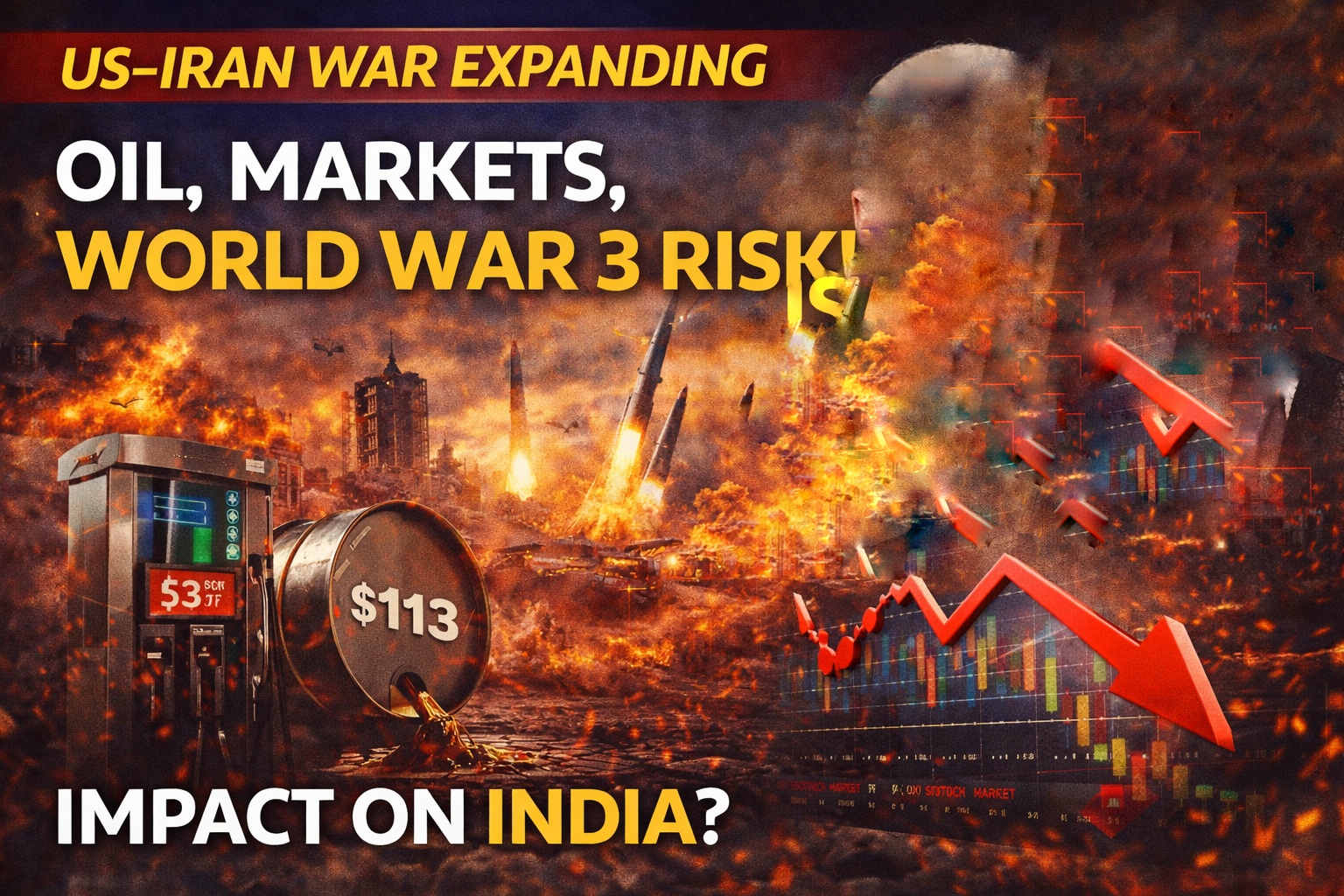
US–Iran War Expanding in 2026 – Is the World Heading Towards a Bigger Conflict?
🚨 Breaking Context: War No Longer Limited to Iran–USA–Israel
Recent international reports indicate that the ongoing conflict between Iran, the United States, and Israel is no longer confined to these three actors. The war is gradually expanding across multiple regions.
Iran-backed groups, particularly the Houthis in Yemen, have reportedly launched missiles towards Israel, opening a new front in the conflict.
👉 This signals a shift from a bilateral conflict to a multi-country geopolitical crisis.
Impact:
- Red Sea shipping routes at risk
- Global trade disruption
- Insurance and freight costs rising
🌍 Asia on Alert – Strategic Power Shift
Countries like Japan, Taiwan, and South Korea are closely monitoring the situation. The primary concern is that the United States is shifting its military focus from Asia to the Middle East.
👉 Strategic Risk:
- China may attempt aggressive moves in Asia
- Regional security imbalance
- US global credibility under pressure
This creates a dual-front geopolitical tension — Middle East conflict + Asia instability.
💣 Military Pressure Rising – Weapons & Resources Under Strain
Reports indicate that the United States has already deployed over 850+ Tomahawk missiles in recent weeks.
This raises serious concerns:
- Weapon stockpile depletion
- Long-term sustainability of war operations
- Possible diversion of weapons from Ukraine conflict
👉 This shows the war is not short-term — it is entering a prolonged phase.
⛽ Economic Shock – Direct Impact on India
One of the most immediate consequences is the sharp rise in crude oil prices, reportedly crossing $110+ per barrel.
Impact on India:
- Petrol and diesel prices likely to increase
- Transport cost surge
- Food inflation rise
- Pressure on middle-class households
👉 India, being a major oil importer, is directly affected by Middle East instability.
📉 Share Market Impact
Global markets have already shown volatility:
- Stock markets falling
- Gold prices rising
- Investor panic increasing
For detailed market impact analysis, read:
Iran Leader Death Impact on Indian Share Market – Full Analysis
⚖️ NATO & Political Tensions
The United States has reportedly expressed dissatisfaction with NATO allies for limited support.
👉 Possible consequences:
- Weakening Western alliances
- Fragmentation in global power blocs
- Rise of independent geopolitical strategies
🧠 No Clear Exit – War Becoming Complex
Experts suggest that the war has entered a complicated phase with no easy resolution.
Two Possible Paths:
- Negotiation: May reduce tensions but weaken strategic control
- Escalation: May lead to wider regional or global conflict
👉 If diplomacy fails, the war may continue for months or even longer.
🌐 Legal Perspective – International Law Angle
This conflict raises serious international law questions:
- Use of force across sovereign borders
- Targeted military strikes legality
- Proxy warfare accountability
- Violation of UN Charter principles
There is ongoing debate whether such actions fall under:
- Self-defense (Article 51 UN Charter)
- Or unlawful aggression
⚠️ What Happens If Ignored?
If global institutions fail to act:
- Conflict may spread across multiple countries
- Economic crisis may deepen globally
- Civilian impact may increase
- Supply chain disruption may worsen
👉 Early diplomatic intervention is critical.
📌 Final Conclusion
The US–Iran war is no longer a limited conflict. It is gradually transforming into a multi-regional geopolitical crisis with serious economic, legal, and security implications.
While the risk of a full-scale World War is not confirmed, the conditions for escalation are clearly developing.
The coming weeks will be crucial in determining whether diplomacy prevails or the conflict expands further.