Theft of Luggage / Cash / Jewellery in Train – Railway Liability, Supreme Court Rulings & Legal Remedies
This article is published by The Legal Warning India and written by Advocate Uday Singh.
Information is based on the Railway Act, Supreme Court principles, and publicly available judicial interpretations.
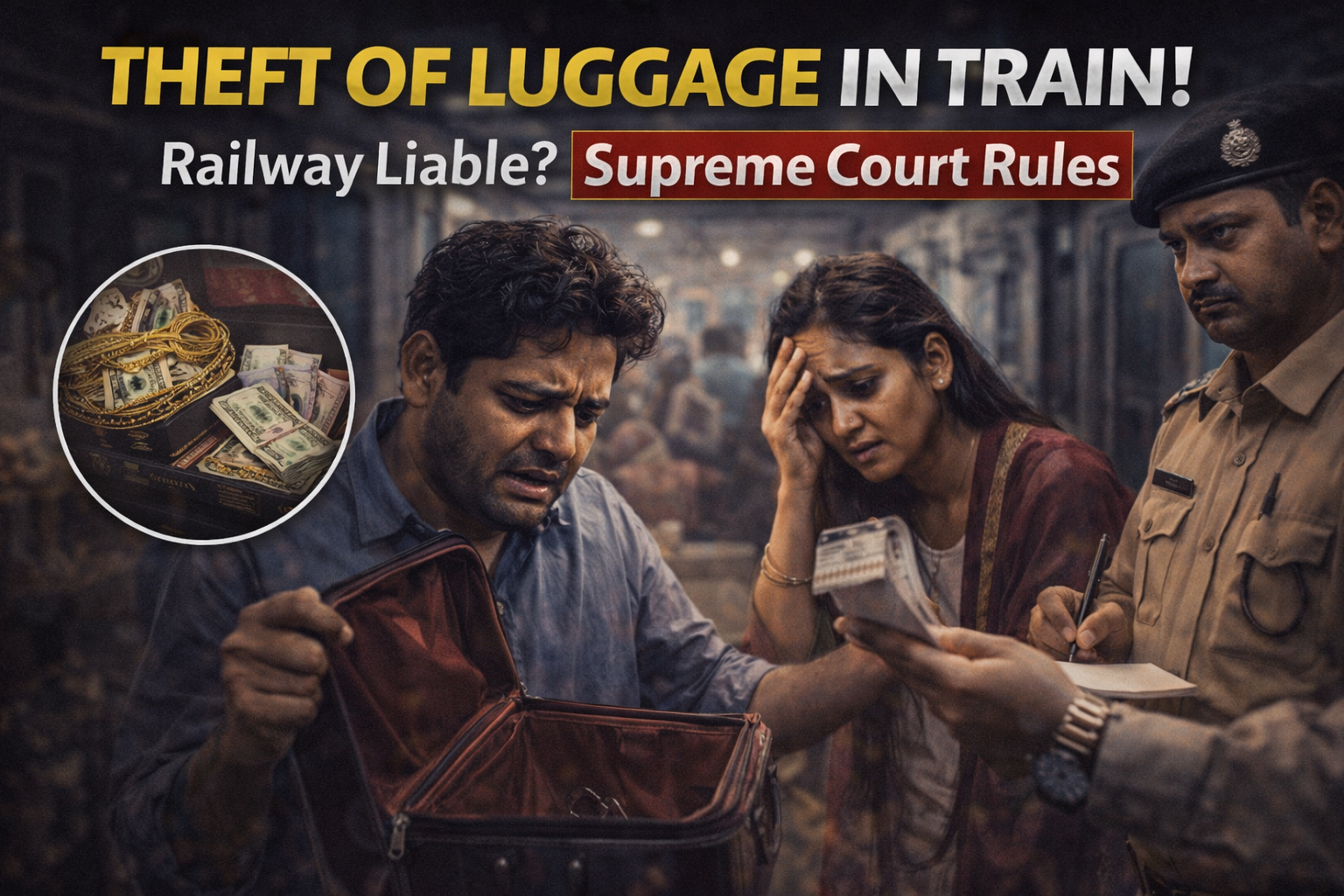
Image used for illustration purposes only
Train Mein Samaan Chori Ho Gaya – Sabse Common Passenger Problem
India mein har roz passengers yeh complain karte hain ki train journey ke dauran unka luggage, cash, jewellery ya mobile chori ho gaya.
Iske baad sabse bada sawal hota hai:
- Kya railway zimmedar hai?
- Agar TTE ya RPF ne laparwahi ki ho to?
- Kya compensation mil sakta hai?
Is article mein hum Railway Act + Supreme Court ke settled law ke basis par complete legal position explain kar rahe hain.
Train Luggage Theft Par Railway Law Kya Kehta Hai?
Important Legal Principle:
Indian Railways ek insurer nahi hai. Matlab har chori ke liye railway automatically responsible nahi hoti.
Railway Act ke tahat:
- Passenger apne luggage ka primary guardian hota hai
- Railway tab liable hoti hai jab railway staff ki negligence prove ho
Supreme Court Position: Railway Is Not Automatically Liable
Supreme Court ne clear kaha hai ki:
“Railways are not insurers of passenger belongings. Liability arises only when theft is a result of negligence or misconduct of railway employees.”
Iska matlab:
- Har theft par compensation nahi milega
- Negligence prove karni hoti hai
Yeh principle multiple Supreme Court decisions mein repeat hua hai.
TTE / RPF Ki Laparwahi Se Chori – Kab Railway Responsible Banti Hai?
Railway liability tab arise hoti hai jab yeh prove ho:
- TTE / RPF ko theft ka risk bataya gaya tha
- Complaint ke baad bhi unhone action nahi liya
- Coach mein suspicious activity ignore ki gayi
- Duty ke dauran staff ne apni responsibility properly discharge nahi ki
Example Situations:
- Passenger ne TTE ko bola ki coach mein unknown log ghoom rahe hain
- RPF available hone ke bawajood patrolling nahi ki
- Complaint diary mein entry hi nahi ki gayi
Aise cases mein courts ne railway negligence maana hai.
Cash & Jewellery Theft – Extra Strict View
Courts ka view yeh hai ki:
- High-value items (cash, gold, jewellery) ko passenger ko extra care mein rakhna chahiye
- Declared luggage ya booked parcel ka case stronger hota hai
Lekin agar railway staff ko specifically bataya gaya ho aur fir bhi negligence hui ho, to railway liability se bach nahi sakti.
Train Mein Chori Ho Jaye To Turant Kya Kare?
Immediate Legal Steps
- Train ke andar hi TTE / RPF ko inform karein
- Written complaint (memo) banwayen
- Nearest GRP/RPF post par FIR
- Lost articles ka exact description likhwayen
- Witness (co-passengers) ka detail note karein
Railway Se Compensation Kaise Claim Kare?
Theft cases mein compensation ke liye:
- Negligence clearly plead karni hoti hai
- TTE/RPF duty failure show karna hota hai
- Supporting documents zaroori hote hain
Sirf yeh kehna ki “train mein chori ho gayi” kaafi nahi hota.
Consumer Court Ya Civil Court – Kahan Case Banta Hai?
- Negligence + deficiency in service → Consumer Court
- High-value loss + disputed facts → Civil Court
Har case facts par depend karta hai.
Frequently Asked Questions (FAQs)
Q1. Train mein cash chori ho gaya – railway pay karegi?
Tabhi jab staff negligence prove ho.
Q2. Jewellery theft mein FIR mandatory hai?
Haan, FIR bahut important hai.
Q3. RPF complaint lene se mana kare to?
Written complaint + senior officer escalation possible hai.
Related Legal Awareness Articles
- Train Cancelled or Delayed – Ticket Refund & Legal Rights
- Train Se Girkar Death – Railway Compensation
- Train Accident Injury – Railway Compensation
- Hit and Run Accident Insurance Claim
Conclusion: Har Chori Mein Railway Guilty Nahi, Par Laparwahi Maaf Nahi
Supreme Court ka clear stand hai ki railway insurer nahi hai, lekin agar TTE ya RPF ki negligence se theft hui hai, to passenger ko legal remedy mil sakti hai.
Sahi time par complaint, FIR aur evidence se case strong banta hai.
Disclaimer: This article is for general legal information and awareness purposes only. It does not constitute legal advice or solicitation. Communication is purely informational, in compliance with Bar Council of India Rule 36.