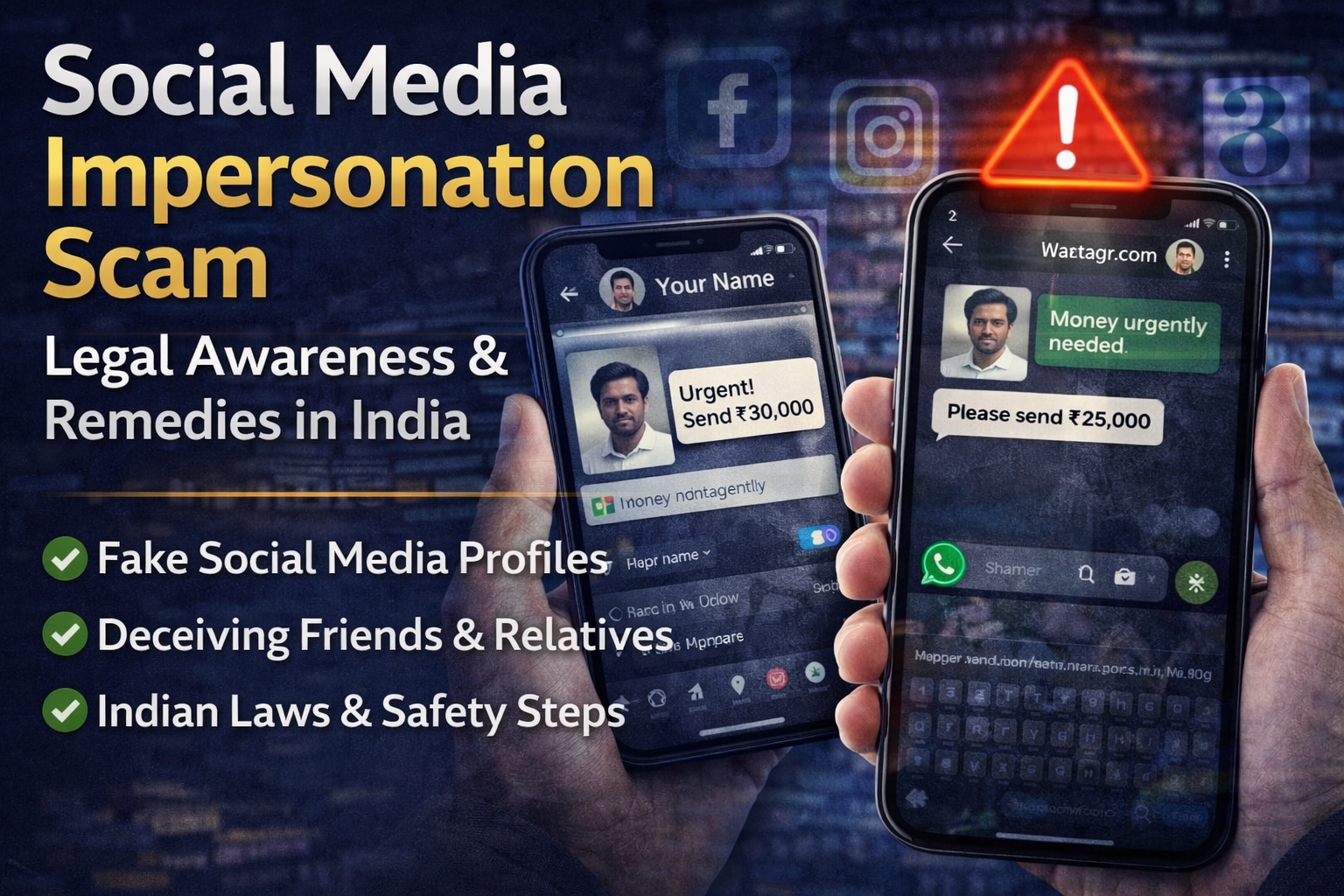
Social Media Impersonation Scam: How Criminals Pose as You and Cheat Your Friends & Family
This article is published by The Legal Warning India and written by Advocate Uday Singh.
Introduction: A Silent but Dangerous Cyber Crime
In the digital age, social media impersonation scams have emerged as one of the most deceptive and emotionally damaging forms of cyber crime.
Unlike technical hacking, these crimes rely on social engineering, trust manipulation, and identity misuse.
Victims often realize the fraud only after money has already been transferred.
What Is a Social Media Impersonation Scam?
A social media impersonation scam occurs when a criminal creates a fake online identity by copying
someone’s name, photograph, and profile details from platforms such as WhatsApp, Facebook, Instagram, or Telegram.
The fraudster then contacts the real person’s friends, relatives, or colleagues, pretending to be that individual,
and requests money, OTPs, or urgent help.
How Criminals Execute Impersonation Scams
- Stealing profile photos from public social media accounts
- Creating duplicate WhatsApp or social media profiles
- Claiming number change, phone damage, or emergency
- Using emotional pressure like illness or urgent payments
- Requesting UPI or bank transfers with secrecy
The Psychology Behind Impersonation Fraud
Impersonation scams succeed because they exploit human emotions rather than technology.
Criminals depend on:
- Urgency and fear
- Trust built through familiar identity
- Embarrassment that prevents verification
- Social pressure to act quickly
Why Impersonation Scams Are Increasing in India
Several factors contribute to the rise of impersonation fraud:
- Public social media profiles
- Easy availability of profile photos
- Instant digital payments
- Lack of verification habits
- Low reporting due to shame or fear
Common Red Flags Everyone Should Notice
- Refusal to answer voice or video calls
- Requests for secrecy
- New UPI IDs or unfamiliar bank accounts
- Unusual language or writing style
- Pressure to act immediately
Applicable Legal Provisions: IPC and Bharatiya Nyaya Sanhita (BNS)
Social media impersonation scams and online cheating cases in India may attract
provisions under the Information Technology Act, 2000 and the Bharatiya Nyaya Sanhita, 2023 (BNS),
which has replaced the Indian Penal Code (IPC).
Cheating by Personation
- Earlier (IPC): Section 419 – Cheating by personation
- Current (BNS): Section 318(2) – Cheating by personation
This provision applies where a person fraudulently pretends to be someone else,
such as creating a fake social media profile or impersonating another individual
to deceive friends, relatives, or colleagues.
Cheating and Dishonest Inducement of Property
- Earlier (IPC): Section 420 – Cheating and dishonestly inducing delivery of property
- Current (BNS): Section 318(4) – Cheating and dishonestly inducing delivery of property
This provision covers situations where money or property is obtained through deception,
including UPI transfers, bank payments, or other digital transactions made under false pretences.
Depending on the facts of each case, additional provisions of the Information Technology Act, 2000,
including Section 66D (cheating by personation using computer resources), may also be applicable.
What Victims Should Do Immediately
- Preserve chat logs, screenshots, and payment receipts
- Report the fake profile to the platform
- Alert friends and family to prevent further fraud
- File a cyber crime complaint through official channels
- Approach local police if financial loss is involved
Preventive Awareness for Individuals and Families
- Restrict profile visibility
- Avoid sharing personal contact details publicly
- Educate elderly family members
- Always verify emergency requests through direct calls
- Never rely solely on profile photos or names
Request Legal Guidance
If a person is facing issues related to social media impersonation or online identity misuse,
they should be aware of the legal procedures and remedies available under Indian law.
This section is shared purely for general legal awareness.
Related Cyber Awareness Guidance
- Online Sextortion & Blackmail – Legal Awareness
- Cyber Crime Bank Account Freeze – Legal Process
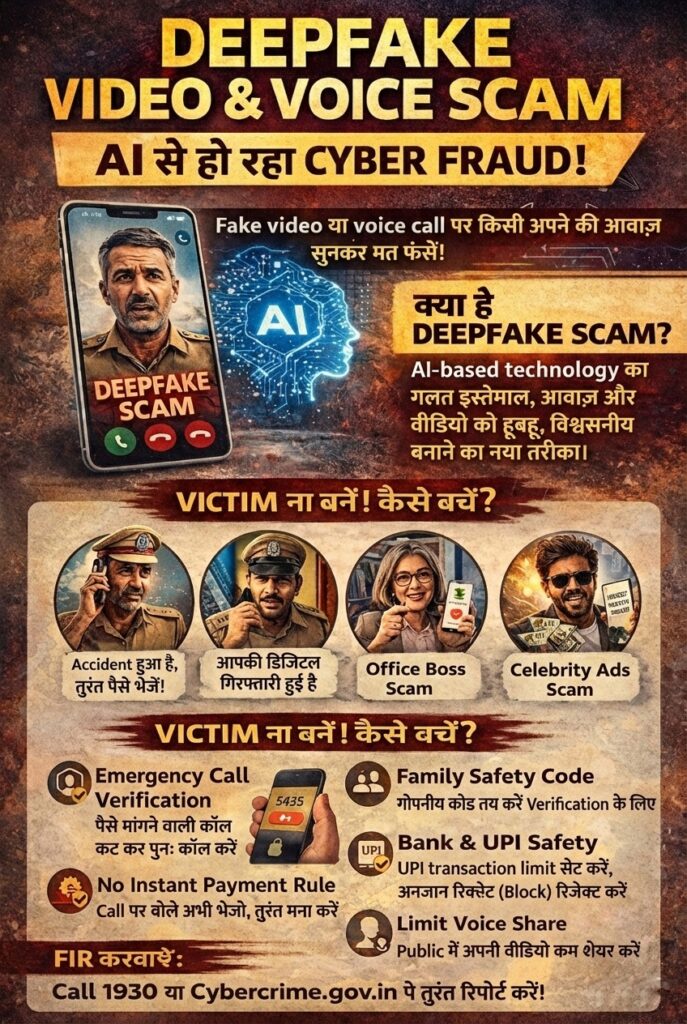
- Deepfake Video & Voice Scam Awareness
Disclaimer
This article is published for general legal awareness only.
It does not constitute legal advice, solicitation, or advertisement under Bar Council of India rules.
The information is based on publicly available legal provisions, reported cyber crime patterns,
and awareness material from news and social media sources.