Section 9 Decree After 1 Year – Divorce Strategy & Legal Consequences Explained
This article is published by The Legal Warning India and written by Advocate Uday Singh.
This article is for general legal awareness and is based on statutory provisions and family court practice.
Background – What Is a Section 9 Decree?
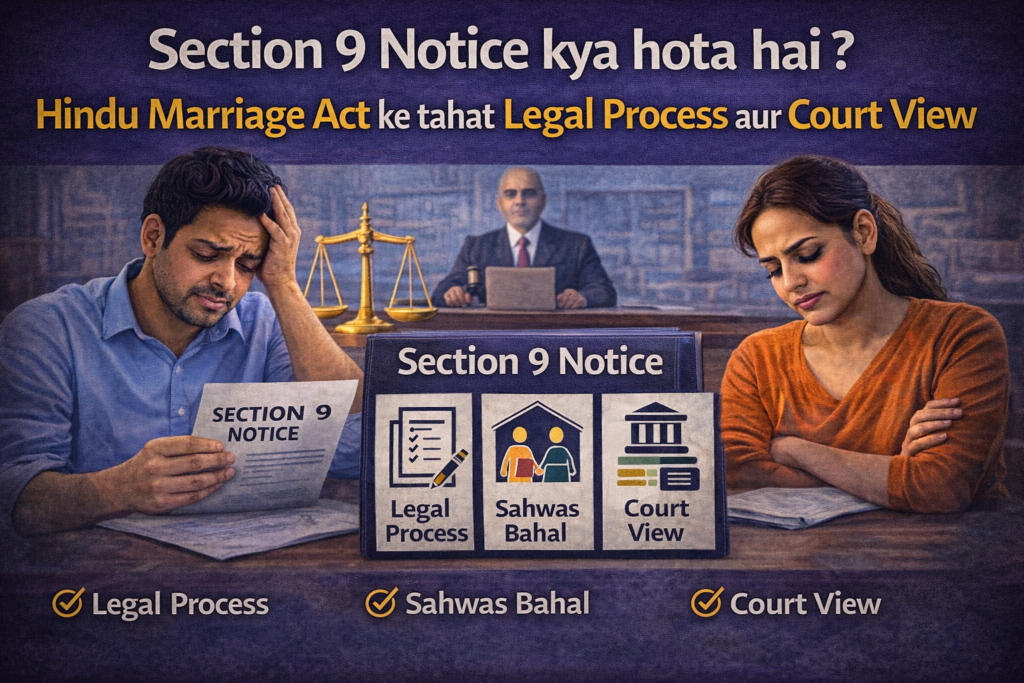
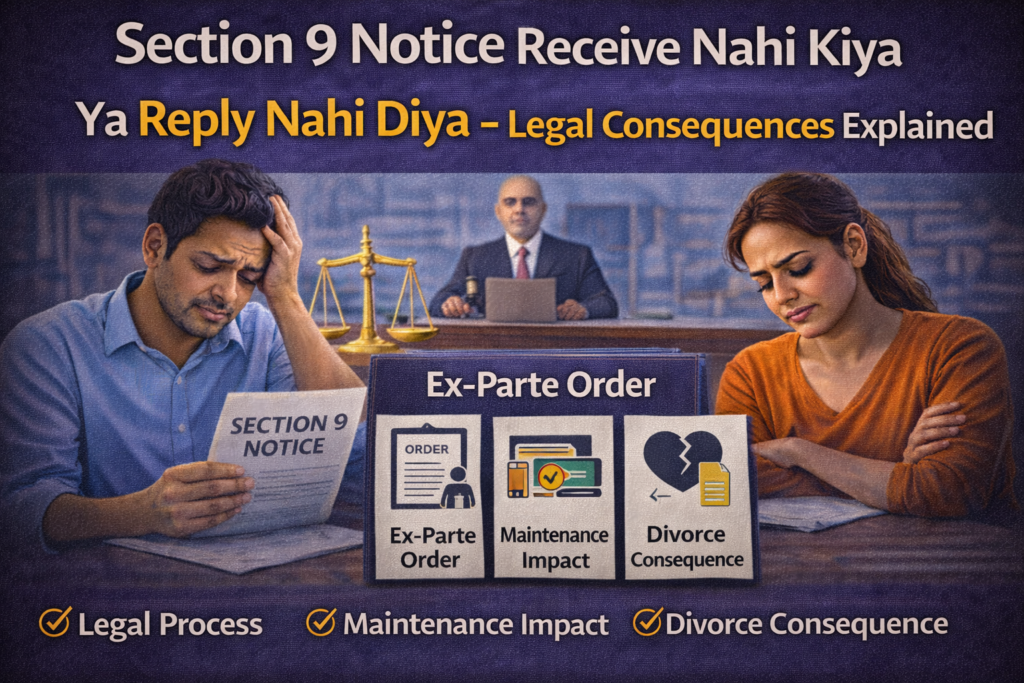
Section 9 of the Hindu Marriage Act deals with Restitution of Conjugal Rights. When the court passes a decree under Section 9, it directs the spouse who has withdrawn from society to resume cohabitation.
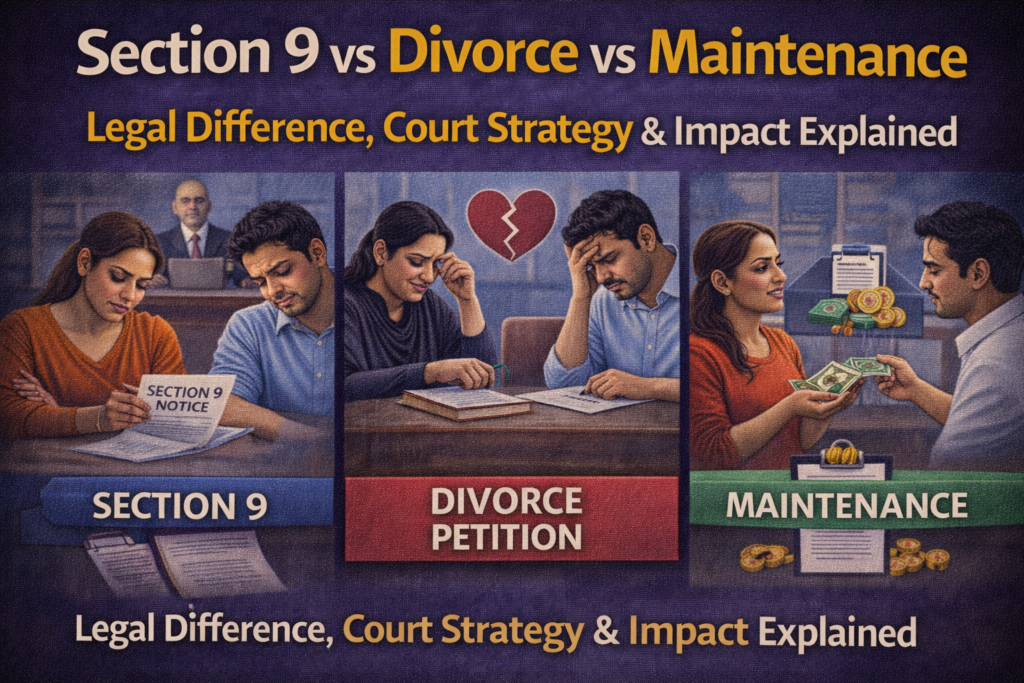
If you want to understand the broader comparison between Section 9, Divorce and Maintenance, read here:
Section 9 vs Divorce vs Maintenance – Legal Strategy Explained
What Happens If Section 9 Decree Is Not Complied With?
The most important legal consequence is this:
If there is no restitution of cohabitation for a period of 1 year or more after passing of the decree, it can become a ground for divorce.
This is provided under Section 13 of the Hindu Marriage Act.
Key Legal Condition
- A valid Section 9 decree must be passed by the court.
- There must be no resumption of cohabitation for at least one year.
- The party seeking divorce must not be taking advantage of their own wrong.
Courts carefully examine whether the non-compliance was deliberate or due to genuine reasons.
Is Divorce Automatic After 1 Year?
No.
Divorce is not automatic. A fresh divorce petition must be filed on the ground of non-compliance of Section 9 decree.
The court will still examine:
- Conduct of both parties
- Attempts at reconciliation
- Any cruelty or safety concerns
Strategic Use of Section 9 Decree in Litigation
1️⃣ As a Defensive Tool
Sometimes a spouse files Section 9 to show willingness to continue the marriage. If the other party refuses to comply, it later strengthens the divorce ground.
2️⃣ As a Tactical Move Before Divorce
In some cases, Section 9 is filed first, and after 1 year of non-compliance, divorce is filed strategically.
3️⃣ Impact on Maintenance Claims
Non-compliance of Section 9 decree may influence maintenance cases, but it does not automatically cancel maintenance.
For maintenance filing process, read:
How to File Interim Maintenance Application in Divorce Case
Important Limitation – “Taking Advantage of Own Wrong”
Law does not allow a person to benefit from their own misconduct.
If the person who obtained the Section 9 decree himself creates obstacles in resuming cohabitation, the court may refuse divorce.
Common Practical Scenarios
- Section 9 decree passed, but parties never attempted reconciliation.
- Decree obtained only to create future divorce ground.
- Section 9 used to influence maintenance litigation.
Courts examine real conduct, not just technical compliance.
Does Section 9 Decree Automatically Stop Maintenance?
No.
Maintenance depends on financial capacity and justified separation. Even after Section 9 decree, maintenance may continue depending on facts.
Practical Advice Before Filing Divorce After 1 Year
- Document all attempts at reconciliation.
- Maintain evidence of communication.
- Ensure there is clear non-resumption of cohabitation.
- Evaluate financial implications (maintenance & alimony).
Conclusion
A Section 9 decree not complied with for one year can legally become a ground for divorce. However, divorce is not automatic and courts closely examine conduct and fairness.
Strategic filing without understanding long-term impact may create complications.
This article is for general legal information and awareness purposes only. It does not constitute legal advice or solicitation. Communication is purely informational, in compliance with Bar Council of India Rule 36.