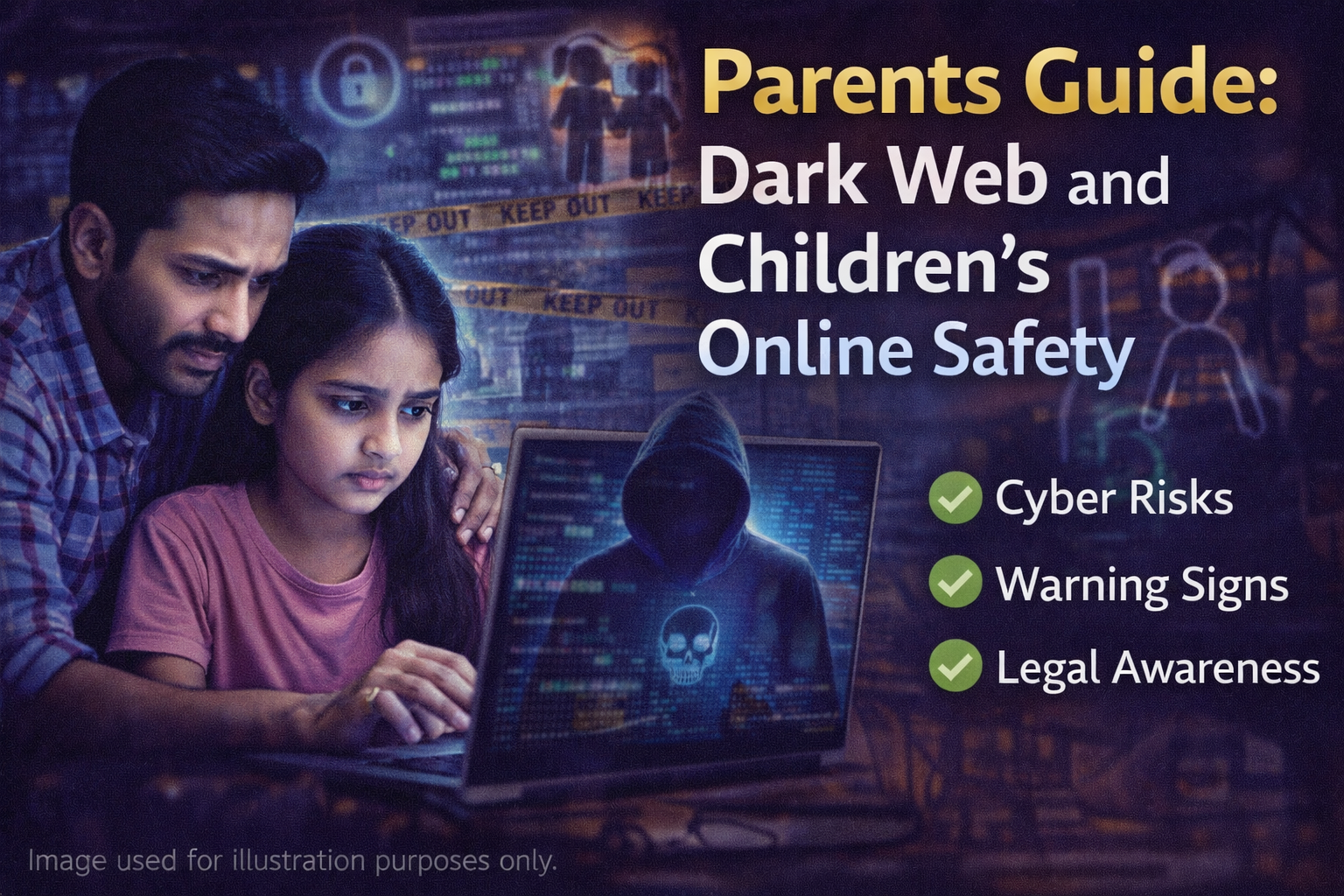
Parents Guide: Dark Web and Children’s Online Safety (Legal & Digital Awareness)
This article is published by The Legal Warning India and written by Advocate Uday Singh.
Why Parents Must Understand the Dark Web Today
In today’s digital age, children are growing up with smartphones, gaming platforms,
social media, and online communities. While most of the internet is harmless,
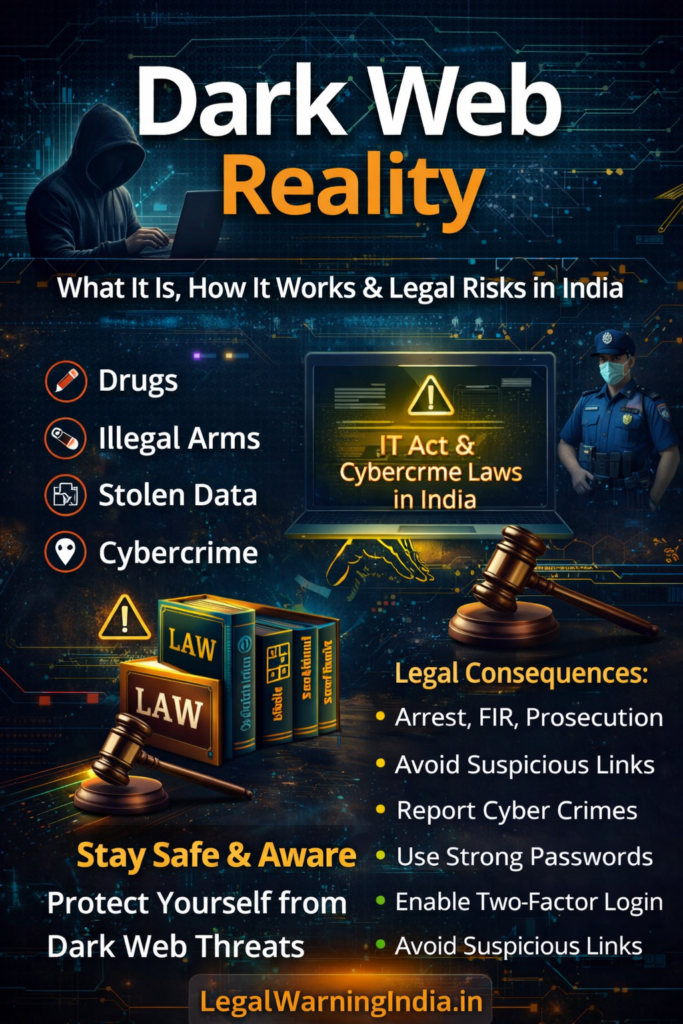
there exists a hidden side known as the Dark Web,
which poses serious risks to children if parents remain unaware.
This guide is written specifically for parents to understand:
how the dark web affects children, how exposure happens indirectly,
what warning signs to watch for, and how to protect children legally and digitally.
What Is the Dark Web? (Simple Explanation for Parents)
The dark web is a hidden part of the internet that cannot be accessed through
regular browsers like Chrome or Safari. It requires special software such as Tor
and is often misused for illegal activities.
Important: Children do not usually access the dark web intentionally.
The real danger lies in indirect exposure through:
- Gaming chats and private servers
- Social media groups and anonymous links
- Free movie, mod, or cheat websites
- Unknown file downloads and invitations
How Children Become Vulnerable Without Visiting the Dark Web
Many parents believe that if their child is not using Tor or similar software,
they are safe. This assumption is dangerous.
Dark web networks often operate on the surface web using:
- Fake profiles on social media
- Private messaging apps
- Encrypted platforms
- Gaming voice and text chats
Children are targeted because of curiosity, emotional vulnerability,
and lack of awareness.
Major Dark Web Risks for Children
1. Online Grooming
Criminals slowly build trust with children through friendly conversations,
eventually manipulating them emotionally or psychologically.
2. Exposure to Harmful Content
Violence, drugs, self-harm, extremist ideologies, and explicit material
can severely affect a child’s mental health.
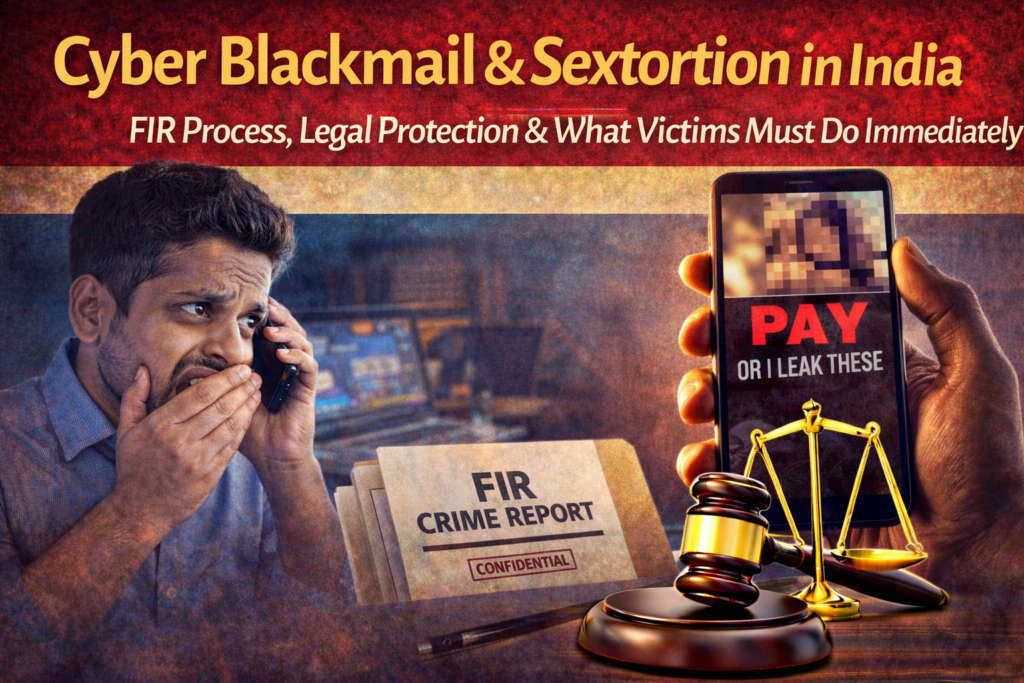
3. Sextortion and Blackmail
Children may be tricked into sharing images or videos,
which are later used for threats and blackmail.
Related awareness:
Online Sextortion Awareness & Legal Remedies
4. Financial Exploitation
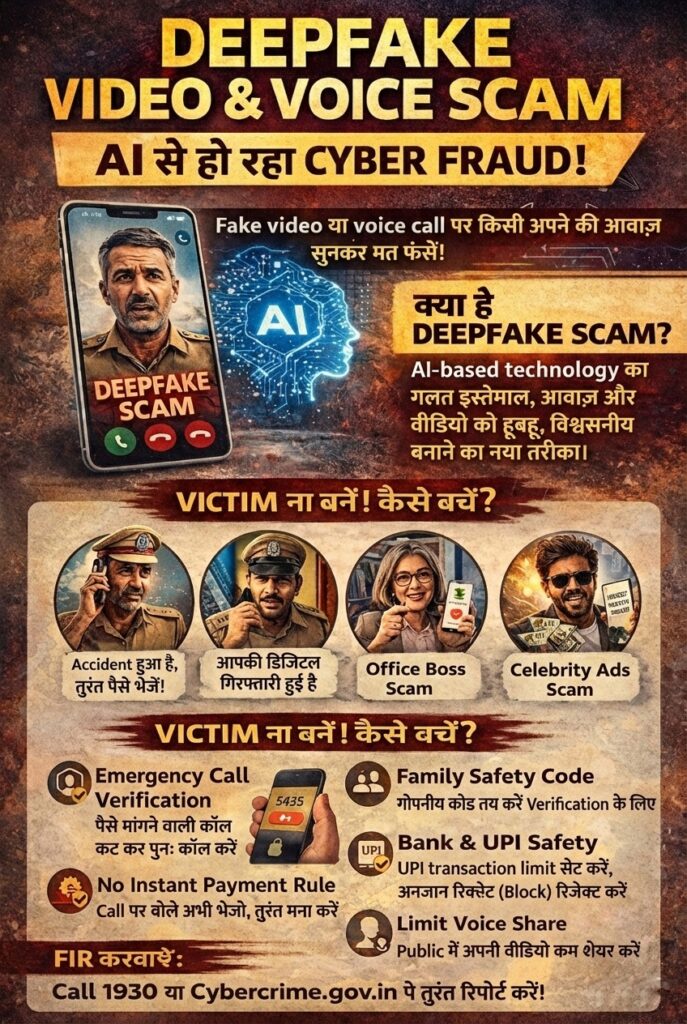
Gaming wallets, gift cards, or parents’ bank details may be misused
through manipulation.
Warning Signs Parents Should Never Ignore
- Sudden secrecy about online activities
- Multiple social media or gaming accounts
- Use of unknown apps or private browsers
- Emotional withdrawal or anxiety
- Requests for money or gift cards
- Fear when messages arrive
Legal Awareness for Parents in India
Indian law provides protection mechanisms, though awareness is essential.
Depending on circumstances, the following may apply:
- Information Technology Act, 2000
- Provisions under Bharatiya Nyaya Sanhita (BNS)
- POCSO Act for child protection
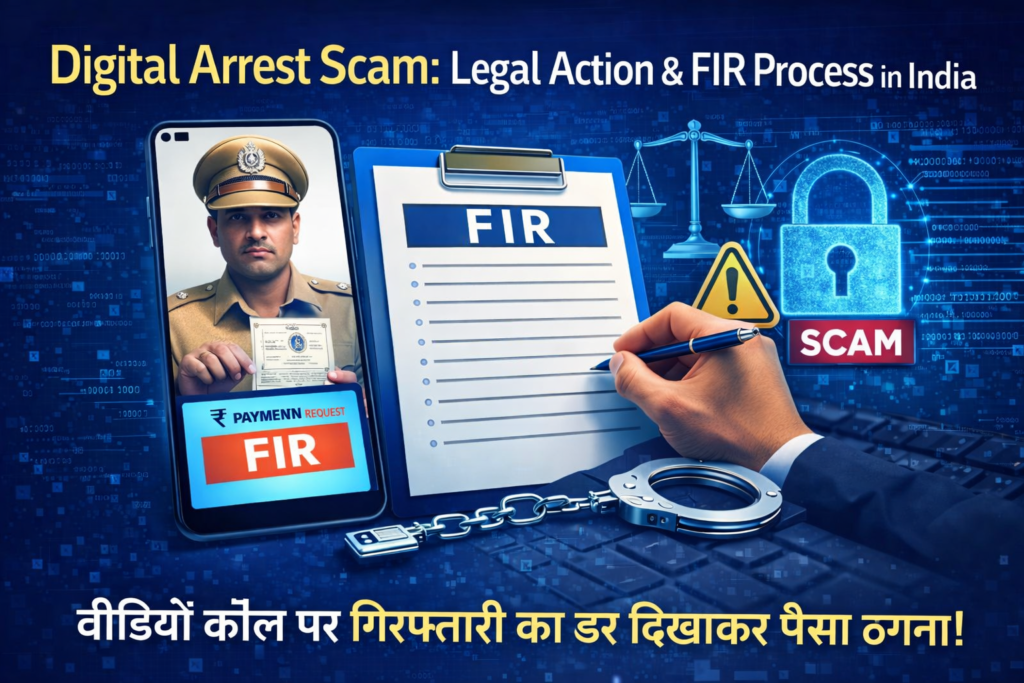
- Cyber crime reporting mechanisms
Parents should understand that early reporting often prevents escalation.
Immediate Steps Parents Should Take
- Talk openly without fear or punishment
- Preserve evidence such as chats or links
- Do not confront unknown online users directly
- Change passwords and privacy settings
- Seek guidance from cyber awareness resources
Preventive Measures Every Parent Must Implement
Digital Controls
- Enable parental controls
- Limit app installations
- Restrict unknown downloads
Emotional Safety
- Encourage open communication
- Educate children about online risks
- Teach refusal and reporting habits
Related Cyber Safety Guidance
Request Legal Guidance
If a parent believes that a child may be at risk due to online activities,
they should be aware of the legal remedies and preventive measures available.
This information is shared strictly for general legal awareness.
▶ Request Online Consultation
▶ WhatsApp Consultation Request
Disclaimer
This article is published for general legal and parental awareness only.
It does not constitute legal advice, solicitation, or advertisement.
Information is based on publicly available sources, reported cyber crime patterns,
and awareness material.
Parents are advised to consult appropriate authorities where required.