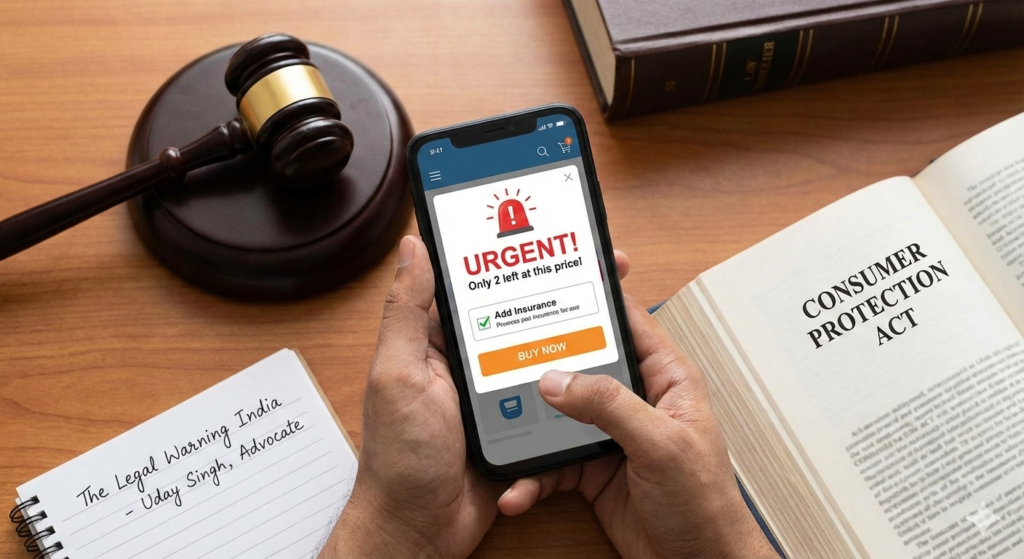
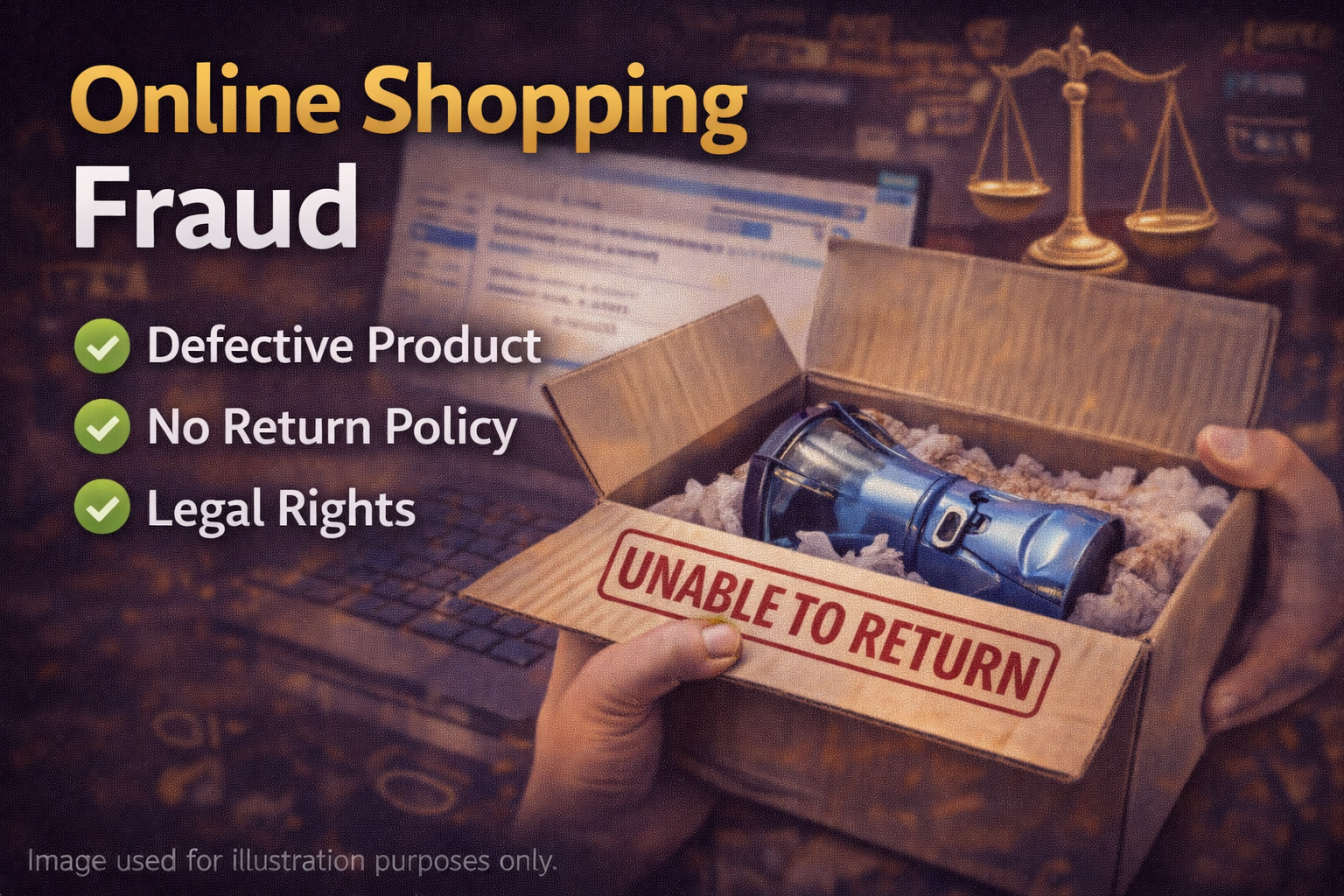
Online Shopping Fraud: Defective Product Delivered With No Return Option
This article is published by The Legal Warning India and written by Advocate Uday Singh.
Introduction: A Growing Digital Consumer Problem
Online shopping has become an essential part of daily life in India. Consumers regularly purchase
electronics, clothing, household goods, and even essential services through e-commerce platforms.
However, with this convenience, cases of online shopping fraud have increased significantly.
One of the most common complaints today involves situations where a consumer receives a
defective, damaged, fake, or misrepresented product and later discovers that the seller or platform
claims the product is “non-returnable” or covered under a “no return policy.”
This article explains the legal position, consumer rights, and remedies available in such cases,
strictly for general legal awareness.
What Is This Type of Online Shopping Fraud?
This type of fraud generally follows a recurring pattern:
- A consumer orders a product online based on images and description
- The delivered item is damaged, fake, used, or not as advertised
- The seller or platform refuses refund or replacement
- The refusal is justified using a “no return” or “non-returnable” clause
In many cases, the consumer only realizes the deception after opening the package.
Are “No Return” Policies Legally Valid in India?
A “no return” policy does not override statutory consumer rights.
If a product is:
- Defective
- Misrepresented
- Not as described
- Unsafe or unusable
Then the consumer retains legal remedies under Indian law, regardless of the return policy mentioned
on the website.
Consumer Protection Act, 2019 – Key Safeguards
The Consumer Protection Act, 2019 provides strong protection against such practices.
- Defective Goods: Goods failing to meet quality or standards
- Unfair Trade Practice: False or misleading representations
- Product Liability: Accountability of seller, manufacturer, and marketplace
Consumers may seek refund, replacement, compensation, and corrective action.
E-Commerce Rules, 2020 – Platform Responsibility
The Consumer Protection (E-Commerce) Rules, 2020 impose obligations on online marketplaces.
- Accurate product descriptions
- Clear disclosure of refund and return terms
- Effective grievance redressal mechanism
- Seller accountability and traceability
E-commerce platforms cannot completely disclaim responsibility by shifting blame to sellers.
When Can Criminal Law Become Relevant?
If the facts indicate intentional deception, repeated fraud, or organized cheating,
criminal provisions may apply depending on circumstances.
Such cases require careful evaluation of intent, evidence, and transaction history.
Immediate Steps Consumers Should Take
1. Preserve Evidence
- Order confirmation emails
- Invoices and payment receipts
- Product photos and unboxing videos
- Screenshots of product description
2. Contact Platform Grievance Officer
Every e-commerce platform must appoint a grievance officer and provide contact details.
3. Submit Written Complaint
Clearly mention the defect, mismatch, and demand appropriate relief.
4. Consumer Complaint (If Required)
If unresolved, the consumer may approach appropriate consumer redressal mechanisms.
Common Red Flags Consumers Should Watch
- Extremely low pricing
- New or unverified sellers
- Fake or repetitive reviews
- No physical address or contact details
- Pressure-based sales tactics
Related Legal Awareness Articles
- Cyber Crime Bank Account Freeze – Legal Remedies
- Online Blackmail & Sextortion Awareness
- Unknown Cyber Complaint & Account Freeze Guide
Request Legal Guidance
The information is for general legal awareness only.
You can apply for information regarding representation.
Disclaimer
This article is published strictly for general legal awareness.
It does not constitute legal advice, solicitation, or advertisement under Bar Council of India Rule 36.
Information is based on publicly available laws and reported consumer issues.
Readers are advised to verify facts independently and consult appropriate authorities where required.