Maintenance Order After Divorce – Enforcement Process Explained (What to Do If Payment Stops)
This article is published by The Legal Warning India and written by Advocate Uday Singh.
Information is based on statutory provisions, family court practice, and publicly available judicial principles.
When Maintenance Order Is Passed but Not Followed
In many divorce cases, the family court passes a clear maintenance order in favour of the wife or dependent spouse. However, the real problem often begins after the order, when the paying spouse delays, avoids, or completely stops payment.
This raises an important question:
👉 What is the legal remedy if maintenance ordered after divorce is not paid?
Maintenance Order After Divorce – Legal Position
A maintenance order passed after divorce is legally binding. Non-compliance is not a private dispute; it is a violation of a court order.
Maintenance after divorce may arise under:
- Section 25 of the Hindu Marriage Act (Permanent Alimony)
- Orders passed in connected maintenance proceedings
Once the order is passed, the paying spouse is legally bound to comply unless the order is modified or stayed.
First Step: Do Not Ignore the Default
Many people wait for months hoping that payment will resume. This delay often weakens enforcement.
Maintenance arrears start accumulating from the first month of default.
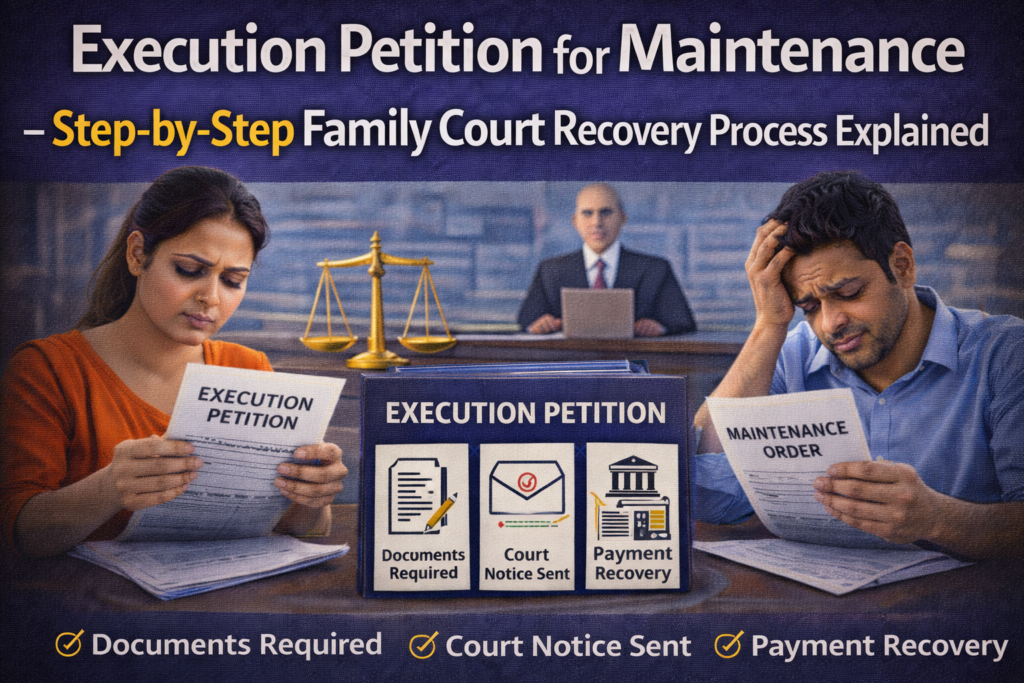
Execution Petition – The Main Enforcement Tool
The primary legal remedy is filing an Execution Petition before the same family court that passed the maintenance order.
The execution petition requests the court to:
- Recover pending maintenance arrears
- Ensure future compliance
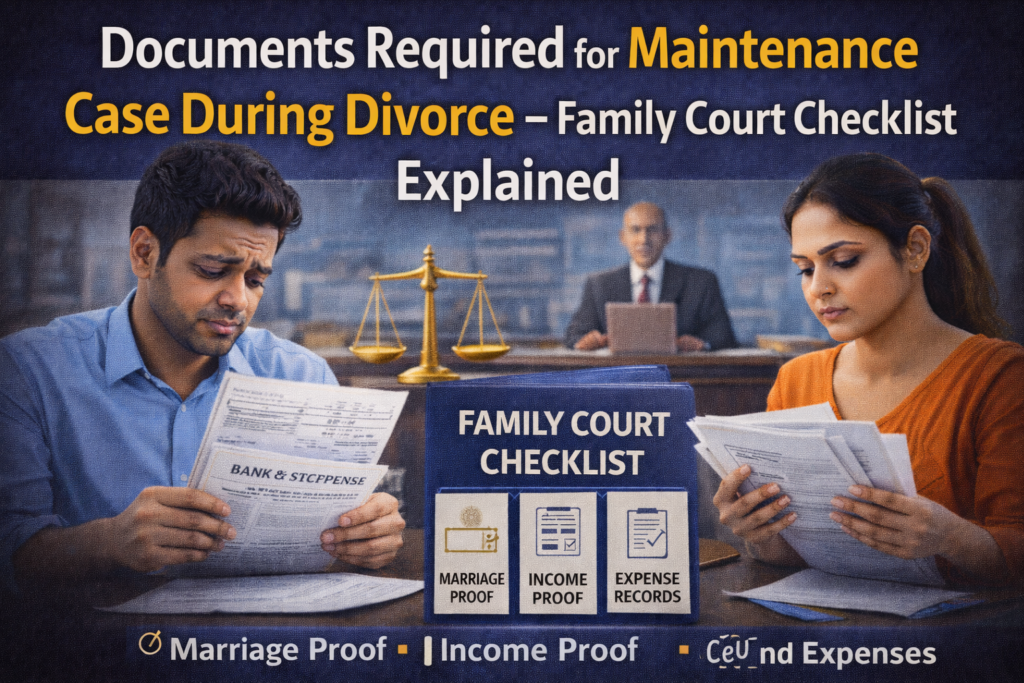
Documents Required for Enforcement
To file an execution petition, the following are usually required:
- Certified copy of maintenance order
- Calculation of arrears
- Bank details for payment
A detailed checklist is explained here:
Documents Required for Maintenance Case During Divorce
Role of Maintenance Affidavit in Enforcement
During enforcement, courts often revisit the income and asset position of the defaulter.
If income was concealed earlier, the court may take a strict view.
Read in detail:
Family Court Maintenance Affidavit – Income Disclosure Rules
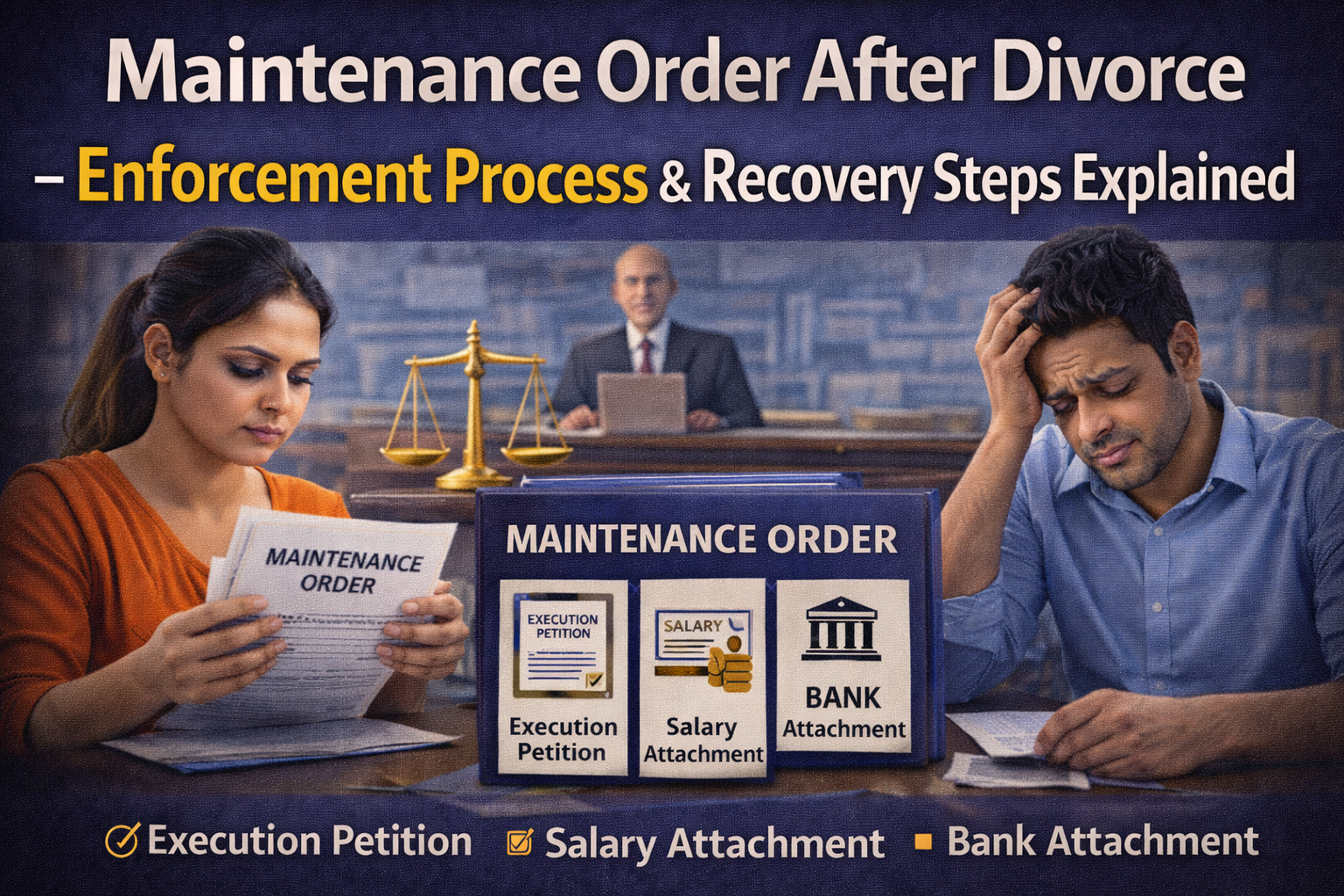
Modes of Maintenance Recovery Ordered by Court
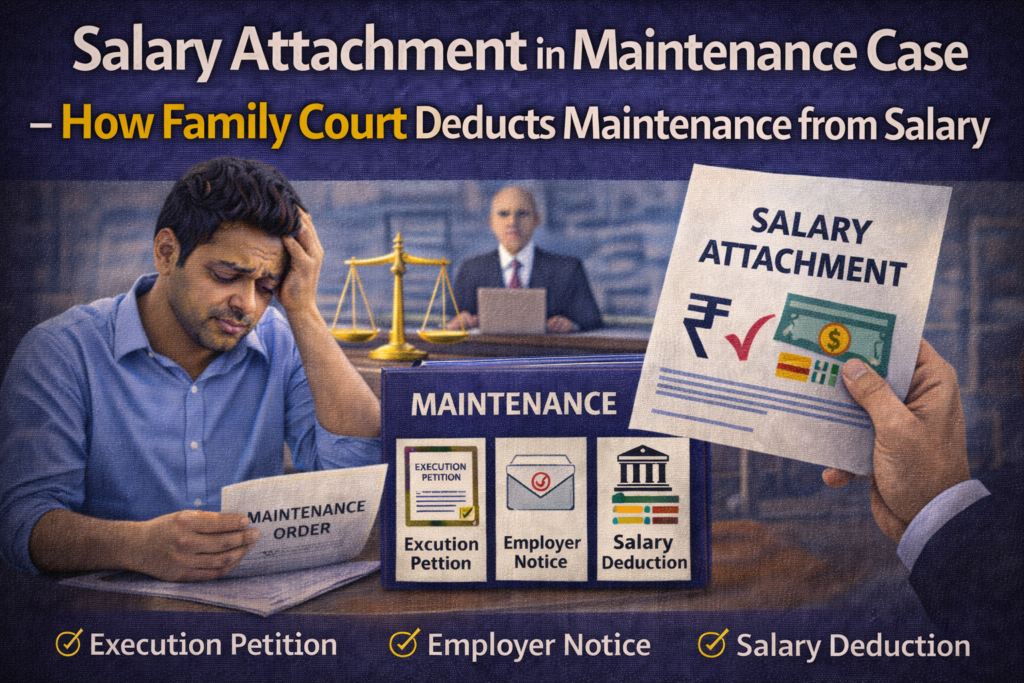
1. Salary Attachment
If the defaulter is employed, the court may direct the employer to deduct maintenance directly from salary.
2. Bank Account Attachment
Courts can order attachment of bank accounts to recover arrears.
3. Property Attachment (Limited Cases)
If movable or immovable assets exist in the defaulter’s name, attachment may be ordered.
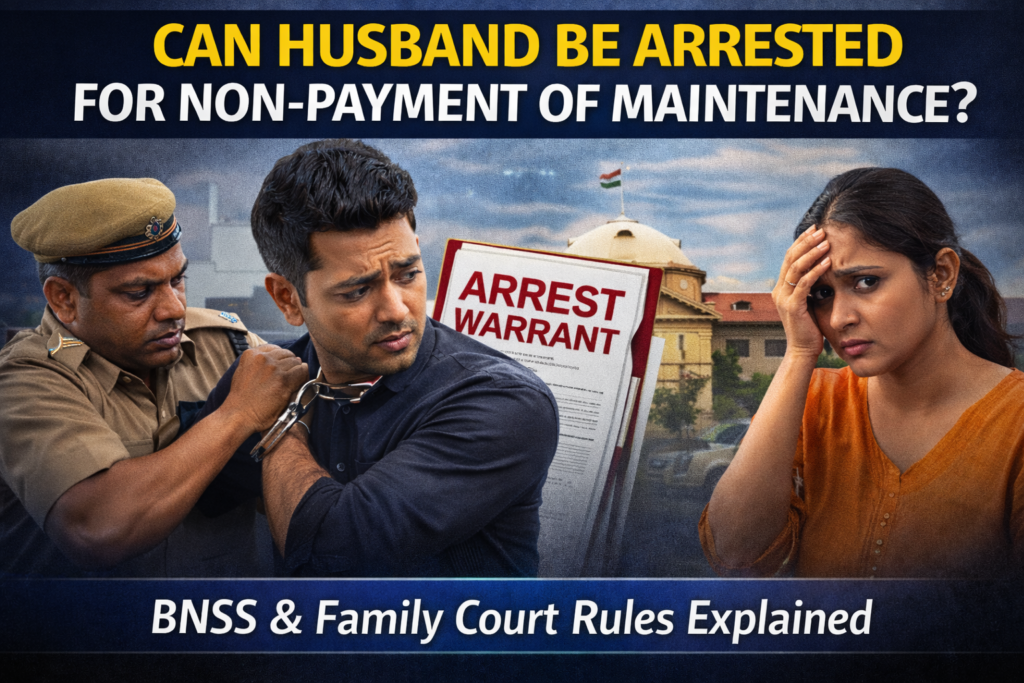
4. Coercive Steps for Wilful Default
In cases of deliberate non-payment, stricter steps may follow.
Detailed explanation:
Can Husband Be Arrested for Non-Payment of Maintenance?
Common Defences Raised by Defaulters
- Loss of job
- Financial hardship
- New family responsibilities
Courts examine whether these reasons are genuine or merely excuses.
Can Maintenance Order Be Modified Instead?
Yes. If there is a genuine change in circumstances, the paying spouse should seek modification, not stop payment.
Unilateral non-payment is never advisable.
What Happens If Enforcement Is Ignored?
Ignoring enforcement proceedings can lead to:
- Increase in arrears
- Adverse court orders
- Loss of credibility
Practical Advice
For Maintenance Holder
- Act promptly on default
- Maintain clear arrears calculation
- Use execution proceedings effectively
For Paying Spouse
- Do not ignore court orders
- Seek modification if genuinely unable to pay
- Avoid coercive enforcement
Conclusion
A maintenance order after divorce is not symbolic; it is enforceable by law. Indian family courts provide effective mechanisms to ensure compliance, but timely legal action is crucial.
Delay benefits the defaulter, not the rightful claimant.
This article is for general legal information and awareness purposes only. It does not constitute legal advice or solicitation. Communication is purely informational, in compliance with Bar Council of India Rule 36.