This article is published by The Legal Warning India and written by Advocate Uday Singh.
Identity Theft Cases in India: How Criminals Take Loans, Create Fake Companies & What Victims Must Do Urgently
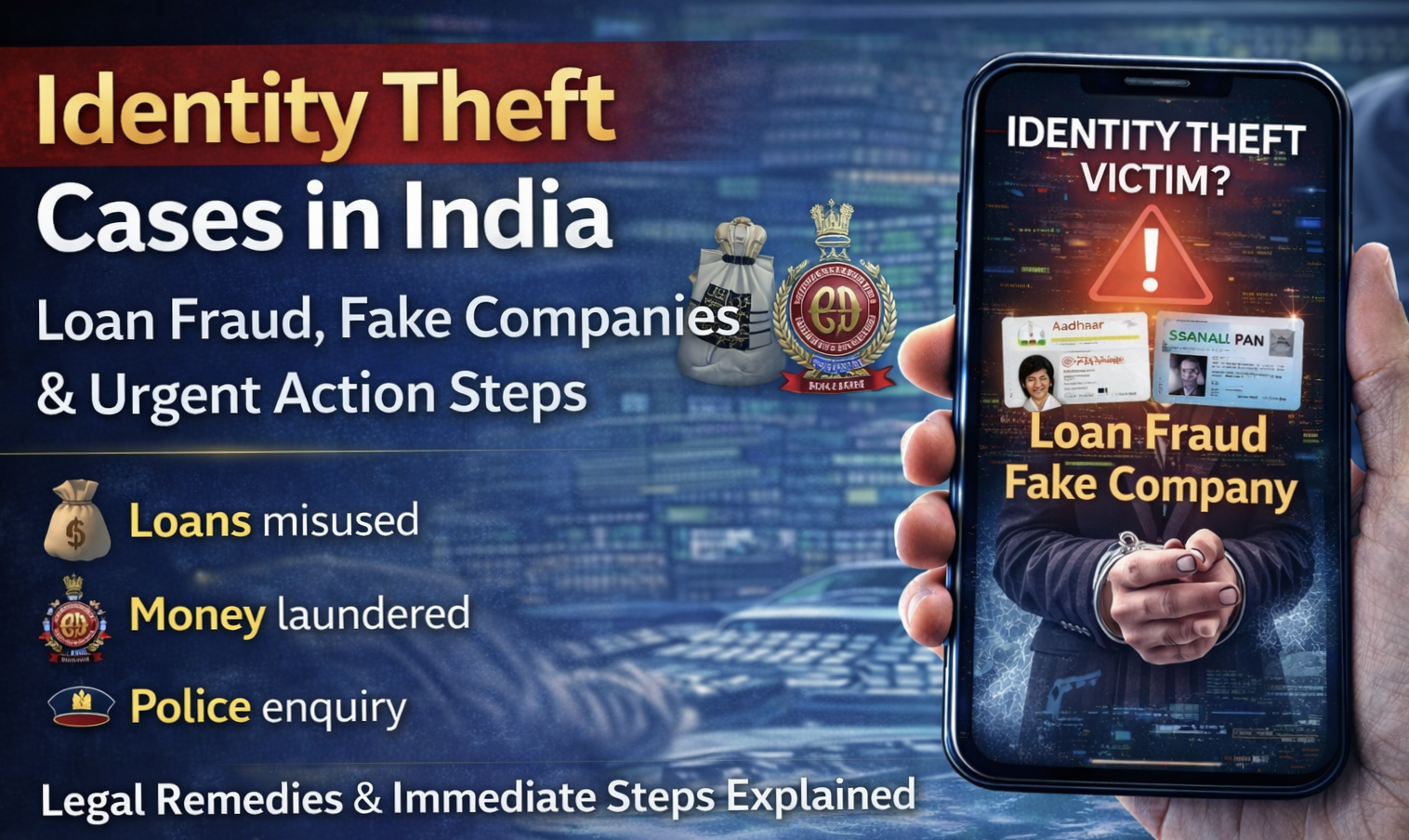
Identity theft has emerged as one of the most dangerous and fast-growing cyber crimes in India. In recent years, criminals have misused stolen Aadhaar, PAN, mobile numbers and digital credentials not only to take loans, but also to create fake companies and launder money — leaving innocent citizens facing police notices, bank recovery actions and legal trouble.
This article provides a deep legal and practical analysis of identity theft cases, the damage caused to victims, and the urgent steps required to protect oneself.
What is Identity Theft?
Identity theft occurs when a fraudster unlawfully uses another person’s personal or financial information — such as Aadhaar number, PAN card, bank details, mobile SIM, email ID or biometric data — to commit fraud or other crimes.
In India, identity theft is often linked with:
- Loan fraud using stolen KYC documents
- Fake SIM card issuance and OTP interception
- Creation of shell companies in victim’s name
- Money laundering through fake businesses
- Tax evasion and GST fraud
Identity Theft for Taking Loans: How It Happens
One of the most common identity theft crimes today is loan fraud. Fraudsters obtain Aadhaar, PAN and mobile number details and apply for:
- Instant app-based loans
- NBFC personal loans
- Credit cards
- Buy-now-pay-later schemes
Victims usually discover the fraud when:
- Recovery agents start calling
- CIBIL score suddenly drops
- Bank sends legal notice
- Police enquiry notice is received
In many cases, victims never applied for any loan but are still shown as defaulters.
Identity Theft to Create Fake Companies & Money Laundering
A more serious form of identity theft involves misuse of personal documents to register fake companies or LLPs. Criminals use stolen identity data to:
- Register shell companies
- Open current bank accounts
- Route illegal money
- Commit GST and tax fraud
- Layer funds to avoid detection
Later, enforcement agencies trace transactions back to the individual whose documents were misused — creating severe legal stress for innocent victims.
Legal Provisions Applicable in Identity Theft Cases
Identity theft cases in India may attract multiple legal provisions, including:
- Information Technology Act – identity related offences
- Bharatiya Nyaya Sanhita (BNS) – cheating, forgery and fraud related provisions
- Banking and financial fraud regulations
- Money laundering laws (in serious cases)
Victims must understand that early legal action is critical to avoid wrongful prosecution.
Major Losses Suffered by Identity Theft Victims
- Financial loss and debt burden
- Damage to credit score
- Harassment by recovery agents
- Police and enforcement enquiries
- Reputational damage
- Mental stress and anxiety
URGENT Steps to Take If You Are a Victim of Identity Theft
1. File a Cyber Crime Complaint Immediately
Register a complaint on the cyber crime reporting portal and keep acknowledgment proof.
2. Inform Banks and Financial Institutions
Submit written intimation to banks, NBFCs and credit bureaus stating identity misuse.
3. Lodge FIR with Local Police
An FIR is crucial to establish that you are a victim and not an accused.
4. Preserve All Evidence
Keep call logs, messages, emails, loan statements and notices safely.
5. Seek Legal Guidance
Early legal intervention helps in freezing fraudulent accounts and protecting victims from wrongful liability.
How Identity Theft Can Be Prevented
- Never share OTP or KYC documents blindly
- Regularly check credit reports
- Limit online sharing of Aadhaar/PAN
- Use official apps and websites only
- Report suspicious activity immediately
Conclusion
Identity theft is no longer a minor cyber issue — it has become a serious legal and financial threat. Victims must act quickly, document everything, and follow proper legal procedures to safeguard themselves.
Awareness, timely action and legal support are the strongest tools against identity theft fraud forcing innocent people into legal trouble.
Disclaimer: This article is for legal awareness and informational purposes only. It does not constitute legal advice or solicitation and is published in compliance with Bar Council of India Rule 36.