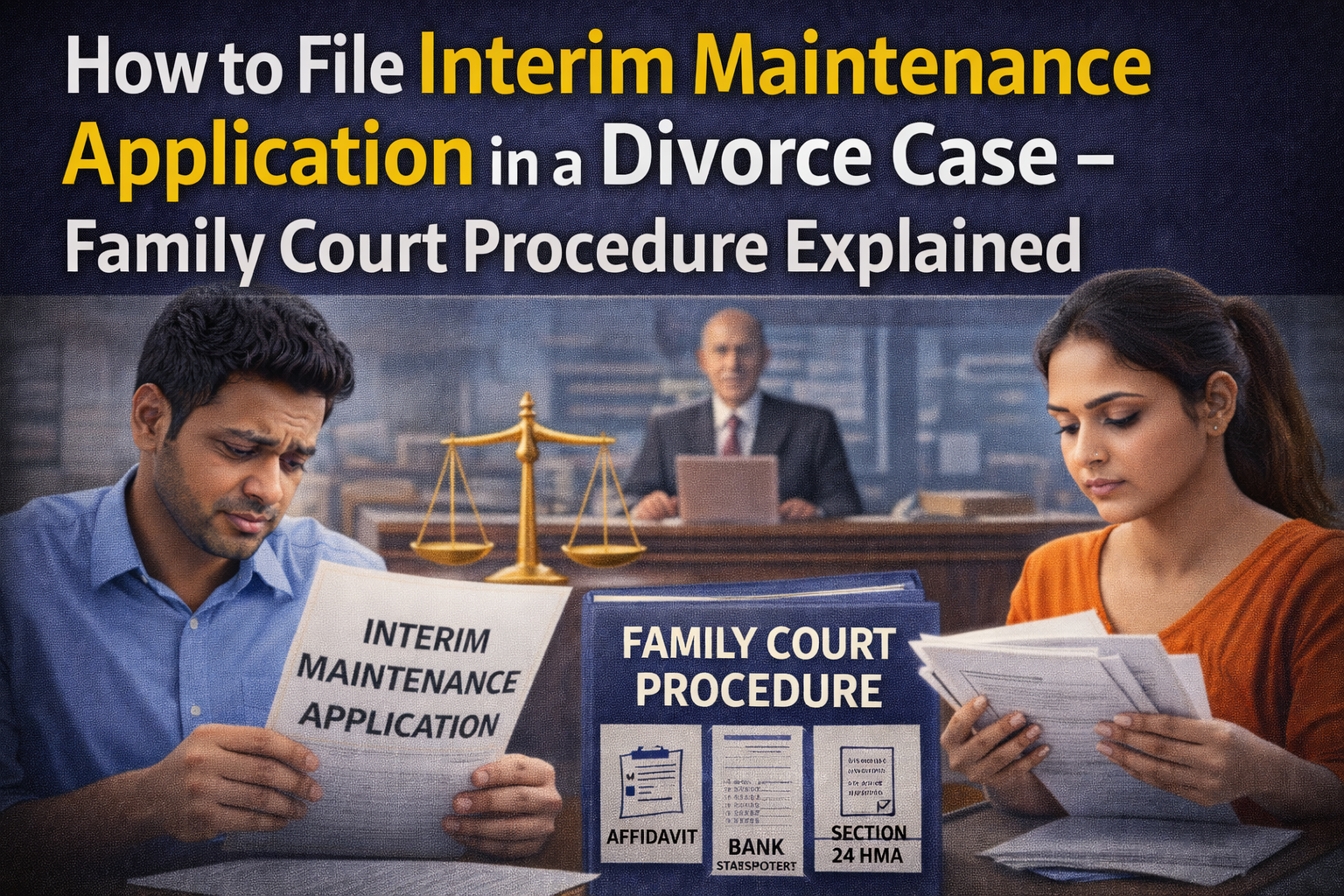
How to File Interim Maintenance Application in a Divorce Case (Step-by-Step Explained)
This article is published by The Legal Warning India and written by Advocate Uday Singh.
Information is based on statutory provisions, family court practice, and publicly available judicial principles.
Why Interim Maintenance Becomes Necessary During Divorce
In most divorce cases, proceedings take months or even years. During this period, one spouse may not have sufficient income to manage daily expenses or legal costs. To address this imbalance, Indian law provides the remedy of interim maintenance.
Interim maintenance is temporary financial support granted while the divorce case is pending. Its purpose is survival and fairness, not punishment.
Legal Provision for Interim Maintenance
Interim maintenance during divorce is mainly governed by:
- Section 24 – Hindu Marriage Act, 1955
This section allows either spouse (husband or wife) to claim maintenance and litigation expenses if they do not have sufficient independent income.
Who Can File an Interim Maintenance Application?
An interim maintenance application can be filed by:
- A wife who is not earning or earning insufficiently
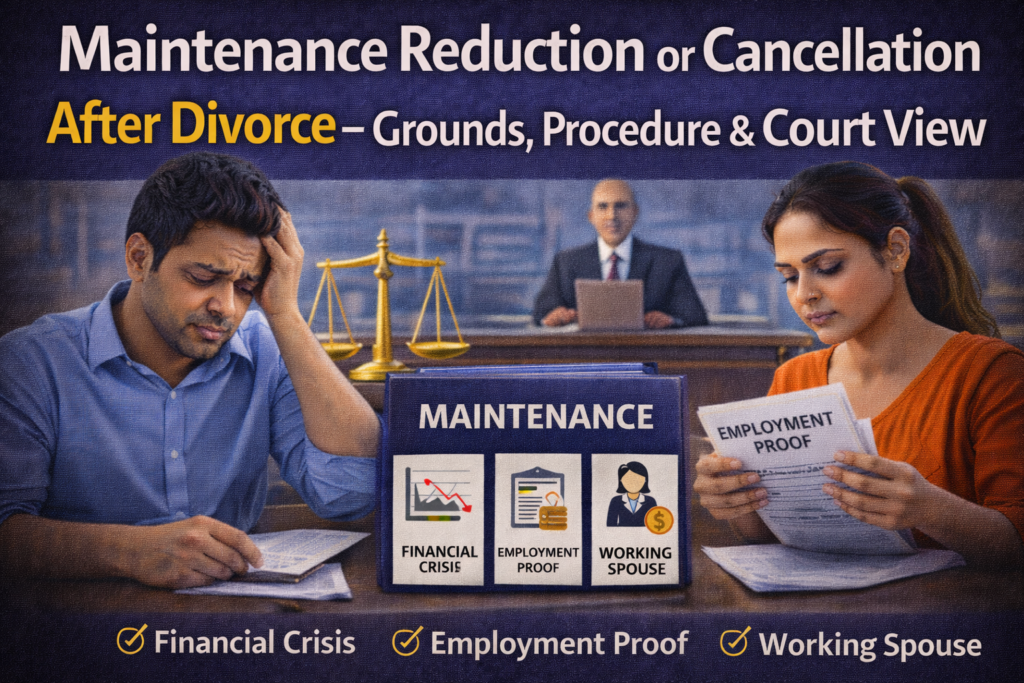
- A working wife whose income is much lower than the husband’s
- A husband who is genuinely unemployed or unable to earn
The deciding factor is financial dependency, not gender.
When Should Interim Maintenance Be Filed?
Interim maintenance can be filed:
- Along with the divorce petition, or
- Any time after divorce proceedings have started
Courts generally prefer early filing so that financial hardship is avoided during litigation.
Step-by-Step Process to File Interim Maintenance Application
Step 1: Draft the Interim Maintenance Application
The application must clearly mention:
- Details of the marriage and divorce case
- Applicant’s income (or lack of income)
- Respondent’s income and financial capacity
- Monthly expenses of the applicant
Step 2: Prepare Income & Expense Affidavit
Family courts usually require an income affidavit disclosing:
- Salary or business income
- Bank accounts
- Assets and liabilities
- Monthly household expenses
False disclosure can seriously harm the case.
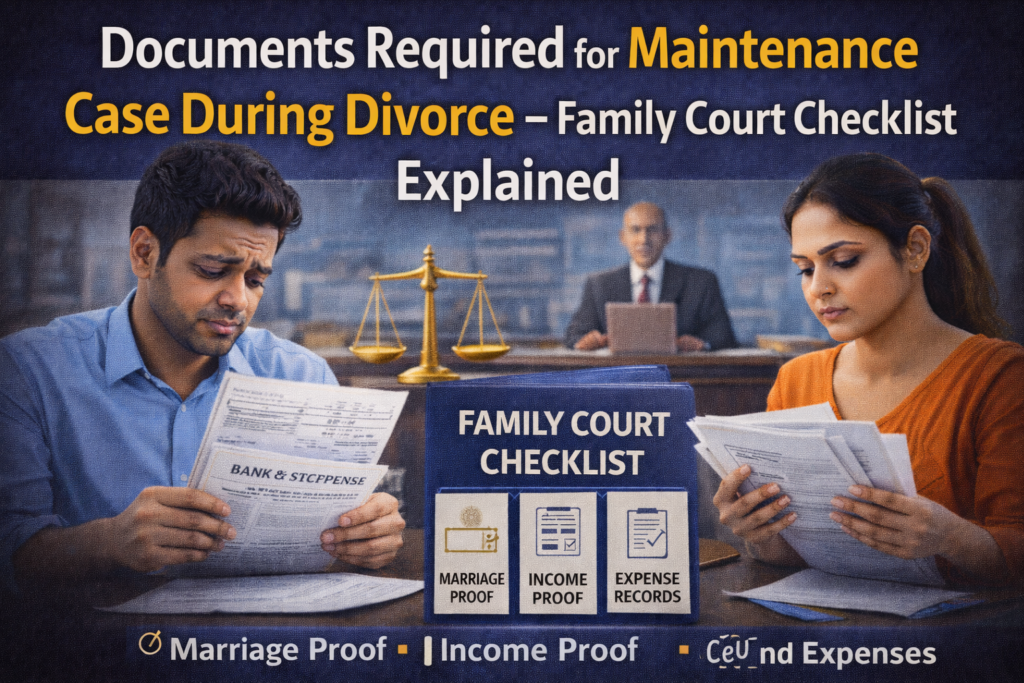
Step 3: Attach Supporting Documents
Common documents include:
- Salary slips / bank statements
- ITR (if available)
- Rent agreement or utility bills
- Medical or child-related expenses
Step 4: Filing in Family Court
The application is filed before the Family Court where the divorce case is pending. Court fees are nominal.
Step 5: Notice & Reply
The opposite party is given time to file a reply, usually disputing income or expenses.
Step 6: Court Hearing & Interim Order
The court may:
- Decide the application on affidavits, or
- Pass a temporary order pending final decision
How Does the Court Decide Interim Maintenance Amount?
The court considers:
- Income of both parties
- Earning capacity (not just present salary)
- Standard of living during marriage
- Number of dependents
There is no fixed formula. Each case is fact-specific.
Common Mistakes to Avoid
- Hiding income or assets
- Exaggerating expenses without proof
- Delaying filing of application
- Ignoring court notices
What If Interim Maintenance Is Not Paid?
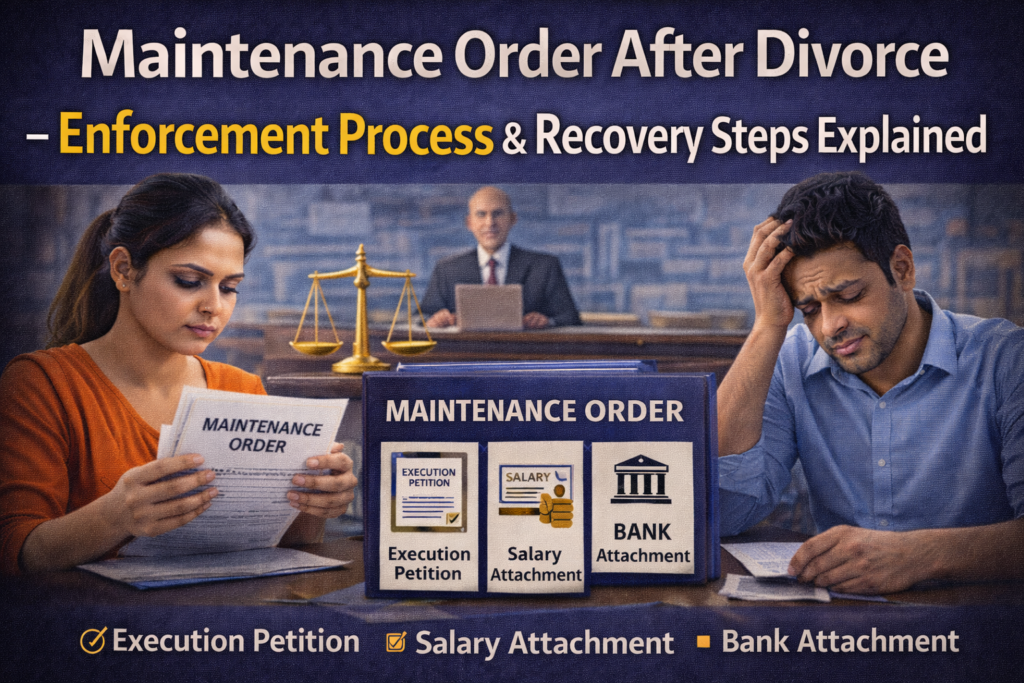
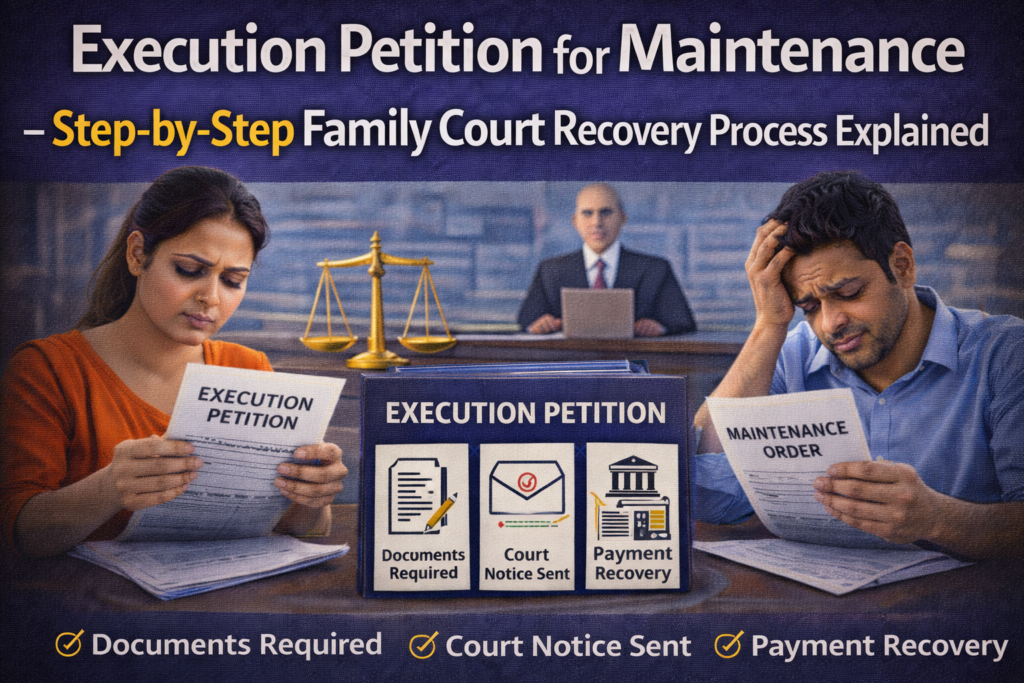
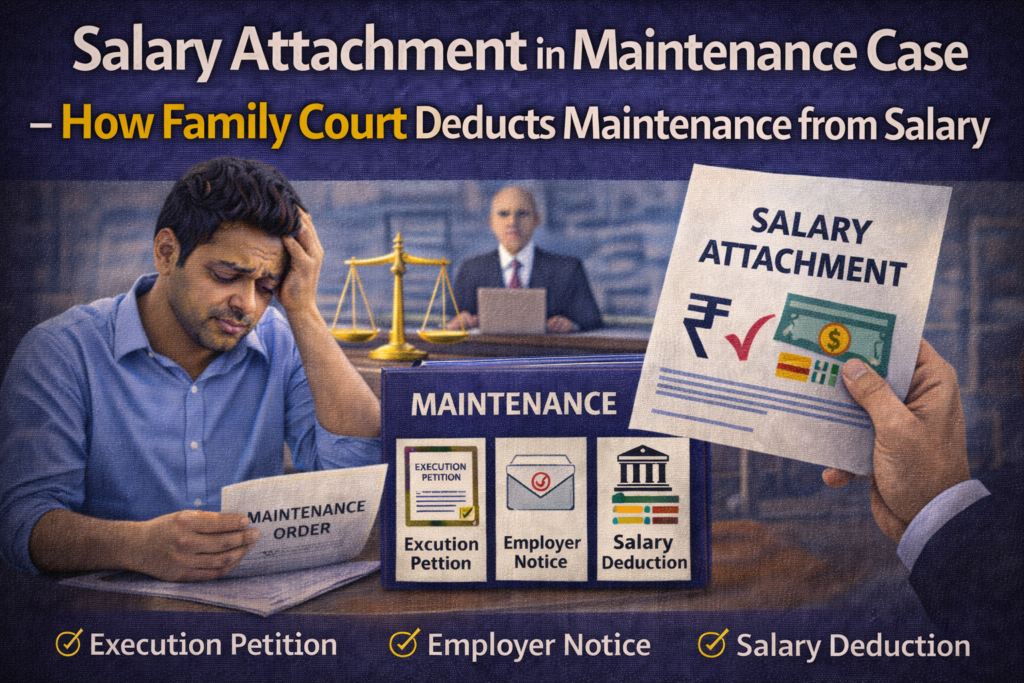
Non-payment of interim maintenance can lead to enforcement proceedings.
Related detailed guides:
- Can Husband Be Arrested for Non-Payment of Maintenance? (BNSS Explained)
- Husband Changed Job to Avoid Maintenance – Legal Remedy
- Working Wife & Husband with Higher Income – Maintenance Law
Difference Between Interim Maintenance and Permanent Alimony
Interim maintenance is temporary and ends with the divorce decree. Permanent alimony is decided at the final stage.
For detailed comparison, read:
Divorce – Interim vs Permanent Maintenance Explained
Conclusion
Filing an interim maintenance application is a crucial step to ensure financial stability during divorce litigation. Courts aim to maintain fairness and dignity, not to penalize either spouse.
Proper drafting, honest disclosure, and timely filing significantly improve the chances of relief.
This article is for general legal information and awareness purposes only. It does not constitute legal advice or solicitation. Communication is purely informational, in compliance with Bar Council of India Rule 36.