This article is published by The Legal Warning India and written by Advocate Uday Singh.
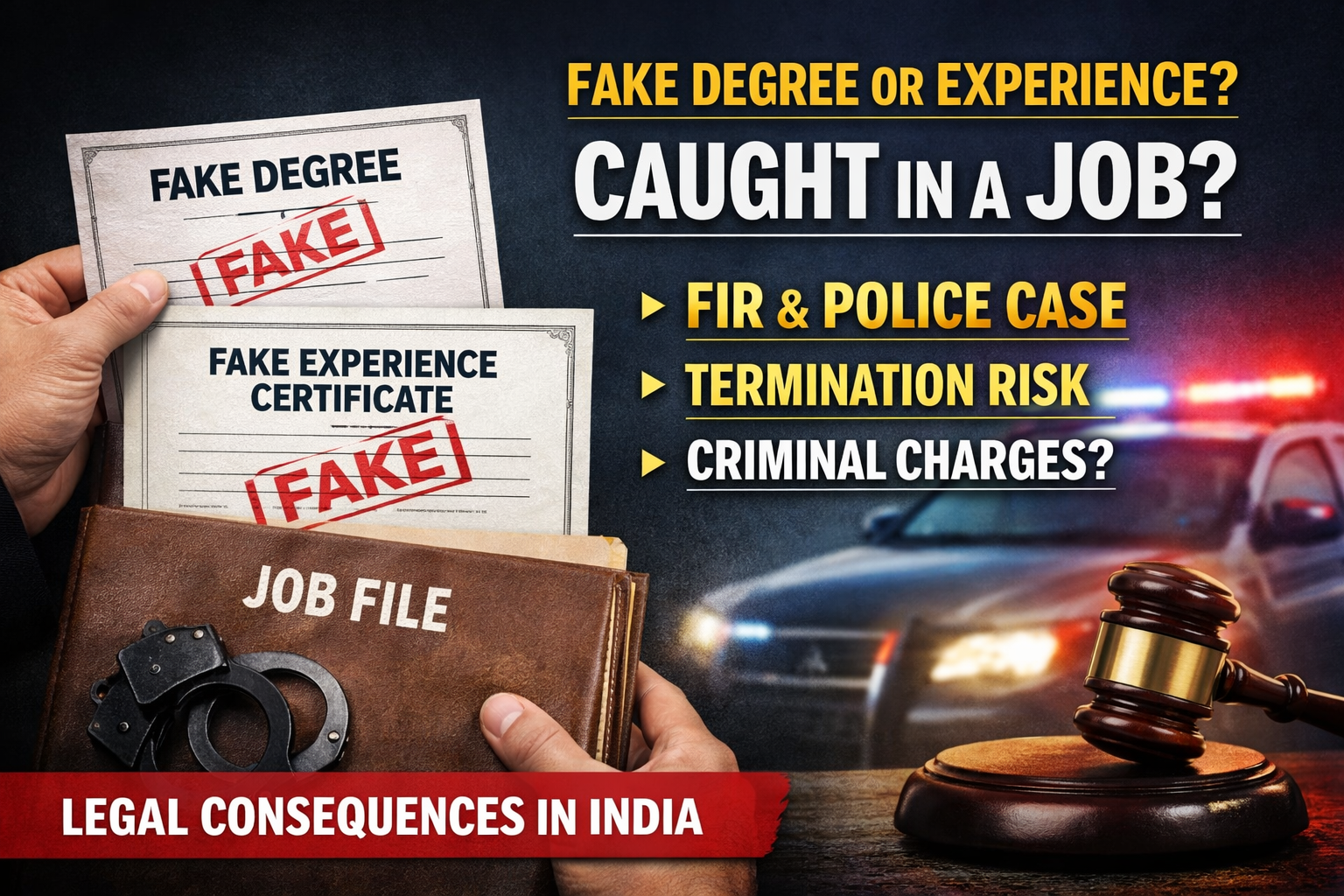
Fake Degree or Fake Experience Certificate to Get a Job – What Happens Under Indian Law?
In India, cases of people getting jobs using fake degrees or fake experience certificates are increasing rapidly. Many employees believe that once they get selected and start working, nothing will happen. This belief is legally dangerous.
This article explains what the law says, what action employers can take, what criminal cases may be filed, and what an employee should do immediately if such a situation arises.
What Is Considered a Fake Degree or Fake Experience Certificate?
A document is treated as fake if:
- The degree is issued by an unrecognized or non-existent university
- The marksheet or certificate is forged or edited
- The experience certificate mentions a company where the person never worked
- Salary slips or relieving letters are fabricated
Is It a Criminal Offence?
Yes. Using a fake degree or experience certificate is not just a company policy violation, it is a criminal offence.
Applicable Criminal Laws
- IPC Section 420 – Cheating and dishonestly inducing employment
- IPC Section 468 – Forgery for the purpose of cheating
- IPC Section 471 – Using forged documents as genuine
- BNS 2023 (New Criminal Law) – Cheating, forgery, and fraud provisions continue with stricter punishment
These offences can lead to FIR, police investigation, arrest, and criminal trial.
What Action Can the Employer Take?
If an employer discovers fake documents, they can:
- Terminate the employee immediately without notice
- Cancel appointment and experience letters
- Recover salary already paid
- File a police complaint or FIR
- Blacklist the employee internally or across group companies
What If the Employee Has Already Worked for Many Months or Years?
Many employees argue:
“I worked honestly, so my job should be safe.”
Legally, this argument does not protect the employee.
Courts have repeatedly held that fraud at the entry level vitiates the entire employment. Even long service does not cure fraud.
Can Salary Already Paid Be Recovered?
Yes, in serious cases:
- Employer may initiate recovery proceedings
- Salary may be treated as “wrongful gain”
- Civil recovery suits or criminal restitution may be filed
What Happens If the Matter Is Ignored?
If the issue is ignored:
- Employer may directly file FIR
- Police may summon or arrest
- Future employment becomes risky
- Passport, visa, and background verification may fail
Ignoring the issue often makes the situation worse.
What Should an Employee Do Immediately?
If someone is facing this situation:
- Do not submit further false explanations or documents
- Stop all informal communication
- Preserve emails, offer letters, and HR communication
- Seek legal guidance immediately
Is There Any Legal Defence Possible?
Each case depends on facts. In some situations:
- Misrepresentation by agents or consultancies can be examined
- Employer’s knowledge or negligence may matter
- Criminal intent must be legally assessed
Early legal intervention can sometimes prevent FIR or reduce criminal exposure.
Prevention Advice (Very Important)
If you are a job seeker:
- Never use fake or “managed” documents
- Verify university recognition on UGC website
- Avoid agents promising “job with fake experience”
A short-term job gain can lead to long-term criminal consequences.
Conclusion
Getting a job using a fake degree or fake experience certificate is a serious legal risk. It can result in termination, FIR, criminal trial, and permanent damage to career and reputation.
Legal awareness and timely action are the only safeguards.
Information is based on news reports and publicly available sources.
Disclaimer:
This article is for general legal information and awareness purposes only. It does not constitute legal advice or solicitation. Communication is purely informational, in compliance with Bar Council of India Rule 36.