This article is published by The Legal Warning India and written by Advocate Uday Singh.
This article is for general legal information and awareness purposes only. It does not constitute legal advice or solicitation. Communication is purely informational, in compliance with Bar Council of India Rule 36.
Fake Courier Scam – “Customs Parcel” Fraud Call: What To Do If You Receive Such a Call in India
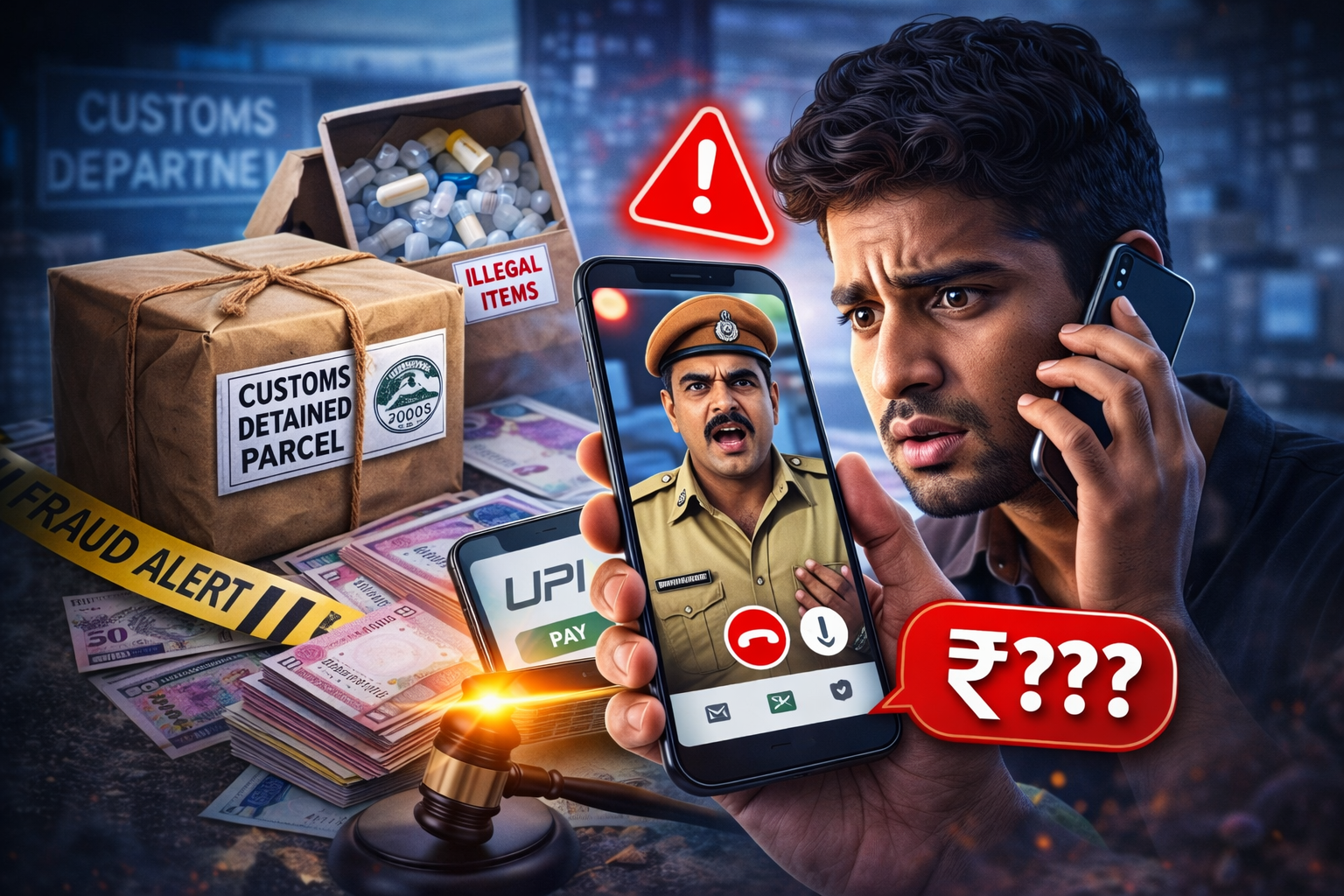
In recent months, many people across India have reported receiving suspicious calls claiming that a courier parcel in their name has been stopped by customs or police. The caller often pretends to be from a courier company, customs department, or even a police officer.
The victim is told that the parcel contains illegal items such as drugs, passports, or foreign currency. The caller then pressures the person to pay a “clearance fee” or threatens legal action.
This type of fraud is commonly known as the Fake Courier Scam or Customs Parcel Scam. Understanding how it works can help people avoid financial loss.
Information is based on news reports and publicly available sources.
Image used for illustration purposes only
How the Fake Courier Scam Usually Works
Scammers follow a psychological pressure strategy. The conversation is designed to create panic and urgency.
- A person receives a call claiming a courier parcel is under investigation.
- The caller says illegal items were found in the parcel.
- The victim is threatened with police or customs action.
- The caller asks for money to “clear the case”.
- Payment is requested through UPI, bank transfer, or crypto.
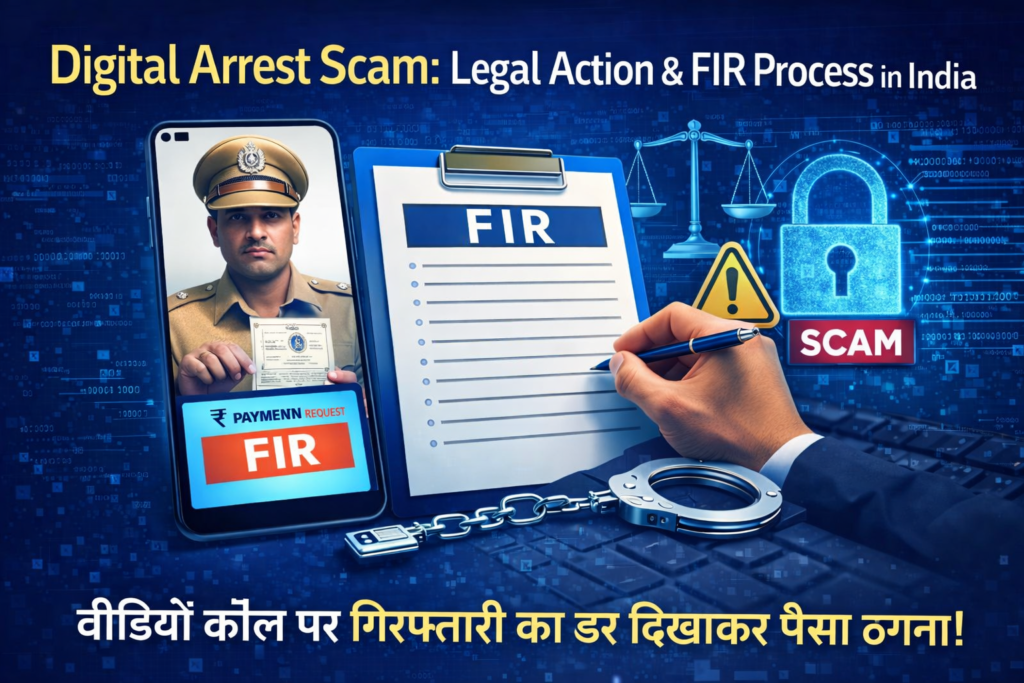
In some cases, scammers even conduct a video call pretending to be police officers.
Common Warning Signs of a Fake Courier Call
- Unexpected call about a parcel you never sent.
- Threats of immediate arrest or police action.
- Request for urgent payment to resolve the issue.
- Callers claiming to transfer the call to “police officers”.
- Pressure to keep the matter secret.
Government authorities usually follow formal legal procedures and do not demand instant payments through digital apps.
Applicable Legal Provisions
Depending on the circumstances, such fraud may involve:
Bharatiya Nyaya Sanhita (BNS), 2023
- Cheating and dishonestly inducing delivery of property
Information Technology Act, 2000
- Section 66D – Cheating by personation using computer resources
These provisions may apply when someone impersonates authorities and deceives victims through digital communication.
What To Do If You Receive a Fake Courier Fraud Call
1. Do Not Share Personal Information
Avoid sharing Aadhaar number, bank details, OTP, or payment information.
2. Do Not Make Any Payment
Scammers rely on panic. Immediate payments increase the risk of financial loss.
3. End the Call and Verify Independently
If the caller claims to be from a courier company, contact the official company customer care number directly.
4. Report the Incident
Suspicious calls can be reported on the National Cyber Crime Portal.
Frequently Asked Questions (F & Q)
Q1. Can customs officers call directly and demand money?
Customs investigations typically follow official procedures and documentation. Direct payment requests over personal calls are suspicious.
Q2. What if the caller claims that drugs were found in my parcel?
Scammers often use this tactic to create panic. Verify the information through official channels before reacting.
Q3. Is it possible for scammers to impersonate police?
Yes. Fraudsters sometimes impersonate law enforcement officials during calls or video calls.
Q4. What evidence should be preserved?
If you suspect fraud, preserve call recordings, phone numbers, messages, and payment transaction details.
Q5. Can cyber police investigate such cases?
Cyber crime units handle online fraud complaints and may examine digital transaction trails and communication records.
Prevention Tips
- Do not panic when receiving threatening calls.
- Always verify claims through official websites or customer care.
- Never transfer money based on phone threats.
- Stay informed about common cyber fraud tactics.
Read Also
Conclusion
Fake courier and customs parcel scams rely on fear and urgency. By understanding the warning signs and verifying information through official sources, individuals can reduce the risk of becoming victims.
Awareness and prompt reporting play an important role in addressing such cyber fraud incidents.
Need legal guidance? You may choose to connect for general consultation and information.
▶ Request Online Consultation
▶ WhatsApp Consultation Request