This article is published by The Legal Warning India and written by Advocate Uday Singh.
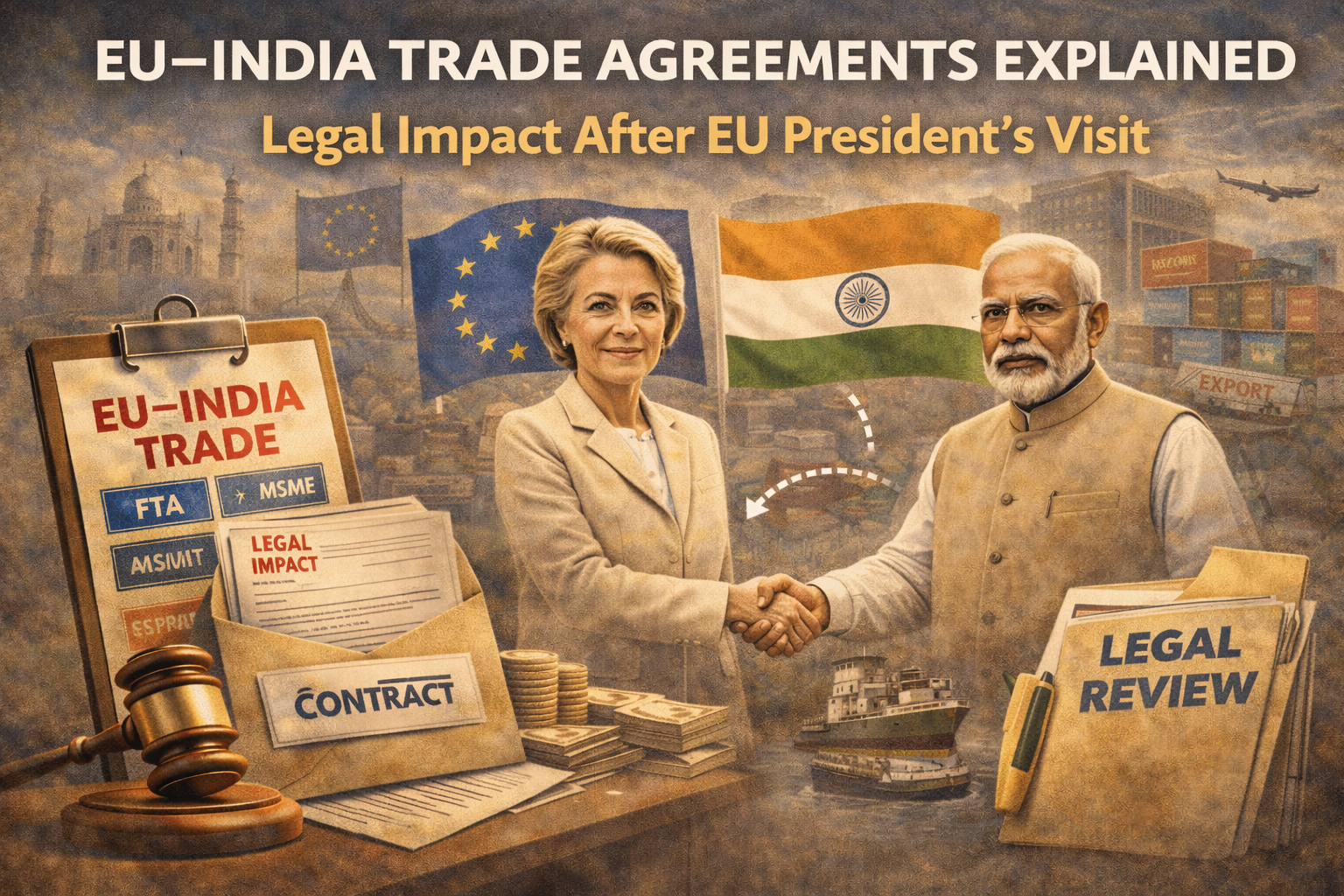
EU–India Trade Agreements Explained: Legal Impact After EU President’s Visit to India
Disclaimer: This article is for general legal information and awareness purposes only. It does not constitute legal advice or solicitation. The content is informational in nature and complies with Bar Council of India Rule 36.
Introduction: Why EU–India Trade Talks Matter Right Now
The recent visit of the European Union President to India has once again brought the long-pending EU–India Trade Agreements into sharp focus. For Indian exporters, importers, MSMEs, startups, and multinational companies, these negotiations are not just diplomatic events — they have direct legal, contractual, and compliance consequences.
Trade agreements determine market access, tariffs, regulatory standards, dispute resolution mechanisms, and investment protection. Ignoring their legal implications can expose businesses to serious financial and contractual risks.
Information discussed herein is based on news reports and publicly available sources.
What Are EU–India Trade Agreements?
EU–India trade negotiations broadly cover:
- Free Trade Agreement (FTA)
- Investment Protection Agreement
- Geographical Indications (GI)
- Regulatory cooperation and sustainability clauses
If concluded, these agreements will legally redefine how Indian businesses trade with the European Union — India’s one of the largest trading partners.
Legal Significance of the EU President’s Visit
High-level visits signal political intent to accelerate stalled negotiations. However, from a legal standpoint, such visits often precede:
- Draft treaty finalisation
- Alignment of regulatory frameworks
- Commitments on labour, environment, and data protection
- Stricter compliance obligations for exporters
Businesses that fail to prepare legally often face post-agreement penalties, rejected consignments, or contract termination.
Key Legal Areas Impacted for Indian Businesses
1. Tariff & Customs Law Changes
Reduction or removal of tariffs sounds beneficial, but it also brings strict origin rules, customs declarations, and documentation obligations. Incorrect compliance may attract penalties or seizure.
2. Contract & Commercial Law
EU buyers increasingly insist on EU-compliant contracts. Indian exporters may face:
- One-sided termination clauses
- Jurisdiction outside India
- Mandatory arbitration under EU rules
3. MSME Vulnerability
Small exporters and suppliers are the most exposed. Without legal safeguards, MSMEs may suffer delayed payments, rejected goods, or unfair contract enforcement.
4. ESG & Sustainability Compliance
EU trade policy strongly links trade with Environmental, Social, and Governance (ESG) compliance. Failure may result in blacklisting or trade restrictions.
Dispute Resolution Under EU–India Trade Framework
Modern trade agreements often provide:
- Investor–State Dispute Settlement (ISDS)
- International arbitration mechanisms
- Panel-based trade dispute resolution
Indian businesses unfamiliar with international dispute systems may lose claims purely due to procedural lapses.
Why Legal Due Diligence Is Critical Before Exporting to EU
Many Indian exporters sign EU contracts without understanding:
- Applicable foreign law
- Limitation of liability clauses
- Payment security mechanisms
- Enforcement risks in foreign jurisdictions
Once disputes arise, corrective legal action becomes complex and expensive.
How This Relates to Legal Notices & Recovery Actions
Trade disputes often escalate into:
Pre-litigation legal notices
Payment recovery and settlement disputes
Wrongful termination of supply or agency
A strategically drafted legal notice often becomes the first shield against international trade loss.
What Indian Businesses Should Do Now
- Review existing EU contracts
- Strengthen legal clauses for dispute resolution
- Ensure MSME protections where applicable
- Prepare for compliance audits
- Seek legal review before signing new EU trade contracts
Conclusion: Trade Opportunity Without Legal Preparation Is a Risk
EU–India trade agreements open enormous commercial opportunities, but they also introduce stringent legal obligations. Businesses that treat trade agreements as political news rather than legal instruments often face serious consequences later.
Timely legal awareness, contract review, and dispute-prevention strategies are essential for sustainable cross-border trade.
Need legal guidance? You may choose to connect for general consultation and information.
▶ Request Online Consultation
▶ WhatsApp Consultation Request