Divorce and Maintenance in India – Interim vs Permanent Maintenance Explained (Deep Legal Analysis)
This article is published by The Legal Warning India and written by Advocate Uday Singh.
Information is based on statutory provisions, court practices, and publicly available judicial interpretations.
Why Maintenance Becomes the Biggest Issue in Divorce
In most divorce cases, the most disputed issue is not divorce itself, but maintenance and financial support. Parties often assume that maintenance is automatic, fixed, or gender-based. In reality, Indian law follows a fact-based and balanced approach.
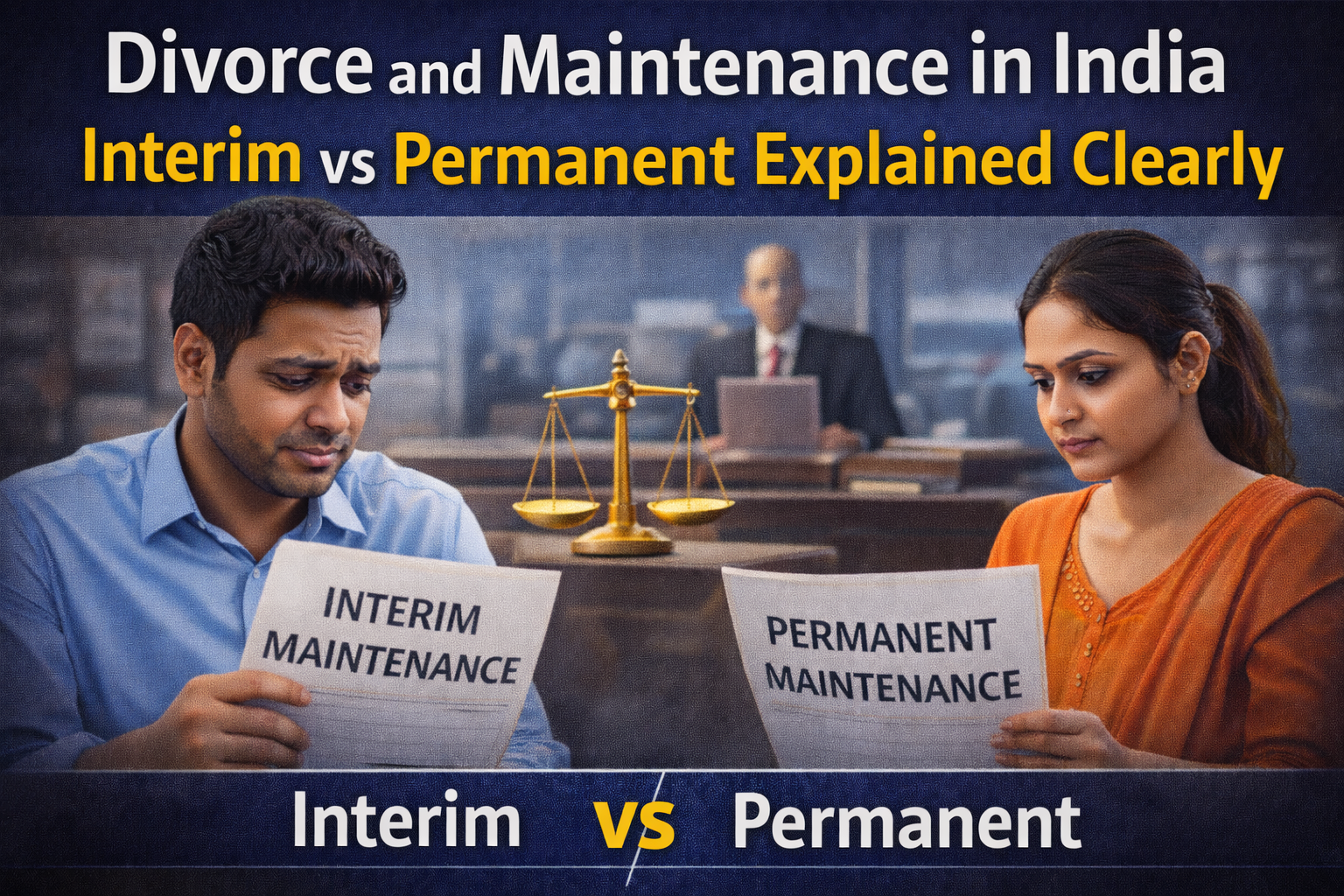
Maintenance can be claimed at two different stages of a matrimonial dispute:
- During the pendency of divorce proceedings (Interim Maintenance)
- After divorce is granted (Permanent Maintenance / Alimony)
Understanding the difference is crucial for both spouses.
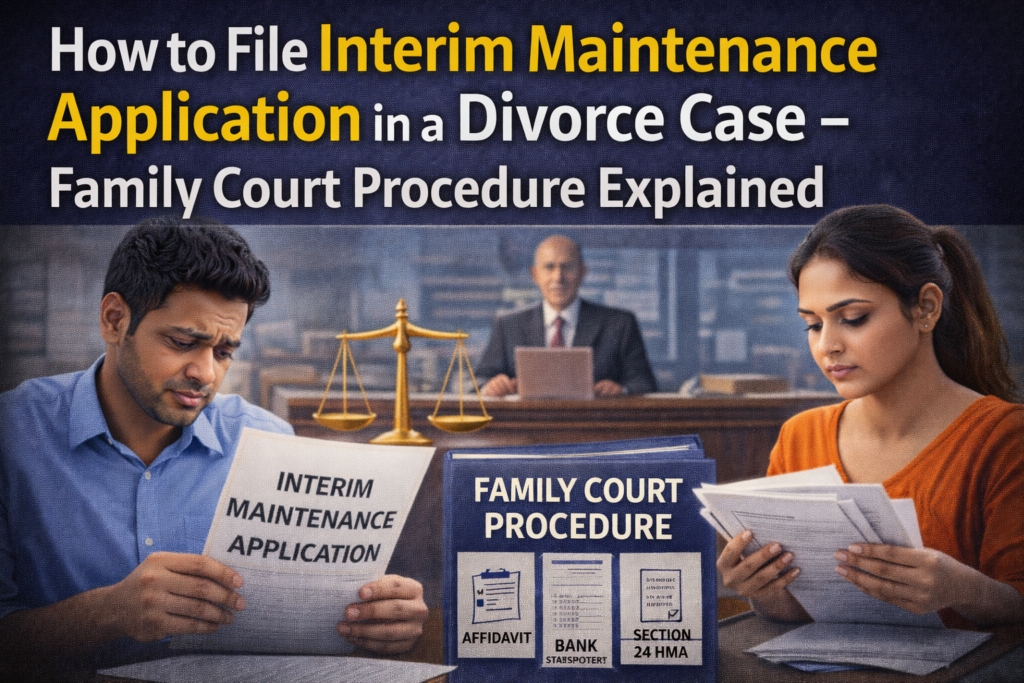
What Is Interim Maintenance?
Interim maintenance is temporary financial support granted while the divorce or matrimonial case is still pending before the court.
Legal Basis
- Section 24 – Hindu Marriage Act
- Relevant personal laws and family court powers
It is meant to ensure that the financially weaker spouse can:
- Survive during litigation
- Meet basic expenses
- Afford legal costs
Is Interim Maintenance Automatic?
No. Courts examine:
- Income of both parties
- Monthly expenses
- Earning capacity, not just salary slips
- Standard of living during marriage
If the applicant has sufficient independent income, interim maintenance may be reduced or denied.
What Is Permanent Maintenance (Alimony)?
Permanent maintenance, also called alimony, is decided at the time of final divorce decree.
Legal Basis
- Section 25 – Hindu Marriage Act
It can be granted:
- As a lump sum amount, or
- As monthly/periodic payments
Key Difference from Interim Maintenance
Permanent maintenance is based on a long-term financial assessment, not temporary hardship.
Factors Courts Consider in Both Interim & Permanent Maintenance
- Income and assets of both spouses
- Employment status and qualifications
- Duration of marriage
- Age and health of parties
- Lifestyle enjoyed during marriage
- Responsibilities towards children or dependents
Maintenance is not meant to punish one spouse or reward the other.
Does a Working Wife Still Get Maintenance?
Yes, in some cases.
If the wife is earning but:
- Her income is substantially lower than the husband’s
- She cannot maintain the same standard of living
The court may award partial or balancing maintenance.
Read related analysis:
Working Wife & Husband with Higher Income – Maintenance Law Explained
What If Husband Claims He Cannot Pay?
Courts do not rely only on current income. They assess:
- Past earning history
- Professional qualifications
- Whether income is intentionally suppressed
Changing jobs or remaining deliberately unemployed does not automatically excuse maintenance liability.
Related reading:
Husband Changed Job to Avoid Maintenance – Is It Legal?
What Happens If Maintenance Is Not Paid?
Non-payment of maintenance has serious consequences. Courts may initiate enforcement proceedings.
Detailed explanation here:
Can Husband Be Arrested for Non-Payment of Maintenance? (BNSS Explained)
Can Maintenance Be Modified Later?
Yes. Both interim and permanent maintenance can be:
- Increased
- Reduced
- Cancelled
Based on change in circumstances such as:
- Job loss or new employment
- Serious illness
- Remarriage
Common Myths About Divorce & Maintenance
- Myth: Maintenance is fixed permanently at one stage
Reality: Courts can modify it later
- Myth: Only wives can claim maintenance
Reality: Law is gender-neutral in some provisions
Conclusion
Interim maintenance and permanent maintenance serve different legal purposes. Courts aim to balance financial fairness, dignity, and ability to pay. Maintenance decisions depend on facts, not assumptions.
Understanding this distinction helps both spouses avoid unnecessary litigation and unrealistic expectations.
This article is for general legal information and awareness purposes only. It does not constitute legal advice or solicitation. Communication is purely informational, in compliance with Bar Council of India Rule 36.