
Divorce Due to Illicit Relationship – Step-by-Step Legal Guide (India)
This article is published by The Legal Warning India and written by Advocate Uday Singh.
Information is based on statutory provisions and publicly available legal principles.
Can Divorce Be Filed for Illicit Relationship in India?
Yes. Under the Hindu Marriage Act, 1955, adultery (extra-marital or illicit relationship) can become a ground for divorce.
Earlier adultery was a criminal offence, but after the decision of the Supreme Court of India in 2018, adultery is no longer a criminal offence. However, it still remains a valid civil ground for divorce.
What Is Considered an Illicit Relationship in Divorce Cases?
An illicit relationship generally refers to a situation where a married person has a voluntary sexual relationship with someone other than their spouse.
Family courts usually examine:
- Nature of the relationship
- Evidence of intimacy
- Frequency and circumstances
Step-by-Step Guide to File Divorce Due to Illicit Relationship
Step 1 – Collect Evidence
Direct proof of adultery is rare. Courts usually rely on circumstantial evidence such as:
- Hotel records
- Travel records
- Messages, chats or emails
- Witness statements
- Photos or videos
Courts examine whether the evidence reasonably indicates a relationship.
Step 2 – Consult a Family Lawyer
A matrimonial lawyer helps assess whether the available evidence is strong enough to sustain a divorce petition.
Incorrect allegations without evidence may weaken the case.
Step 3 – Draft the Divorce Petition
The petition generally includes:
- Marriage details
- Details of the alleged illicit relationship
- Evidence supporting the allegation
- Relief sought from the court
Step 4 – Filing in Family Court
The divorce petition is filed before the appropriate family court based on jurisdiction rules.
The court then issues notice to the other spouse.
Step 5 – Reply by the Opposite Party
The respondent spouse can:
- Deny allegations
- Provide explanation
- Challenge the evidence
Step 6 – Evidence Stage
Both parties present documents, witnesses and cross-examination takes place.
The court evaluates whether adultery has been proved based on probabilities.
Step 7 – Final Judgment
If the court finds sufficient proof, it may grant a decree of divorce.
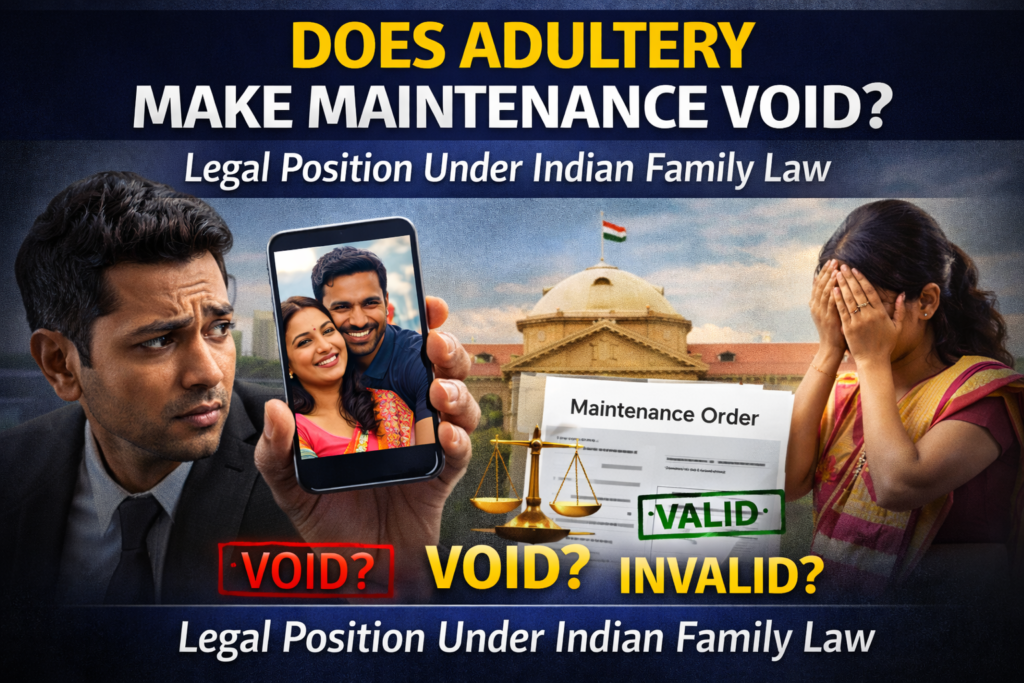
Impact of Illicit Relationship on Maintenance
Adultery allegations may influence maintenance claims depending on the facts of the case.
Related explanation:
Does Adultery Make Maintenance Void or Invalid?
Illicit Relationship and Other Matrimonial Proceedings
Sometimes adultery allegations appear in other matrimonial cases such as:
- Section 9 petitions
- Maintenance disputes
- Domestic disputes
Strategy differences explained here:
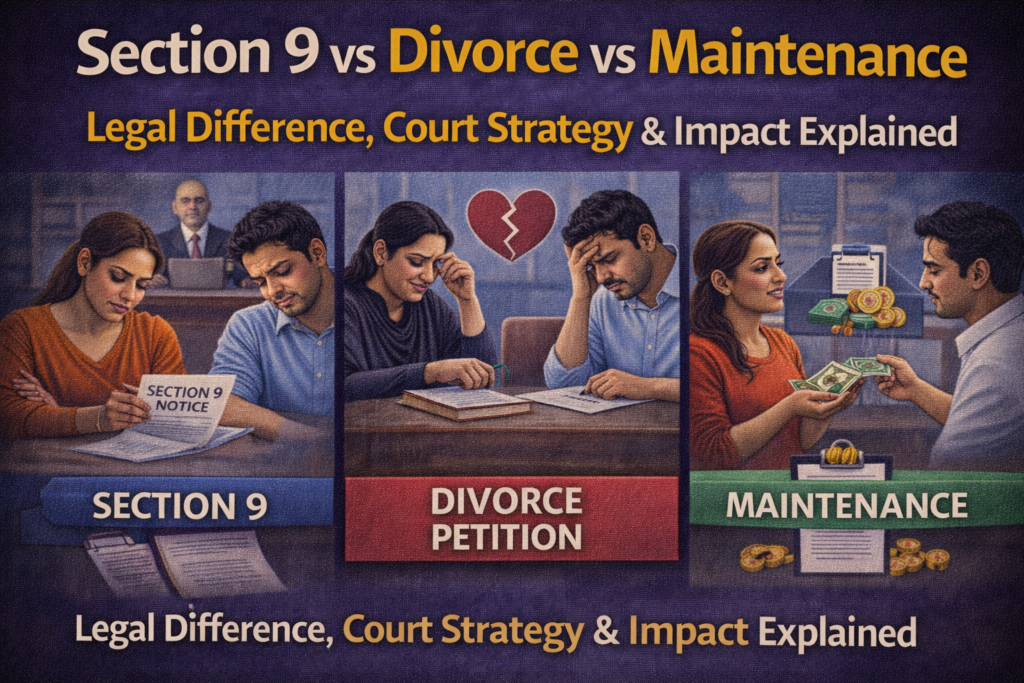
Section 9 vs Divorce vs Maintenance – Legal Strategy Explained
Common Mistakes in Adultery Divorce Cases
- Making allegations without evidence
- Using illegally obtained material
- Ignoring legal procedure
- Relying only on suspicion
Conclusion
Divorce due to an illicit relationship requires careful legal strategy and credible evidence. Courts generally rely on circumstantial proof and overall conduct of parties.
Proper documentation and legal guidance help avoid unnecessary complications in matrimonial litigation.
This article is for general legal information and awareness purposes only. It does not constitute legal advice or solicitation. Communication is purely informational, in compliance with Bar Council of India Rule 36.