This article is published by The Legal Warning India and written by Advocate Uday Singh.
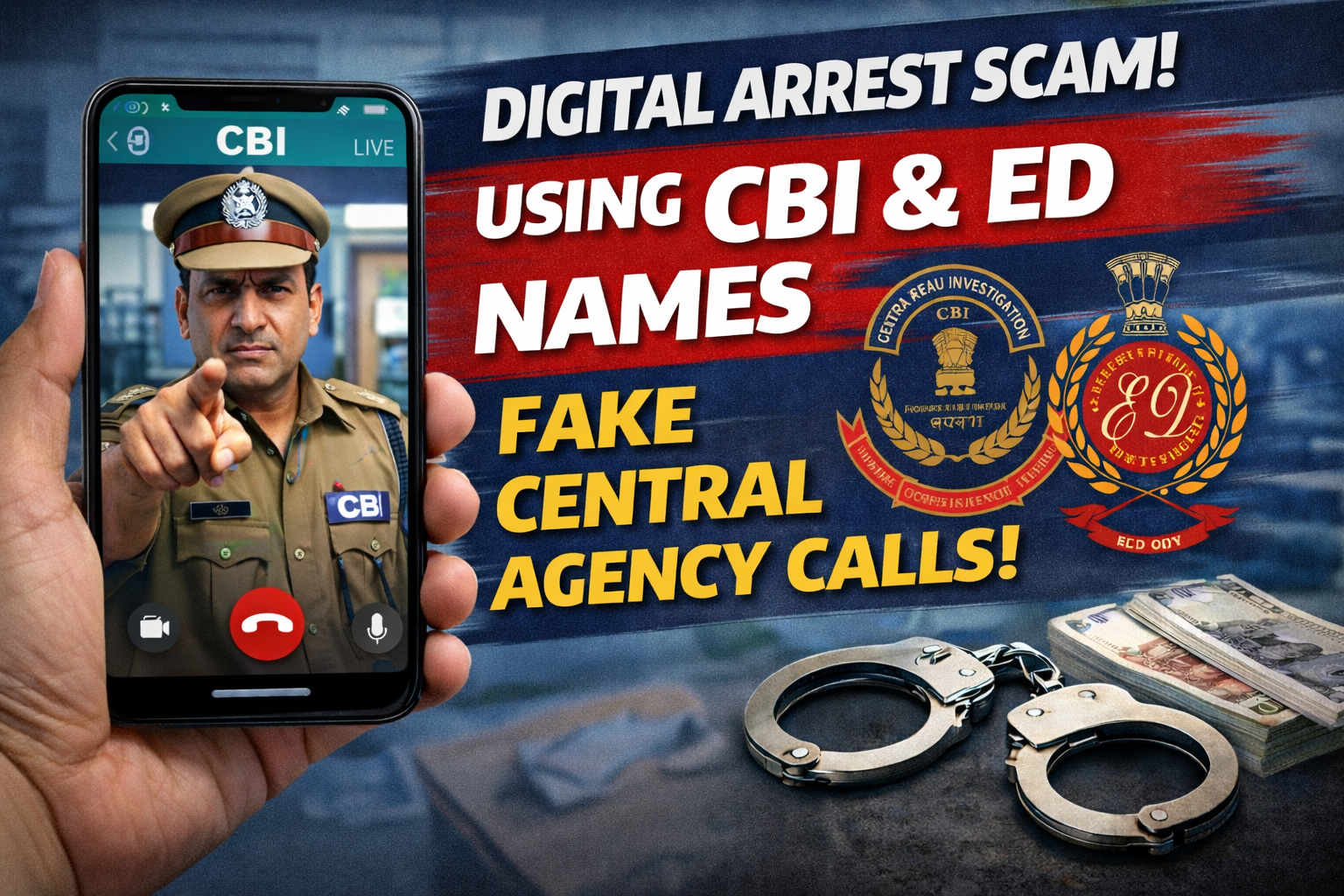
Digital Arrest Scam Using CBI & ED Names – Legal Truth and Public Warning
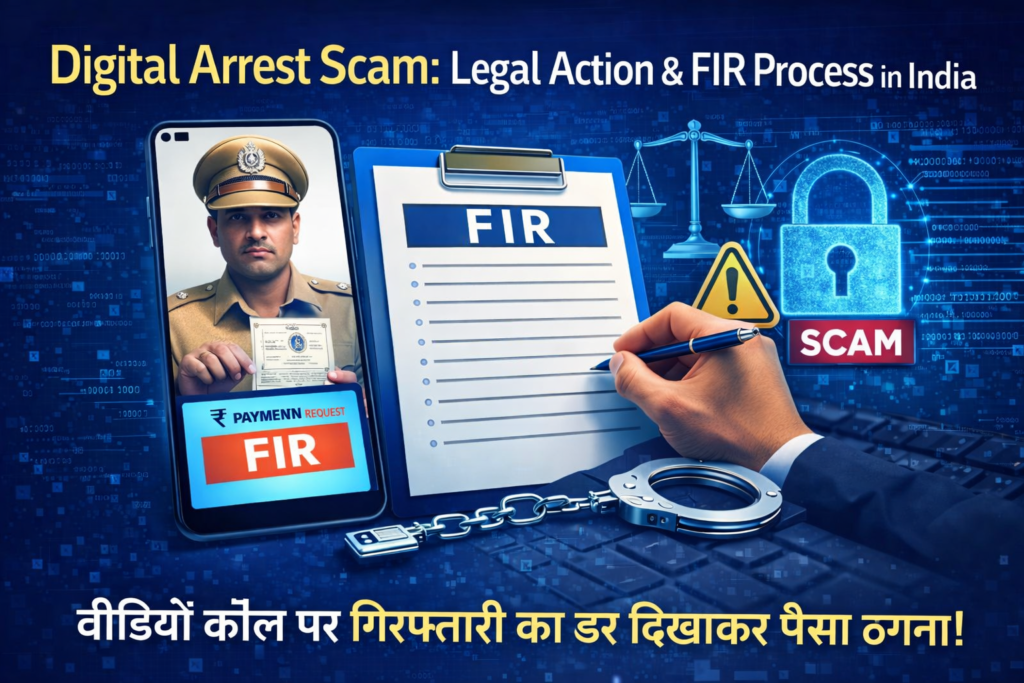
Across India, cyber criminals are misusing the names of CBI (Central Bureau of Investigation) and ED (Enforcement Directorate) to carry out a dangerous fraud known as the Digital Arrest Scam.
Victims receive WhatsApp video calls or phone calls where the caller claims:
“This is CBI / ED. You are under digital arrest.”
This false authority creates fear, panic, and immediate compliance — especially among senior citizens, professionals, and business owners.
What Is the CBI & ED Digital Arrest Scam?
This scam involves cyber criminals impersonating officers of CBI or ED and threatening arrest for serious offences such as:
- Money laundering
- Hawala transactions
- International parcel scams
- Fake bank accounts or shell companies
Victims are told that an arrest warrant exists and must “cooperate digitally” to avoid jail.
Important: There is no such thing as “digital arrest” under Indian law.
How Fraudsters Use CBI & ED Names to Trap Victims
Scammers follow a planned psychological strategy:
- They use official-sounding language and legal terms
- Show fake ID cards and documents on video calls
- Use fear of central agencies like CBI and ED
- Threaten freezing of bank accounts and assets
They then demand money in the name of:
- Verification charges
- Bail amount
- Settlement to “close the file”
Legal Reality: Can CBI or ED Arrest Someone Online?
No. Neither CBI nor ED has the legal authority to arrest anyone through:
- WhatsApp calls
- Video conferencing
- Phone calls
- Online payments
As per Indian legal procedure:
- Arrest requires physical presence of officers
- Written summons or warrant is mandatory
- Arrest memo must be prepared
- Family or lawyer must be informed
Any claim of online arrest by CBI or ED is fraudulent.
Why People Fall for CBI & ED Digital Arrest Scams
Victims panic because:
- CBI and ED are central investigative agencies
- Cases sound serious and non-bailable
- Scammers use fear of jail and asset seizure
- Victims are asked to keep the call confidential
Fear prevents rational thinking — which scammers exploit.
What To Do If You Receive Such a Call?
- Disconnect the call immediately
- Do not share Aadhaar, PAN, bank details, or OTP
- Do not transfer any money
- Save call details and screenshots
- Report to cyber crime helpline 1930
If Money Has Already Been Transferred
If you or a family member has already paid money:
- Inform your bank immediately
- Request transaction blocking
- File cyber crime complaint without delay
Delay can significantly reduce recovery chances.
Read Also: Related Awareness Article
To understand WhatsApp-based digital arrest scams in detail, read:
👉
Cyber Crime Digital Arrest: Kya Police WhatsApp Par Arrest Kar Sakti Hai?
Public Awareness Message
- ✔ CBI & ED never arrest through WhatsApp
- ✔ Digital arrest is a fake concept
- ✔ Fear-based calls are cyber crimes
Awareness and timely action are the only safeguards.
Disclaimer: This article is for general legal information and awareness purposes only. It does not constitute legal advice or solicitation. Communication is purely informational, in compliance with Bar Council of India Rule 36.
You can request legal guidance.
Get general legal information and consultation support.