Can Husband Be Arrested for Non-Payment of Maintenance? (BNSS Explained Clearly)
This article is published by The Legal Warning India and written by Advocate Uday Singh.
Information is based on statutory provisions and publicly available court interpretations.
0
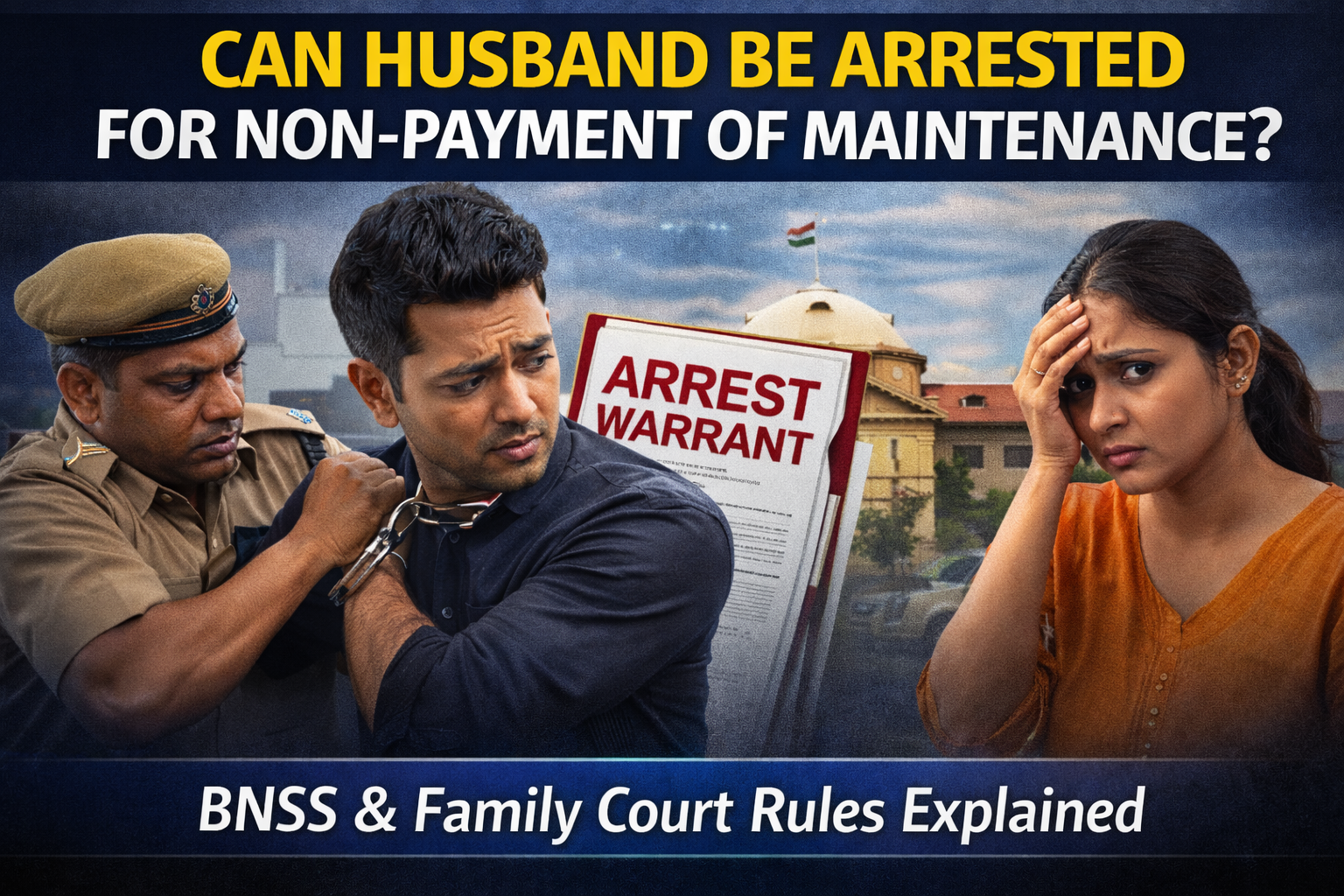
Image used for illustration purposes only
The Common Fear: “Will I Be Arrested for Not Paying Maintenance?”
In family court disputes, one of the most searched and feared questions is:
“Can a husband be arrested if maintenance is not paid?”
The short answer is: Yes, arrest is legally possible — but not automatic, and not without following a proper legal process.
With the introduction of the Bharatiya Nagarik Suraksha Sanhita (BNSS), many people are confused about whether the law has become stricter or more lenient. This article explains the position in a clear, balanced way.
Maintenance Law Basics – Section 125 CrPC
Maintenance to wife, children, or parents is primarily governed by Section 125 of the Criminal Procedure Code (CrPC). While CrPC has been replaced procedurally by BNSS, the substantive right to maintenance remains unchanged.
The objective of maintenance law is not punishment, but:
- To prevent financial destitution
- To ensure basic survival and dignity
- To stop wilful neglect of dependents
What Happens When Maintenance Is Not Paid?
If a husband fails to pay maintenance despite a court order:
- Arrears of maintenance start accumulating
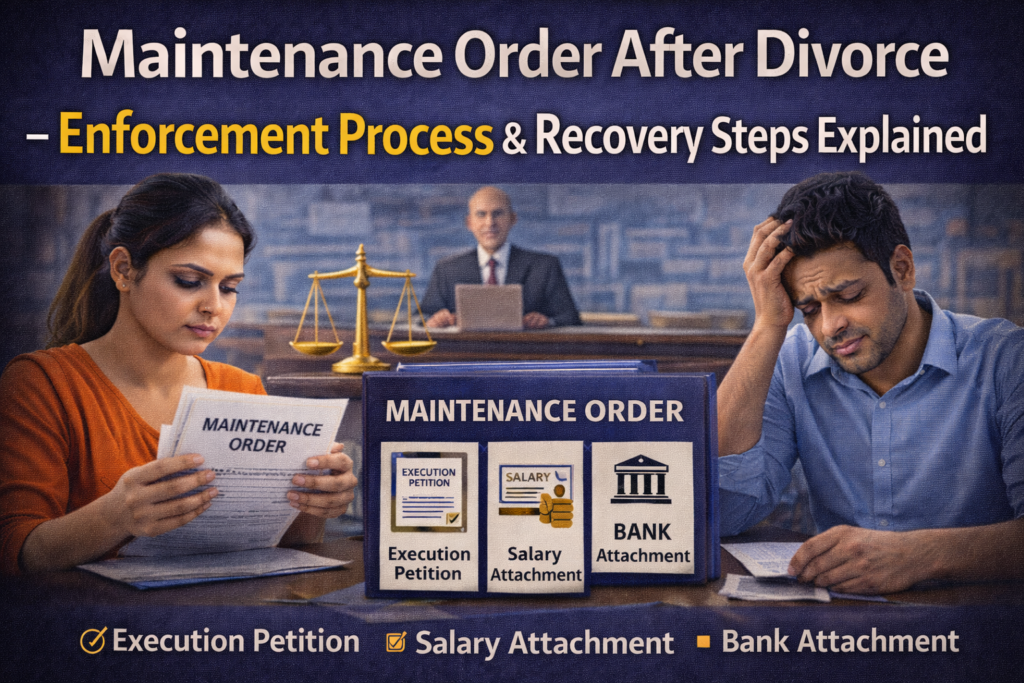
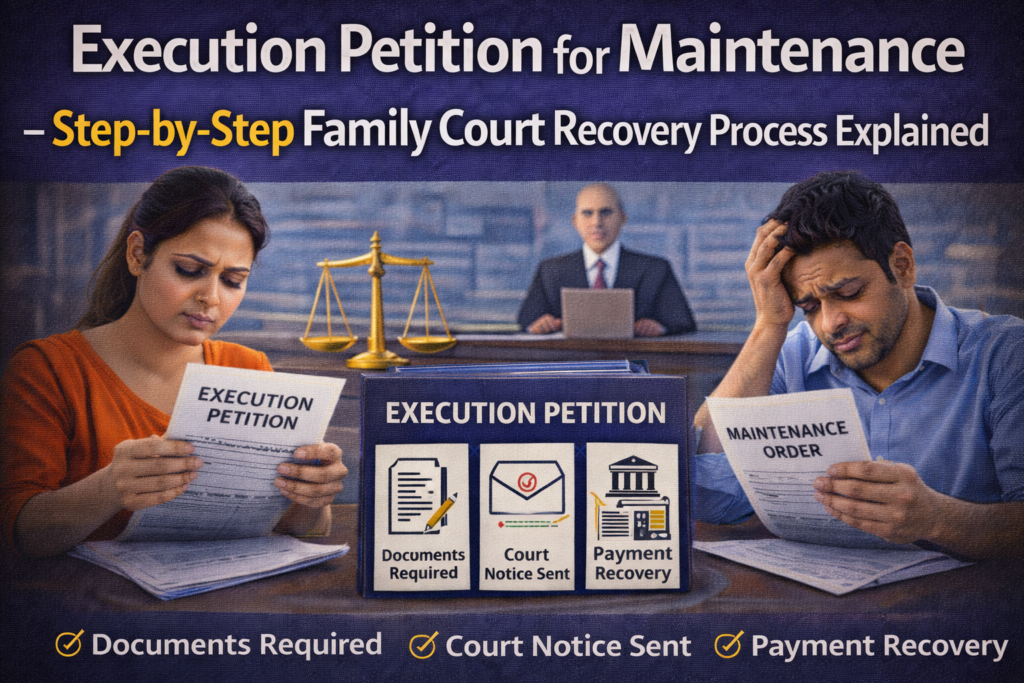
- The wife can file an execution petition in family court
- The court examines whether the default is wilful or justified
Only after this stage does the question of arrest arise.
BNSS Explained: Is Arrest Automatic for Maintenance Default?
No. Even under BNSS, arrest is not automatic.
Key BNSS Principles Applicable to Maintenance Default
- Court must first give an opportunity to pay
- Reason for non-payment is examined
- Wilful and intentional default is required
- Arrest is used as a last resort
BNSS reinforces the principle that coercive steps should be proportionate, not mechanical.
When Can Arrest Actually Be Ordered?
A family court may consider arrest only when:
- There is a valid maintenance order
- The husband has the capacity to pay
- Payment is deliberately avoided
- Repeated opportunities are ignored
In such cases, the court may issue a warrant for recovery or detention for a limited period, as provided by law.
Important Clarification: Arrest Is Not Punishment
Courts have repeatedly clarified that:
- Detention is meant to enforce compliance
- It does not wipe out maintenance arrears
- Payment obligation continues even after release
Therefore, arrest is a pressure mechanism, not a settlement.
Common Defences Taken by Husbands
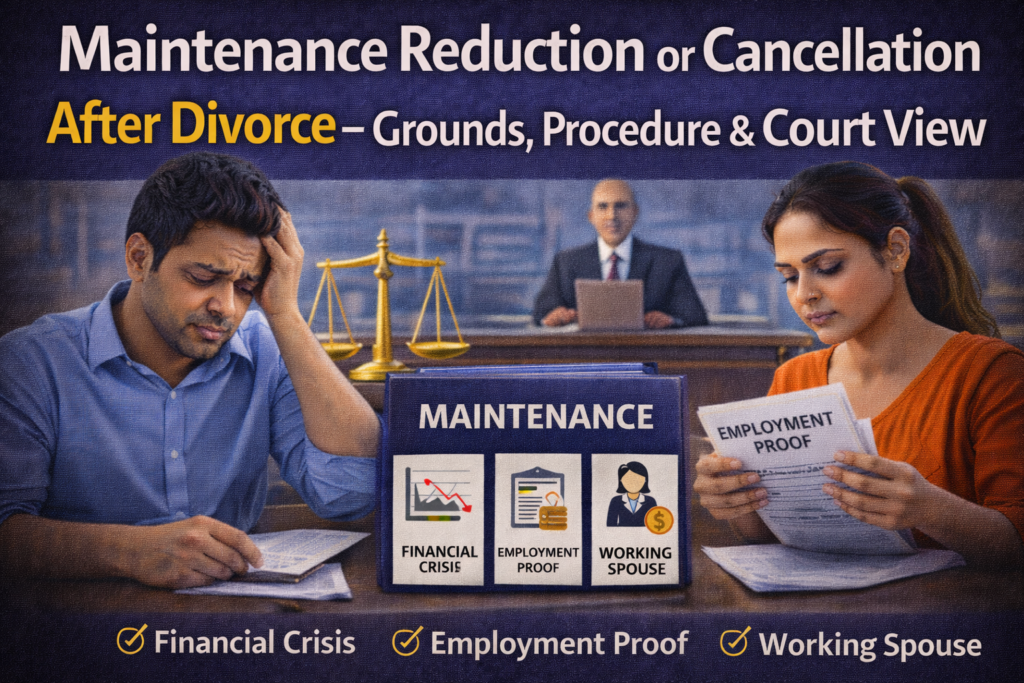
- Unemployment or job loss
- Medical emergency
- Financial dependency on others
- False or exaggerated maintenance claims
Courts examine these defences carefully. Genuine hardship may delay coercive action, but intentional avoidance is not tolerated.
What If Husband Changed Job or Income?
Changing a job or reducing income to avoid maintenance is not a valid defence.
You may also read:
Husband Changed Job to Avoid Maintenance – Is It Legal?
What If Allegations Like Adultery Are Raised?
Allegations such as adultery do not automatically suspend maintenance. Only a court finding can affect maintenance rights.
Related reading:
Does Adultery Make Maintenance Void or Invalid?
Practical Advice for Wife (Maintenance Holder)
- File execution petition without delay
- Maintain record of unpaid months
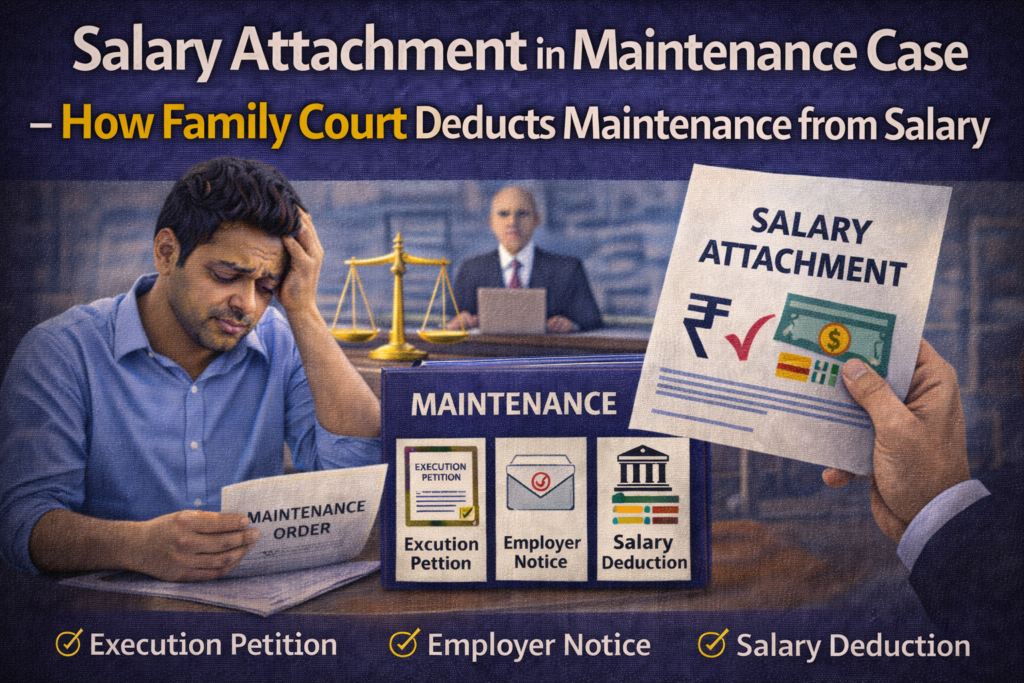
- Seek salary or bank attachment first
- Use arrest remedy only when default is wilful
Practical Advice for Husband
- Do not ignore court orders
- Seek modification if income has genuinely changed
- Document hardship with proof
- Engage legally instead of avoiding proceedings
Conclusion
Yes, a husband can be arrested for non-payment of maintenance, but only after due legal process. Under BNSS, courts continue to treat arrest as a last and coercive step, not an automatic consequence.
Timely compliance or lawful modification is always safer than enforcement proceedings.
This article is for general legal information and awareness purposes only. It does not constitute legal advice or solicitation. Communication is purely informational, in compliance with Bar Council of India Rule 36.