
SARFAESI Notice Received from Bank or NBFC – Complete Legal Guide to Reply, Stay & Stop Seizure
This article is published by The Legal Warning India and written by Advocate Uday Singh.
This article is for general legal information and awareness purposes only. It does not constitute legal advice or solicitation. Communication is purely informational, in compliance with Bar Council of India Rule 36.
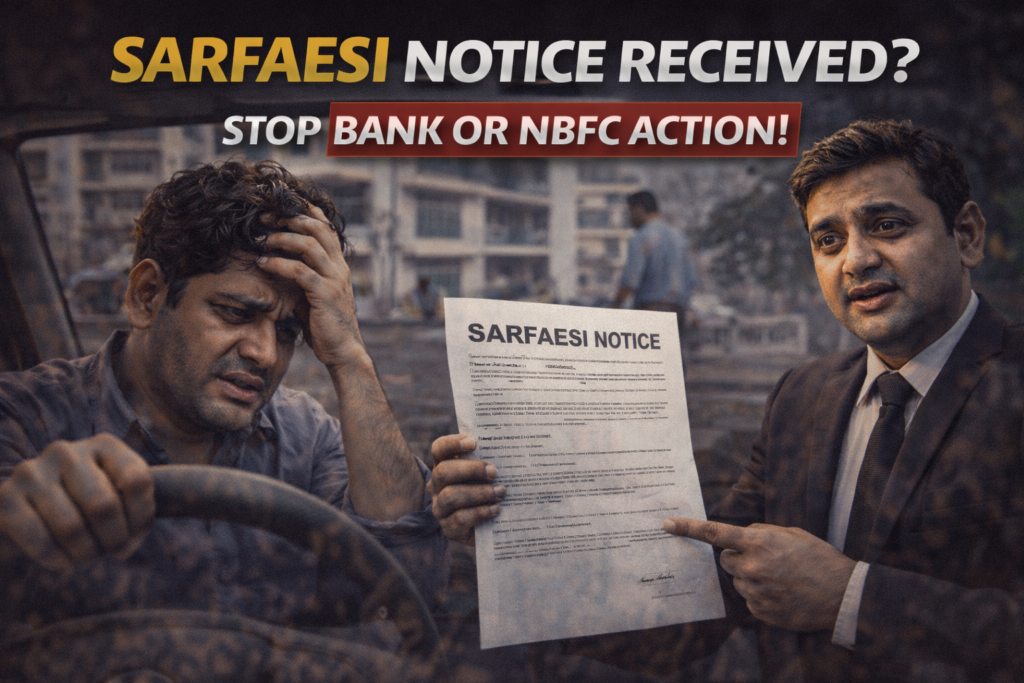
SARFAESI Notice – One of the Most Serious Legal Problems for Borrowers
Receiving a SARFAESI notice from a bank or NBFC is one of the most stressful situations for any borrower.
It usually means the lender is preparing to take action against your property, vehicle, or secured asset.
People immediately search online:
- What is SARFAESI notice?
- How to reply to Section 13(2) notice?
- Can SARFAESI action be stopped?
- Will my property be auctioned?
This article explains everything in one place – borrower rights, legal reply, stay options, DRT remedies, and how advocate intervention helps stop illegal action.
What Is the SARFAESI Act? (Simple Explanation)
The SARFAESI Act, 2002 allows banks and NBFCs to recover dues from secured loans without going to civil court.
Under this law, lenders can:
- Declare loan account as NPA
- Issue demand notice
- Take possession of property or vehicle
- Auction the secured asset
Important: This power is not absolute. The law also provides strong rights and remedies to borrowers.
Section 13(2) SARFAESI Notice – The First & Most Important Stage
A Section 13(2) notice is a demand notice asking the borrower to clear outstanding dues within 60 days.
At this stage:
- No possession has been taken yet
- Borrower has the legal right to reply
- Objections can be raised
This is the best time to send an advocate reply.
Why You Must Reply to SARFAESI Notice Through an Advocate
Ignoring the notice or sending an informal reply is a serious mistake.
An advocate reply:
- Creates a strong legal record
- Challenges wrongful NPA declaration
- Objects to incorrect outstanding amount
- Raises RBI guideline violations
- Protects against illegal possession
Banks take advocate replies seriously because they know the matter can go to DRT or High Court.
Section 13(4) – When Bank Tries to Take Possession
If the borrower does not reply or the bank rejects objections, it may proceed under Section 13(4).
This includes:
- Symbolic possession notice
- Physical possession through authority
- Preparation for auction
Urgent legal action is required at this stage.
How to Stop SARFAESI Action Legally
1️⃣ Advocate Reply to Section 13(2)
First and most critical legal defence.
2️⃣ DRT Application Under Section 17
Borrower can approach Debt Recovery Tribunal (DRT) against illegal SARFAESI action.
3️⃣ Interim Stay on Possession or Auction
On valid grounds, DRT can grant stay and protect property.
4️⃣ Restructuring / One Time Settlement
Parallel negotiation is legally permissible.
Common Myths About SARFAESI
- Myth: SARFAESI means arrestTruth: It is a civil recovery law, not criminal
- Myth: Bank can seize property anytimeTruth: Due process is mandatory
Frequently Asked Questions (FAQs)
Can SARFAESI notice be challenged?
Yes. Through advocate reply and DRT proceedings.
Can NBFCs issue SARFAESI notices?
Yes, if the loan is secured and conditions are met.
Is auction immediate after notice?
No. Several legal steps are required before auction.
Related Legal Awareness Articles
- Legal Notice for EMI Default – Advocate Reply Guide
- Unable to Pay EMI – Legal Restructuring Letter
- Loan Recovery Agent Harassment
- Bank Account Frozen – Legal Remedy
Conclusion: SARFAESI Notice Is Serious, But It Is Not the End
A SARFAESI notice does not mean automatic loss of property.
Timely advocate reply, proper objections, and DRT action can stop illegal possession and auction.
If you have received a SARFAESI notice, do not ignore it. Early legal action creates the strongest defence.