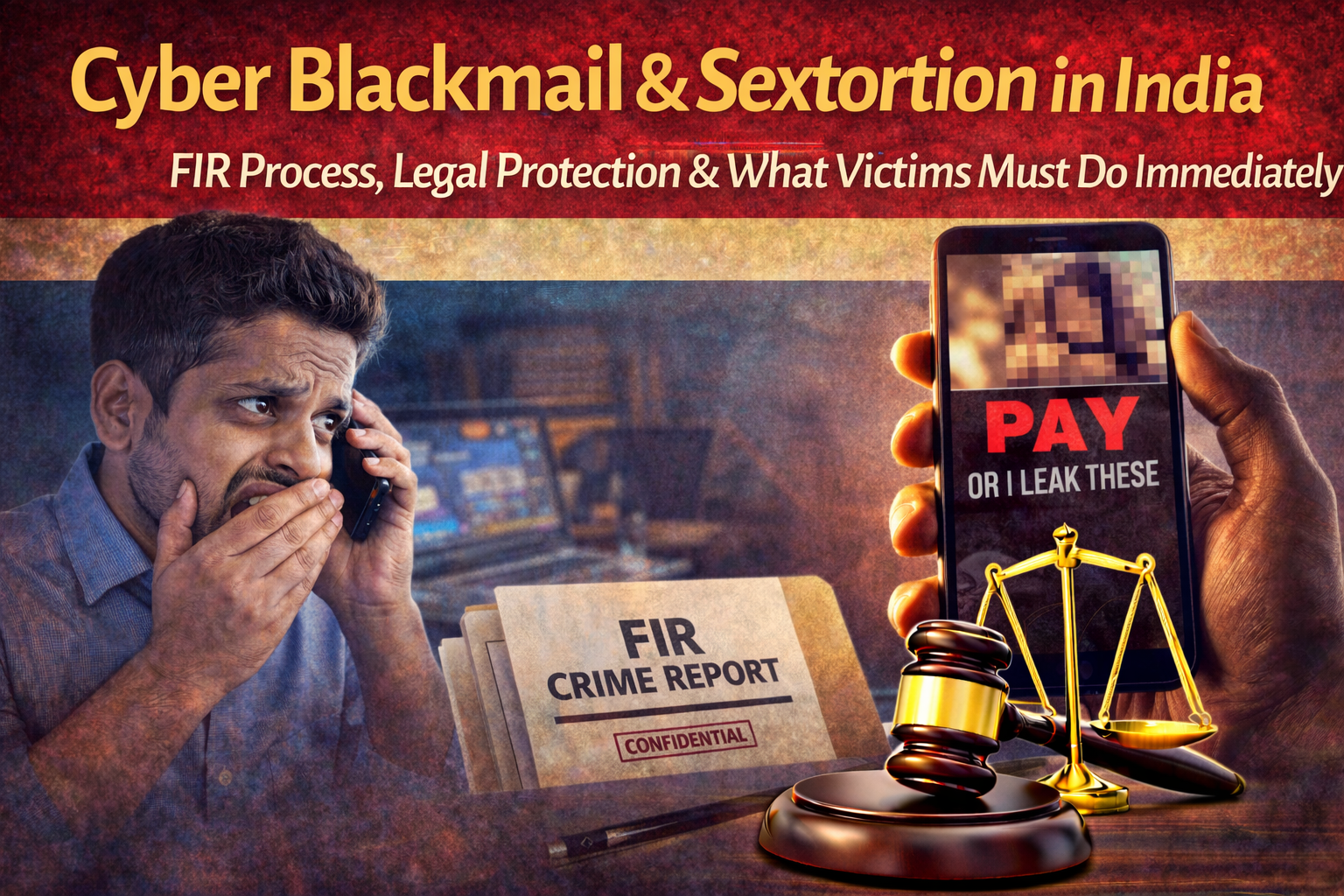
Cyber Blackmail & Sextortion in India: FIR Process, Legal Protection & What Victims Must Do Immediately
This article is published by The Legal Warning India and written by Advocate Uday Singh.
Cyber blackmail and sextortion have become one of the fastest-growing cyber crimes in India. Every day, thousands of people receive threats involving private photos, videos, screen recordings, or fake morphed content — demanding money, continued video calls, or silence.
Most victims panic, feel ashamed, and hesitate to report the crime. Offenders exploit this fear.
The most common emergency question is:
“Someone is threatening to leak my private photos/videos online. What should I do legally?”
This article explains cyber blackmail and sextortion laws in India, FIR process, legal protection available to victims, and immediate steps to stop the harassment.
What Is Cyber Blackmail / Sextortion?
Cyber blackmail or sextortion occurs when someone:
- Obtains or fabricates private photos/videos
- Threatens to publish or share them
- Demands money, favours, or silence
- Uses WhatsApp, Instagram, Facebook, Telegram, email, or dating apps
Both men and women are victims. Teenagers and working professionals are increasingly targeted.
Common Sextortion Scams in India
- Video call recording scam
- Instagram / Facebook fake profile trap
- Dating app sextortion
- Telegram extortion groups
- Morphed image blackmail
- Threats to send content to family or office
Paying money does not stop the crime — it usually escalates.
Is Cyber Sextortion a Criminal Offence in India?
Yes. Cyber blackmail and sextortion are serious criminal offences under Indian law.
Applicable legal provisions include:
- IT Act provisions related to misuse of electronic content
- Criminal intimidation and extortion provisions
- Online harassment and privacy violation laws
Victims are legally protected. The shame lies with the criminal — not the victim.
Immediate Steps Victims Must Take (Very Important)
- Do not pay any money
- Stop responding to threats
- Preserve all evidence (screenshots, chats, call logs)
- Note down URLs, usernames, phone numbers
- Block but do not delete conversations
Evidence preservation is critical.
How to File FIR for Cyber Blackmail / Sextortion
Option 1: Cyber Crime FIR
You can file a complaint at your nearest police station or cyber crime cell. FIR must be registered.
Option 2: Online Cyber Crime Complaint
Online cyber crime complaint mechanisms are available for reporting sextortion cases.
Police cannot refuse to register FIR for cyber extortion.
What If Police Refuse to Register FIR?
If police delay or refuse:
- Submit written complaint to senior police officer
- Send legal notice through an advocate
- Approach appropriate judicial authority
Law mandates action in cognizable cyber crimes.
Can Content Be Removed From Internet?
Yes. Legal steps can be taken to:
- Request takedown from platforms
- Freeze offending accounts
- Trace IP addresses and devices
Speed matters — early action prevents viral spread.
Legal Protection Available to Victims
- Confidential handling of complaints
- No public disclosure of victim identity
- Legal action against offender
- Preventive measures by cyber cell
Victims are not required to face the accused directly at the initial stage.
Common Mistakes Victims Make
- Paying money out of fear
- Deleting evidence
- Not filing FIR due to shame
- Handling the criminal alone
Silence empowers the offender.
How to Protect Yourself From Sextortion
- Never accept unknown video calls
- Do not share personal images
- Use privacy settings on social media
- Report suspicious profiles immediately
Related Articles
- Cyber Crime Legal Help – Online Fraud & UPI Issues
- WhatsApp Messages as Court Evidence – Legal Position
Frequently Asked Questions (FAQs)
Q. Will my family or employer be informed?
No. Complaints are handled confidentially.
Q. Can fake morphed images also be reported?
Yes. Even fake content is punishable.
Q. Is FIR mandatory?
Yes, for criminal action and protection.
This article is for general legal information and awareness purposes only. It does not constitute legal advice or solicitation. Communication is purely informational, in compliance with Bar Council of India Rule 36.