
Advocate Rights in Case of Assault or Threats in Uttar Pradesh
Incidents involving assault, threats, or harassment of advocates have been increasingly reported in
various parts of Uttar Pradesh. An advocate is not only an officer of the court but also an essential
pillar of the justice delivery system. Any attack on an advocate directly affects the rule of law.
This article explains the legal rights of advocates in cases of assault or threats and the remedies
available under Indian law.
Legal Status of an Advocate
An advocate enjoys statutory recognition and protection under law while discharging professional duties.
Assault or intimidation against an advocate during or due to professional work is treated as a serious
offence.
To understand the basic police procedure related to complaints and FIRs, you may read:
Police FIR Procedure Explained
Assault or Threat to an Advocate: Is FIR Mandatory?
Yes. In cases involving physical assault, criminal intimidation, or threats to life, the police are
duty-bound to register an FIR. Refusal to do so amounts to dereliction of duty.
If police refuse to register FIR, legal remedies are available under the criminal procedure framework.
A detailed explanation is available here:
FIR under Section 173 BNSS (Earlier Section 156(3) CrPC) Explained
Police Duty to Provide Protection
In cases where an advocate faces continuous threats, police protection may be sought.
Police authorities are obligated to assess threat perception and ensure safety, especially when the
threat arises from professional duties.
Role of Bar Council and Bar Associations
Bar Councils and local Bar Associations play a vital role in safeguarding advocates.
They may take up the matter with senior police officials, file representations, or initiate collective
action for protection of the legal fraternity.
Issues related to advocate safety and collective representation are also discussed in the context of
bar leadership and reform. You may read:
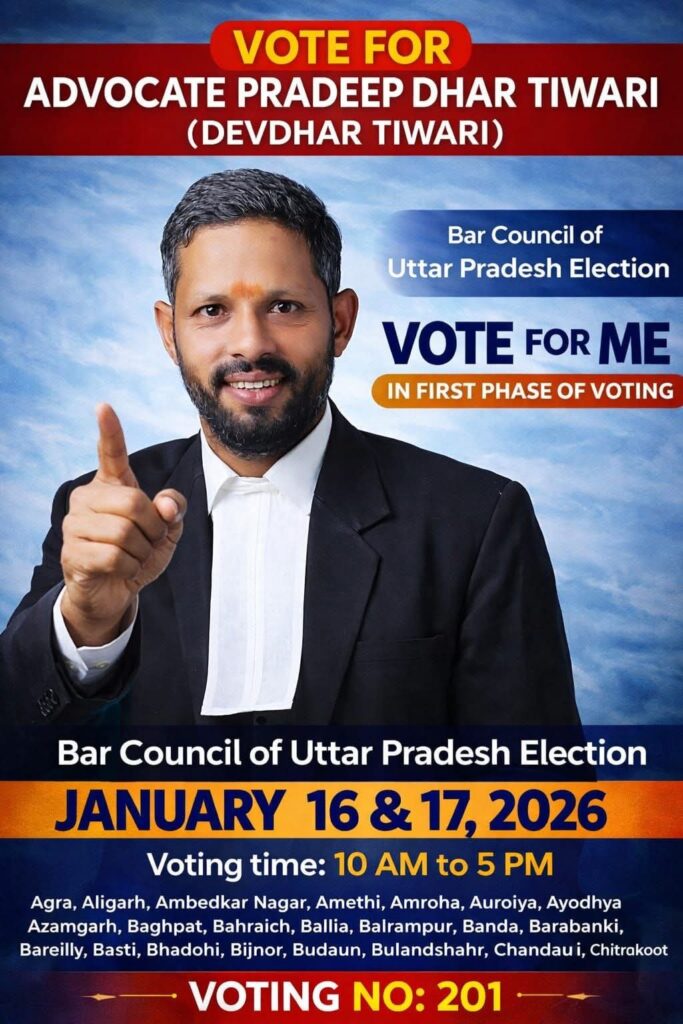
Who Is Devdhar Tiwari Pradeep – Bar Council Election Perspective
When Civil Dispute Turns Criminal
Many assaults on advocates originate from disputes that were initially civil in nature.
Understanding the distinction between civil and criminal proceedings is crucial.
For clarity, refer:
Difference Between Civil Recovery and Criminal Case
Conclusion
Assault or threats against advocates cannot be tolerated in a constitutional democracy.
Advocates must be aware of their rights, legal remedies, and institutional support systems.
Prompt legal action not only protects the individual advocate but also strengthens the justice system.
Disclaimer:
This article is published for general legal awareness and informational purposes only.
It does not constitute legal advice or solicitation under the Bar Council of India Rules.
No advocate-client relationship is created by reading this content.
Written By:
Uday Singh, Advocate
Practicing Advocate at High Court and District Courts
Antarrashtriya Manavadhikar Association, Prabhari